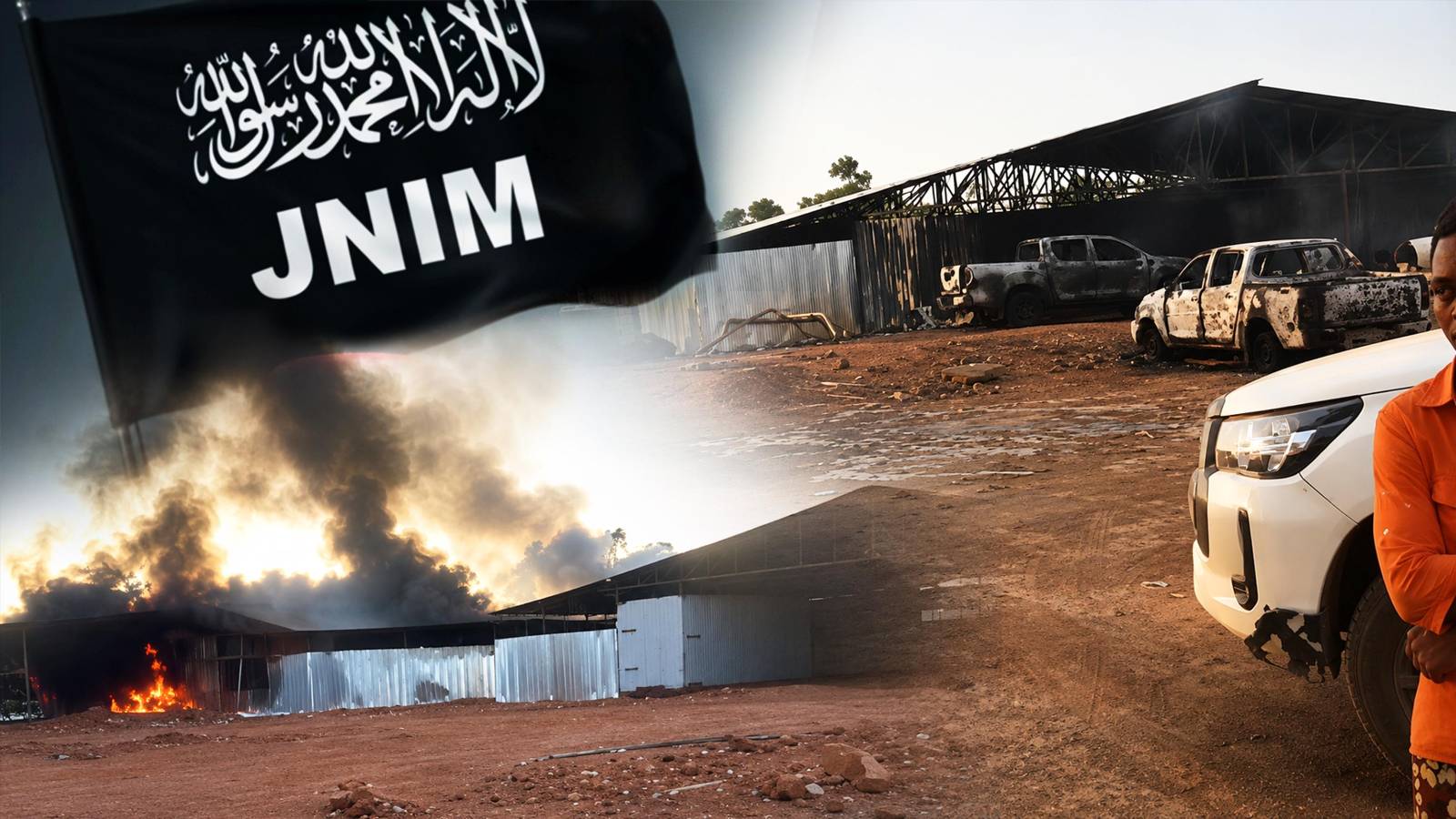
The Group for the Support of Islam and Muslims (JNIM) has once again demonstrated its operational reach in Mali, launching a coordinated assault on a Chinese-operated mining site near Naréna, close to the Guinea border. The attack not only caused significant material damage but also resulted in the abduction of nine Chinese nationals, underscoring the widening security vacuum in a country struggling to assert control over its territory.
The JNIM’s calculated strike
The predawn raid unfolded with military precision. Dozens of armed assailants, moving swiftly on motorcycles and four-wheel-drive vehicles, overran the mining facility in Kangaba Circle. While the zone had previously been considered relatively insulated from large-scale jihadist offensives, the JNIM’s bold incursion shattered that perception.
The attackers systematically destroyed critical infrastructure, torching excavators, power generators, and administrative buildings. Their most valuable target, however, was human: local reports confirm the abduction of nine Chinese workers, who were forcibly taken to an undisclosed location. Such hostage-taking not only generates leverage for future negotiations but also sends a clear message to both Bamako and Beijing about the group’s expanding influence.
The Malian army’s faltering grip on power
This brazen attack near an international border spotlights the Malian Armed Forces (FAMa)’s inability to maintain territorial security. Once confined to the northern and central regions, the conflict has steadily crept southward, now encroaching upon the economic heartlands of the country. The fact that a major industrial site could be overrun with minimal resistance reflects the collapse of Bamako’s defensive networks.
On the ground, Malian troops appear trapped in a reactive posture, confined to fortified garrisons while the JNIM roams freely. The failure to anticipate or intercept the attackers exposes glaring weaknesses in military intelligence and logistical coordination. Despite repeated assurances from the transitional government about reclaiming sovereignty, the reality on the ground tells a different story: vast areas of the country remain beyond state control.
Russian mercenaries fall short
In a bid to fill the security void left by departing Western forces and the UN stabilization mission, Mali turned to Russia for support, welcoming the deployment of the Africa Corps (formerly Wagner Group). Yet, despite Moscow’s promises of rapid stabilization, the mercenary force has proven ill-equipped for the task at hand.
Their tactics—often brutal and indiscriminate—have failed to deter the JNIM or secure vulnerable economic zones. Far from curbing the group’s momentum, their presence has done little to slow its geographic expansion, particularly toward Bamako and key mining districts. The once-hyped Russian intervention now stands exposed as a costly miscalculation, unable to deliver on its security guarantees.
China’s economic interests under siege
The targeting of Chinese-owned assets marks a strategic shift in the JNIM’s campaign. Beijing remains Mali’s most significant economic partner, particularly in gold mining and infrastructure development. By striking at the heart of these ventures, the jihadist group aims to cripple Bamako’s revenue streams while sending a direct warning to foreign investors: the Malian state can no longer ensure their protection.
This incident could force Beijing to reassess its economic engagement in the Sahel. With no credible security assurances from the Malian junta, Chinese authorities may opt to reduce investments or demand stricter protective measures, further straining an already fragile bilateral relationship.
A looming crisis of governance
The assault on Naréna signals a dangerous escalation in Mali’s protracted security crisis. By striking at will near an international frontier, the JNIM has exposed the hollowness of Bamako’s counterterrorism strategy and the inefficacy of its foreign backers. Unless decisive action is taken to bolster intelligence, protect civilians, and safeguard economic assets, the country risks slipping into a permanent state of lawlessness, with devastating consequences for its people and regional stability.