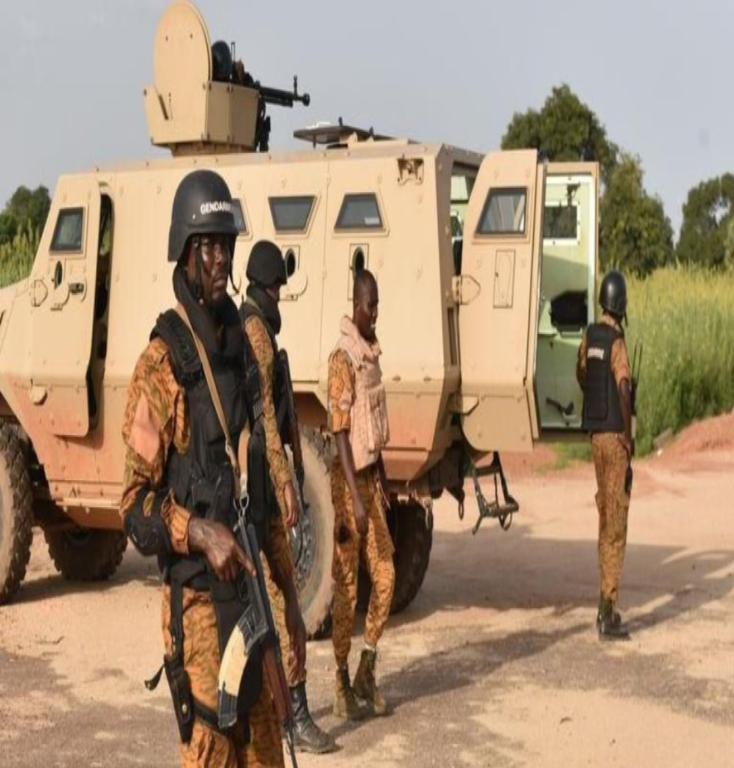
The Burkina Faso armed forces face a growing challenge as the Group for the Support of Islam and Muslims (JNIM), Al-Qaeda’s Sahel affiliate, escalates its operations with audacious ambushes and strategic propaganda campaigns. In its latest claims, the group reports destroying a military armored vehicle near Fada N’Gourma and killing three civilian defense volunteers in the Bam province. Though these assertions remain unverified, they underscore a troubling trend that continues to destabilize the nation’s security landscape.
Why these claims matter now
JNIM’s dual announcements arrive amid a broader surge in insurgent activity across Burkina Faso. The group’s ability to strike military convoys and auxiliary forces highlights vulnerabilities in the country’s counterterrorism efforts. While the claims lack independent confirmation, their timing suggests an intentional effort to disrupt public confidence and pressure security forces. With JNIM operating across multiple regions—from the East to the Bam province—the message is clear: no area is immune to the rising tide of violence.
Armor targeted near Fada N’Gourma
The claim of destroying a military armored vehicle near Fada N’Gourma follows a pattern of attacks that exploit weak points in logistics and mobility. Located in the strategically vital Eastern region, Fada N’Gourma serves as a critical hub for military movement and civilian trade. The use of improvised explosive devices (IEDs) in such an area demonstrates the adaptability of jihadist tactics, turning routine patrols into high-risk operations. Even heavily armored units are not immune to these deadly traps, which can cripple not just vehicles but entire supply lines.
While the destruction of the armored vehicle remains unconfirmed, the psychological impact of such an event cannot be overstated. It sends a chilling message to both military personnel and civilians about the ever-present threat lurking in unexpected corners of the country.
How improvised explosives reshape military operations
IEDs have become a hallmark of insurgent warfare in the Sahel. Unlike direct combat engagements, these weapons do not require large numbers of fighters; instead, they rely on hidden devices that can strike suddenly and vanish without a trace. For the Burkina Faso military, this means:
- Heightened vigilance on all transport routes, even in areas previously considered safe.
- Increased costs for securing convoys and patrol routes, straining already limited resources.
- A shift in strategy from proactive engagements to defensive positioning, limiting mobility and operational reach.
The military’s struggle to counter these threats underscores a fundamental challenge: in an asymmetric war, conventional forces must constantly adapt to unconventional tactics.
Civilian volunteers bear the brunt in Bam province
Beyond the armored vehicle incident, JNIM’s second claim—targeting civilian defense volunteers in the Bam province—brings the conflict’s human cost into sharp focus. The group alleges it killed three Volunteers for the Defense of the Homeland (VDP), a civilian militia formed to assist national security forces. While the exact details of the attack remain uncertain, the incident reflects a brutal reality: these volunteers, often poorly equipped and minimally trained, are on the front lines of Burkina Faso’s insurgency.
The loss of three lives, if confirmed, is more than a statistical casualty. It represents a direct challenge to the state’s ability to protect its citizens. The VDP volunteers are vital to filling gaps in security coverage, but their exposure to ambushes and raids raises critical questions about their support and oversight.
The ripple effects of losing weapons and fighters
JNIM also claims to have seized automatic weapons during the Bam province operation. While the group’s accounts must be treated with caution, the potential loss of military-grade weapons into insurgent hands is a grave concern. Such weapons can:
- Empower local armed cells to carry out more sophisticated attacks.
- Fuel cycles of violence, where captured arms are used in subsequent raids.
- Undermine public trust in the government’s ability to maintain order.
For families of the volunteers and civilians in Bam province, this attack is not just a military setback—it is a personal tragedy that deepens the cycle of fear and instability.
A crisis spreading beyond the battlefield
The ripple effects of Burkina Faso’s insurgency extend far beyond isolated skirmishes or weapon losses. Years of relentless violence have reshaped daily life for millions, particularly in regions like the North, East, and Central-North:
- Isolated communities: Villages cut off from markets, schools, and health centers due to road insecurity.
- Economic paralysis: Farmers unable to tend fields, traders hesitant to transport goods, and markets struggling to function.
- Humanitarian strains: Displaced families in overcrowded camps, with limited access to food, clean water, and medical care.
This is not just a security crisis—it is a humanitarian one. The longer it persists, the harder it becomes for the state to regain control and restore normalcy.
Can Burkina Faso turn the tide? The road ahead
JNIM’s latest claims serve as a stark reminder of the uphill battle facing Burkina Faso’s government and military. Beyond the immediate threats to convoys and civilians, the insurgency poses deeper questions about long-term stability:
- Military adaptation: How can forces counter IEDs and ambushes without compromising mobility?
- Civilian protection: What safeguards can be implemented to shield VDP volunteers and rural communities?
- State presence: How can essential services—education, healthcare, and law enforcement—be restored in conflict zones?
The challenges are monumental, but the stakes could not be higher. For Burkina Faso, the next chapter in its fight against extremism will determine whether it can reclaim its territory, its economy, and its people’s sense of safety.
As unverified reports of armored vehicle destruction and civilian casualties circulate, one truth remains undeniable: Burkina Faso’s battle against JNIM is far from over. The question now is whether the state can regroup, adapt, and reverse the tide before the crisis spirals further out of control.