Gabon’s new era: Parliament becomes the heart of the republic
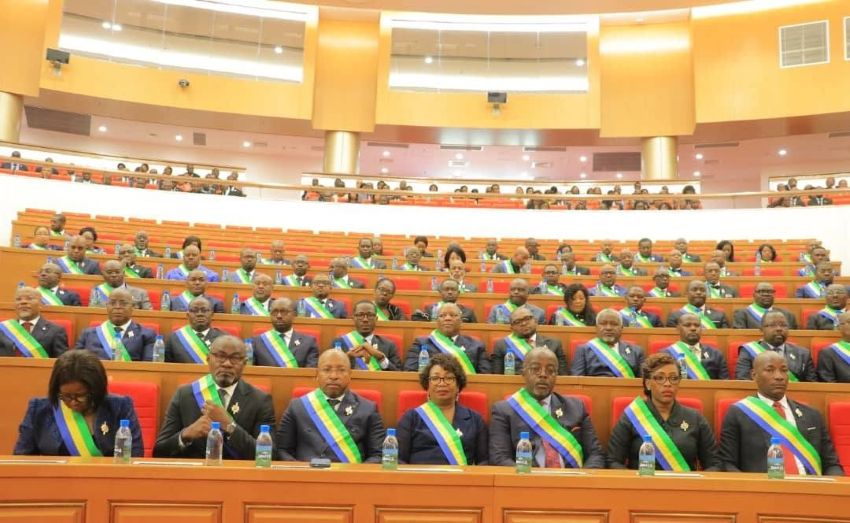
Libreville, June 15, 2026 — A historic moment unfolded today in Gabon as President Brice Clotaire Oligui Nguema delivered his annual address to the Parliament convened in Congress, a first under the Fifth Republic’s Constitution.
This unprecedented gathering signals more than just a formal state occasion. It marks the inauguration of a bold institutional shift, placing Parliament at the core of national governance and accountability.
The Palais Léon Mba, home to the National Assembly, has evolved from a mere legislative forum into the symbolic stage where the executive, national representatives, and the sovereign people converge annually. This transformation redefines the balance of power in Gabon’s political landscape.
An institutional innovation with far-reaching implications
Previously, presidential addresses to Parliament were rare exceptions. Now, the Fifth Republic’s Constitution mandates this annual meeting as a cornerstone of governance. Each year, the head of state must present his vision, achievements, and future plans before lawmakers in Congress.
While the change may appear procedural, its political significance is profound. It embeds a culture of regular accountability at the highest level of government. The president’s legitimacy is no longer confined to election results; it is now reinforced by transparency and continuous oversight from elected representatives.
This model diverges sharply from traditional presidential systems. It institutionalizes public scrutiny of government actions, fostering a culture where governance is not just about decision-making but also about explanation and responsibility.
The choice of the Palais Léon Mba for this Congress is deliberate. Historically, executive power dominated the political stage. By addressing Parliament directly, the president underscores that democratic legitimacy extends beyond presidential elections. It thrives in an ongoing dialogue with the people’s representatives.
The Parliament’s elevated role in the Fifth Republic
The constitutional reforms following the 2023 National Inclusive Dialogue have dramatically enhanced Parliament’s stature. Once perceived as a secondary institution, it now stands as a pillar of Gabon’s new institutional equilibrium.
This shift responds to a critical national demand: rebuilding public trust. The revised Constitution strengthens oversight, transparency, and accountability mechanisms to address this need.
The annual Congress embodies this vision. Though it may not involve direct voting or debates, its impact is undeniable. It creates a shared institutional moment for both majority and opposition, fostering republican unity in a politically divided landscape.
Parliament also mirrors Gabon’s diversity, with 215 deputies and senators representing the nation’s political, geographical, and social spectrum. The president’s address, while formally directed at lawmakers, resonates with all citizens.
The birth of a new political culture
Every enduring democracy thrives on rituals that give meaning to its political life. Gabon’s annual Congress could become one such defining tradition.
Beyond its ceremonial function, this gathering reflects a governance philosophy rooted in transparency and institutional dialogue. It signals a shift from authority exercised solely through decrees to one grounded in explanation and accountability.
In a continent where institutional reforms are often met with skepticism by investors and international partners, Gabon’s initiative sends a strong signal of stability. It demonstrates a commitment to predictable, sustainable governance.
The true significance of today’s Congress extends beyond the president’s speech. It represents the establishment of a republican tradition poised to shape Gabon’s political future for decades.
The Fifth Republic is redefining its identity by making Parliament the common ground where the executive and national representatives meet annually. Gabon’s new governance model measures state strength not by power concentration but by its capacity for accountability. This may well be the most transformative change since the Republic’s inception.
You may also like
Senegal: how Sonko’s playful jab at Sadio Mané over 2029 is reshaping the political conversation
Senegal’s shadow funds: How unchecked spending drains public trust and budgets
Bénin: le Sénat tient sa séance inaugurale sous la conduite de Patrice Talon
Gabon : la participation citoyenne au cœur de la Ve République
Is Chad truly experiencing a political easing of tensions?