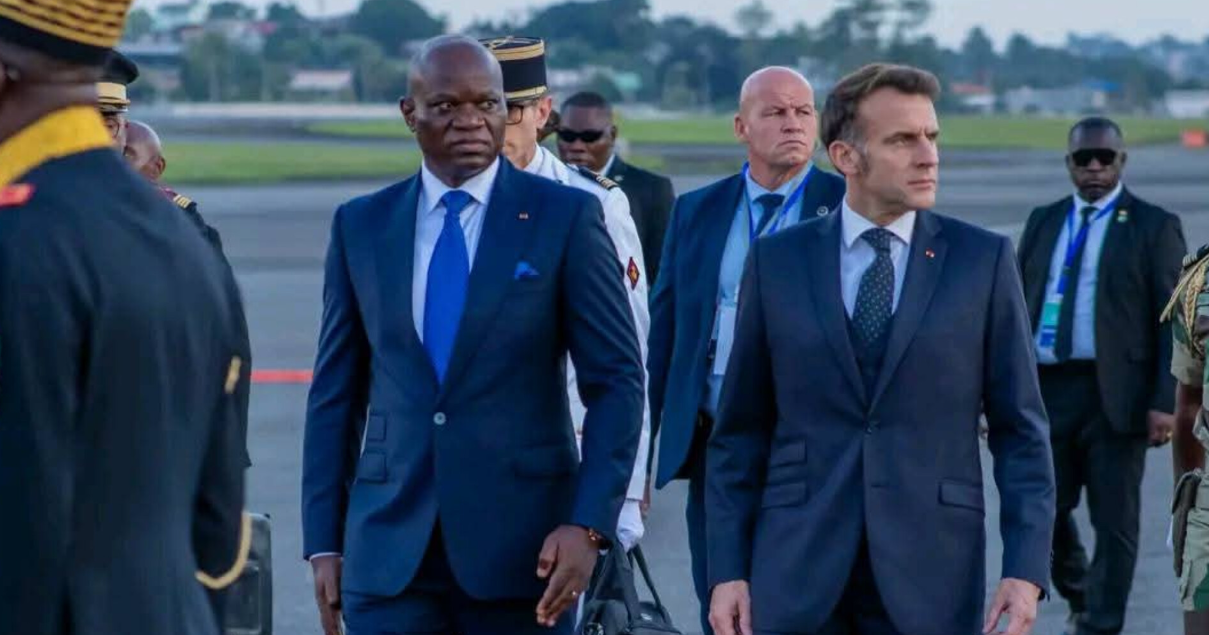
The Gabonese head of state, General Brice Clotaire Oligui Nguema, has just wrapped up a landmark three-day state visit to France, reshaping the contours of his nation’s relationship with its former colonial power. The discussions at the Élysée Palace centered on two pivotal issues: the future of the Camp de Gaulle military base and Gabon’s push to industrialize its manganese sector. Rather than opting for confrontation or submission, Libreville is charting a third path—one of strategic recalibration, where sovereignty and pragmatism coexist.
From military presence to mutual cooperation: redefining Camp de Gaulle
For decades, the Camp de Gaulle base served as a symbol of French military dominance in Gabon. However, the winds of change have swept across Central and West Africa, prompting a reassessment of this decades-old arrangement. While France has already begun downsizing its troop presence in the region, Gabon is not demanding an abrupt withdrawal. Instead, President Oligui Nguema is negotiating a phased transition that aligns with Libreville’s vision of enhanced sovereignty.
The Gabonese proposal is twofold: either transform the base into a jointly managed training hub or scale down French operations to a minimal footprint focused solely on technical cooperation and counter-piracy efforts in the Gulf of Guinea. This approach allows Gabon to reclaim strategic control without severing vital security ties, while France avoids the diplomatic fallout seen in neighboring countries that have taken a more confrontational stance.
Manganese power play: Gabon’s quest for local transformation
Gabon’s economic ambitions hinge on manganese, the nation’s second-largest export after oil. For years, the country has exported nearly all of its raw manganese overseas, missing out on the added value that comes from processing. That paradigm is now shifting. During high-stakes meetings in Paris, President Oligui Nguema delivered a clear ultimatum to French mining giant Eramet and its subsidiary Comilog: the future of their partnership depends on Gabon’s ability to develop its own high-value industries.
The Gabonese government is demanding a fairer distribution of profits, the creation of skilled jobs for its youth, and substantial investment in domestic processing plants. By leveraging its manganese resources—critical for electric vehicle batteries—Gabon aims to position itself at the heart of the global green energy transition, ensuring that its natural wealth translates into tangible economic growth.
Libreville’s pragmatic route vs. the Sahel’s isolationist gamble
This state visit underscores Gabon’s distinctive diplomatic strategy. While the military juntas of the Alliance of Sahel States (AES)—comprising Bamako, Niamey, and Ouagadougou—have embraced loud anti-Western rhetoric and abrupt policy shifts, Gabon is pursuing a different model. Rather than trading one dependency for another or risking economic isolation, Libreville is embracing a balanced approach.
President Oligui Nguema’s method is one of Realpolitik: maintaining robust ties with France while diversifying partnerships with countries like China, Turkey, and India. This nuanced stance rejects the oversimplified narrative that African nations must choose between Western allegiance and sovereign independence. Instead, it proves that strategic alignment and assertive diplomacy can coexist without sacrificing national interests.
The dark side of progress: digital repression and democratic backsliding
Despite Gabon’s international acclaim for its diplomatic finesse, concerns linger closer to home. The government’s frequent internet disruptions and social media blackouts—justified under the guise of maintaining public order—have drawn sharp criticism from civil society and opposition figures. These measures, while framed as efforts to curb misinformation, risk undermining the very freedoms President Oligui Nguema champions on the global stage.
Observers note that France has privately emphasized the importance of upholding fundamental liberties during informal discussions. The challenge for Gabon’s leadership is clear: sustaining domestic stability while preserving the international credibility it has worked so hard to build. Striking this balance will determine whether the country’s diplomatic renaissance translates into lasting progress.
A new chapter for Gabon
As the state visit concludes, Gabon stands at a crossroads. By renegotiating its military footprint and demanding local value addition in its mining sector, the country is redefining its partnership with France on its own terms. Yet the road ahead is fraught with challenges—not least the need to reconcile its outward-facing sovereignty with the demands of a free and open society at home.
The success of Gabon’s strategy will hinge on two critical factors: delivering on its promises to the international community and ensuring that its citizens benefit from the same freedoms it advocates abroad. The coming months will reveal whether Libreville can walk this tightrope without stumbling—proving that Africa’s future need not be written in extremes, but in the art of the possible.