Gabon’s 2027 budget revolution: results over spending
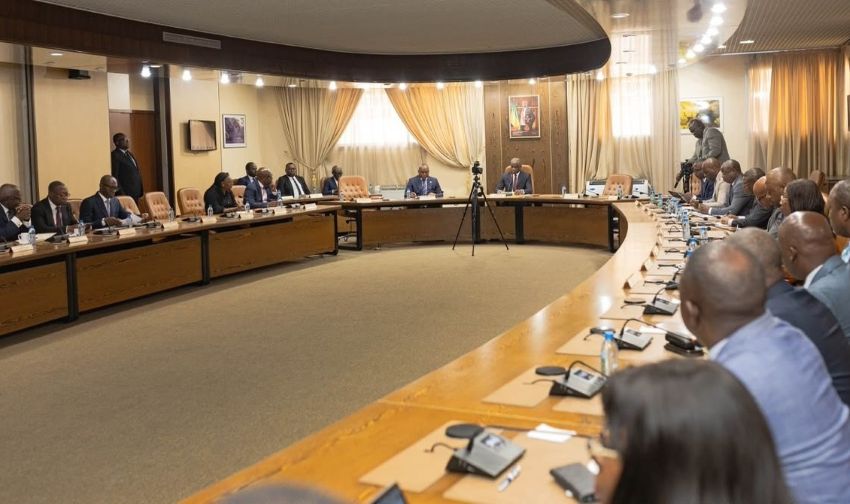
Libreville — The Gabonese government is set to launch one of the most ambitious budgetary reforms in its recent history. As preparatory conferences for the 2027 Finance Bill commence, authorities aren’t merely initiating another annual accounting exercise. They are signaling a decisive break from decades of administrative management focused on credit consumption rather than measurable outcomes.
To government departments, the message is unambiguous: budgets will no longer function as mere operational envelopes. Every franc allocated must now demonstrate tangible impact on the economy, infrastructure, public services, or employment. In a region where public spending efficiency remains a persistent economic concern, Gabon aims to transform its budget into a powerful instrument for national transformation.
Ending automatic budget allocations
The reform hinges on a fundamental principle that remains revolutionary across many African administrations. Public expenditure will no longer be justified by historical precedent but by its capacity to deliver concrete results. New performance benchmarks will include roads delivered, schools constructed, electricity access improved, jobs created, businesses supported, or additional revenue generated.
This shift also targets long-criticized practices such as automatic credit renewals, insufficiently documented expenditures, and revenues bypassing official Treasury channels. Departments must now submit comprehensive, evidence-based proposals with precise objectives. Public agencies’ generated resources must be fully accounted for and reintegrated into state finances to enhance transparency and fund traceability.
For international partners, this evolution sends a strong signal in an era where budget governance quality increasingly determines economic credibility.
Ambitious growth under scrutiny
The administration forecasts 5.1% growth for 2027, up from the approximately 4% expected this year. This acceleration would stem primarily from public and private investments alongside productive sector development.
Notably, budget projections adopt conservative oil price assumptions, demonstrating a commitment to gradually reduce the economy’s vulnerability to international energy market fluctuations. Manganese, processed wood, and palm oil emerge as key growth drivers identified by authorities, confirming the long-stated but rarely so determinedly pursued economic diversification strategy.
The challenge remains formidable. Few oil-producing nations have successfully escaped hydrocarbon dependence without implementing profound economic and public governance reforms.
Balancing fiscal discipline with social imperatives
Budget preparation coincides with ongoing discussions with the International Monetary Fund. Authorities have nonetheless reassured the public on one critical point: financial imbalance reduction must not come at the expense of citizens.
Social spending will be protected, particularly in water access, electricity, healthcare, education, and support for vulnerable households. Six key priorities already structure current deliberations: improving water and energy services, youth entrepreneurship, infrastructure, housing, social justice, sustainable development, and institutional strengthening.
The equation remains complex. Scarce resources face immense social expectations. The true test of the 2027 budget won’t lie in parliamentary figures but in the state’s ability to convert allocated credits into visible results for citizens. Ultimately, neither macroeconomic projections nor budget tables will determine the reform’s success. The verdict will belong to the people themselves.
If schools function better, water and electricity become more accessible, youth find greater opportunities, and infrastructure genuinely develops, Gabon will have succeeded in its transition to a new public management culture. Otherwise, the results-based budget will merely join the ranks of Africa’s unfinished reform narratives. The year 2027 could thus mark a pivotal moment for Gabonese economic governance—and potentially a model observed far beyond its borders.