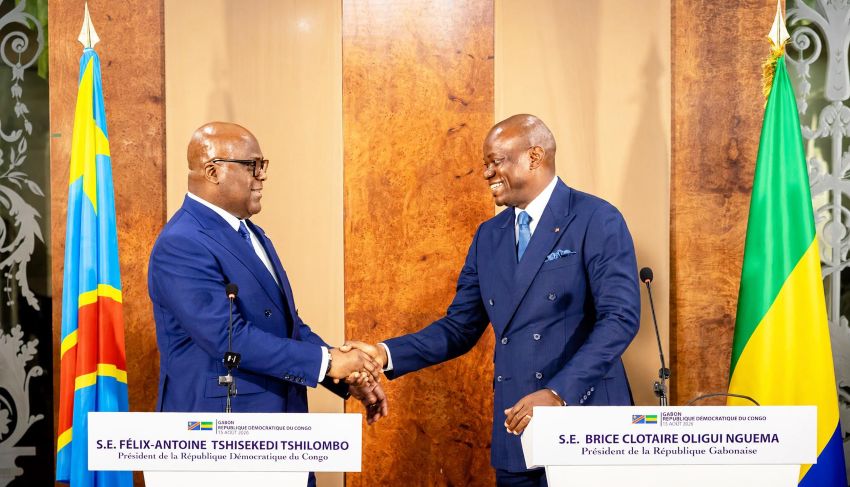
Gabon and Democratic Republic of Congo forge stronger partnership during presidential visit
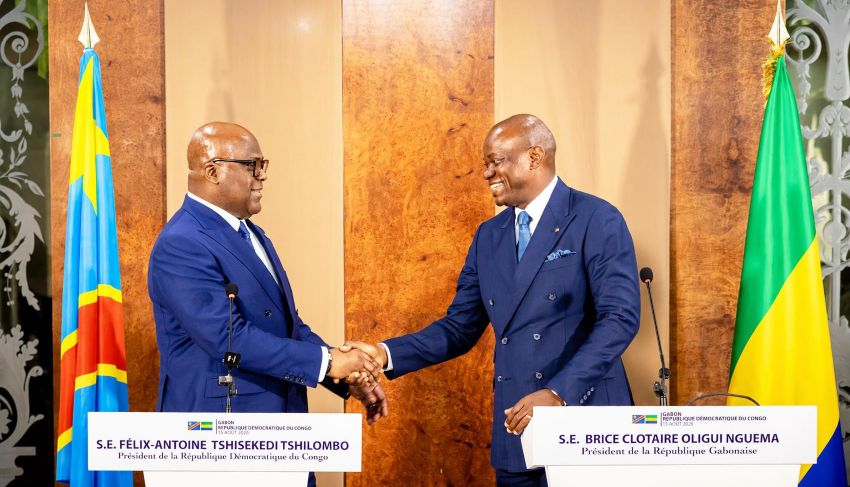
Libreville, August 15, 2026 — The visit by Félix-Antoine Tshisekedi Tshilombo to Libreville transcended the usual diplomatic formalities. Behind closed doors, exchanges between the President of the Democratic Republic of Congo (DRC) and his Gabonese counterpart, Brice Clotaire Oligui Nguema, revealed a shared ambition: to elevate bilateral relations into a powerful engine for economic growth, regional stability, and African solidarity.
Three landmark agreements emerged from these discussions, signaling a new chapter in Gabon-DRC cooperation.
The timing of President Tshisekedi’s visit coincided with Gabon’s 66th Independence Day, lending symbolic weight to the occasion. More than a diplomatic gesture, the visit underscored the deep bonds between the two nations and their leaders’ commitment to long-term collaboration. Key areas of focus included agriculture, infrastructure, transportation, energy, mining, health, education, vocational training, digital innovation, and cultural exchange.
At the core of these discussions was a shared vision: both countries possess vast resources, but their true potential lies in local transformation, job creation, and the free flow of African expertise, capital, and know-how.
From historical ties to economic empowerment
The two heads of state emphasized the urgent need to accelerate the local processing of natural resources. This strategic shift aims to reduce dependence on raw material exports while fostering greater value addition within their borders.
President Oligui Nguema highlighted Gabon’s ongoing reforms in digitalization, women’s empowerment, youth employment, living standards, and natural resource valorization. President Tshisekedi praised these initiatives and expressed the DRC’s eagerness to deepen ties with Gabon.
While economic cooperation dominated the agenda, the talks also addressed pressing regional challenges. Transnational organized crime, regional integration, and the conditions for lasting peace and stability were all on the table. The leaders also turned their attention to the Congo Basin—a critical ecological zone requiring cross-border solutions for its preservation.
Climate financing, particularly around carbon pricing mechanisms, emerged as another potential area of collaboration. As African nations seek to amplify their climate contributions on the global stage, a united Gabon-DRC stance could strengthen their negotiating position.
The partnership extends to continental diplomacy as well. Gabon is seeking Kinshasa’s backing for its candidacy to the ITU Council ahead of the Doha elections in November 2026, as well as its bid to host the African Union Summit in 2027. For Gabon, this would mark a historic return to hosting a major continental event, nearly half a century after its last summit in Libreville in 1977.
Three agreements to turn words into action
The visit’s significance lies in the concrete commitments formalized between the two governments. The first agreement spans multiple sectors, including justice, environment, health, and mining, with a strong focus on local resource transformation. The second establishes visa exemptions for holders of diplomatic and service passports. The third creates a framework for regular diplomatic and political consultations.
A Joint Commission will oversee the implementation of these agreements—a critical step to ensure these commitments translate into tangible projects with measurable impact. African partnerships often falter at this stage, where declarations fail to materialize into funded, monitored, and evaluated initiatives.
Gabon and the DRC now have a roadmap to follow. The challenge ahead is to convert signatures into construction sites, declarations into investments, intentions into jobs, and diplomatic relations into visible benefits for both populations.
The visit concluded with a moment of reflection at Libreville’s Sainte-Marie Cathedral, a site with deep ties to Congolese history. The cathedral’s halls bore witness to a memorial mass held in February 2018 in honor of Étienne Tshisekedi, father of the current DRC president.
The path forward demands more than symbolic gestures; it requires organized, financed, and results-driven solidarity. Between Libreville and Kinshasa, the moment has arrived to turn history into collective strength. The agreements signed provide the framework. The Joint Commission must now set the pace.
Africa no longer needs to merely proclaim its solidarity—it must organize it, fund it, and transform it into tangible outcomes. Gabon and the DRC have taken the first step. The rest depends on action.
You may also like
Moussa Kaka’s disappearance in Niger: the far-reaching consequences for citizens, the press and West Africa’s economy
Lyon’s goalless stalemate with Chelsea: the real-world fallout for fans, clubs and the women’s game
Eastern DRC peace mediation: what the latest Tshisekedi letter to Gnassingbé means for civilians and local businesses
Mali: JNIM ambush on Russian Africa Corps convoy near Niono — what it means for civilians and local trade
Mali’s poverty crisis: how hunger and hardship are reshaping daily life for millions