French national day: France reaffirms support for peace efforts in DR Congo
- Politics
During celebrations marking the French National Day, Ambassador Rémi Maréchaux delivered a powerful message reaffirming France’s unwavering commitment to peace in eastern Democratic Republic of Congo (DRC), deepening bilateral cooperation, and championing multilateral solutions to regional conflicts.
Speaking at his residence in Kinshasa before a diverse gathering of dignitaries, diplomats, and civil society leaders, Maréchaux emphasized that July 14th commemorates not the nation’s independence or a political anniversary, but the ideals of the 1789 French Revolution: liberty, equality, and fraternity.
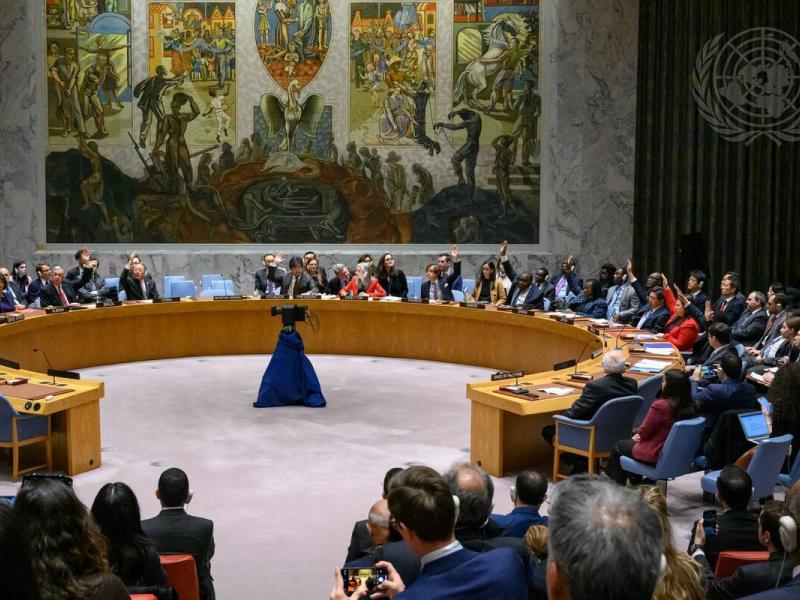
Turning to the security situation in eastern DRC, the French envoy reiterated France’s active role at the United Nations Security Council, pushing for sustainable solutions to the ongoing conflict. He highlighted France’s leadership in securing key resolutions aimed at restoring stability in the region.
“The Democratic Republic of Congo is facing profound challenges—above all, a prolonged war in its eastern provinces. France has been at the forefront at the UN Security Council, advocating for critical resolutions to end hostilities. Resolution 2773, adopted unanimously, establishes the framework for a peaceful resolution: the M23 must immediately cease hostilities, withdraw its forces, and dismantle all illegal parallel administrations. Rwanda must halt its support for the M23 and withdraw its troops from Congolese territory.”
The ambassador also referenced Resolutions 2808 and 2825 (2026), which extend the mandate of MONUSCO for another year and renew sanctions against armed groups in DRC until July 1, 2027, respectively. He praised ongoing mediation efforts led by the United States, Qatar, and the African Union, stressing that diplomacy remains a strength, not a sign of weakness.
“Two additional resolutions empower MONUSCO to support the implementation of the Washington Agreement and renew sanctions against armed groups, while also extending the mandate of the Group of Experts documenting the conflict’s realities. France supports and encourages these mediation efforts. As President Tshisekedi declared on June 30, the path of negotiation reflects strength, not weakness—grounded in the principles of national sovereignty and territorial integrity.”
Beyond multilateral engagement, Maréchaux underscored the importance of bilateral cooperation between France and DRC, particularly in security. He cited France’s recent support in rebuilding a Jungle Brigade battalion in Kisangani, with plans to train a second battalion later this year.
“France’s multilateral commitment is complemented by bilateral action—strengthening state authority through police and military cooperation. I visited Kisangani in March to oversee the regeneration of a Jungle Brigade battalion with French trainers. A second battalion will follow in October.”
The ambassador celebrated DRC’s growing international influence, noting its recent return to the UN Security Council—where it currently holds the presidency—as well as its leadership in the UN Human Rights Council and the International Conference on the Great Lakes Region. He also highlighted DRC’s enhanced role in the Francophonie, including the candidacy of Juliana Lumumba for Secretary-General of the International Organisation of La Francophonie.
“These milestones are not just victories for the DRC—they are victories for the world. In an era where international relations are increasingly dominated by power imbalances, France champions an inclusive multilateralism that gives Africa a stronger voice in global governance.”
Maréchaux’s remarks come at a pivotal moment, as DRC navigates both internal crises and renewed global interest. “The world is recognizing the DRC’s potential—its strategic role in the energy transition and climate action cannot be overstated,” he said.
His statement follows the signing of the Washington Peace Agreement, brokered by the United States, which outlines measures for de-escalation, the phased withdrawal of Rwandan forces, and the neutralization of armed groups like the FDLR—considered by Kigali a security threat. Despite this diplomatic progress, the security situation in eastern DRC remains volatile, with M23 rebels maintaining control over key cities like Goma and Bukavu.
The ambassador’s speech also referenced the stalled Doha process, aimed at fostering dialogue between the Congolese government and the M23 rebellion. While international condemnation of external support for armed groups persists, the gap between diplomatic commitments and ground realities continues to widen.