Francophonie election 2026: France’s hidden agenda under scrutiny
The International Organisation of La Francophonie (OIF) is set to elect its new Secretary-General on November 15 and 16, 2026, in Phnom Penh, Cambodia. This leadership role, which spans four years, carries significant influence over the diplomatic balance among Francophone nations across Africa, Europe, and the Americas. Yet, as the election approaches, questions arise about France’s true intentions behind the scenes.
Rumors now confirm that French President Macron’s administration is quietly pushing for the candidacy of former Romanian Prime Minister Dacian Ciolos to replace Rwanda’s outgoing Secretary-General, Louise Mushikiwabo. This move comes despite France’s public diplomatic overtures toward the Democratic Republic of the Congo’s candidate, Juliana Amato Lumumba, a former Minister of Culture and Arts.
The question lingers: Why is France, seemingly divided between supporting the Congolese candidate and the Rwandan contender, now positioning a third figure—Ciolos—as a compromise? The situation becomes even more perplexing when considering Rwanda’s strained relationship with the French language and its two completed terms under Mushikiwabo’s leadership.
Can the Democratic Republic of the Congo’s leadership aspirations be dismissed?
The DRC, home to over 100 million French speakers, boasts vibrant Francophone universities and media outlets. It stands as the beating heart of the Francophonie. Yet, France’s apparent reluctance to endorse Lumumba’s candidacy raises concerns about its commitment to recognizing the DRC’s central role in this cultural and political alliance.
If France’s covert maneuvers succeed in blocking Lumumba’s election, the DRC may need to reconsider its relationship with France. As the world’s largest Francophone nation, the DRC deserves fair and respectful treatment from Paris. The OIF’s leadership is not merely a ceremonial position—it wields substantial, if subtle, influence over the geopolitical dynamics of Francophone countries.
A leadership void demands the right choice
The next Secretary-General must embody experience, neutrality, and unwavering motivation to guide the OIF effectively. Juliana Amato Lumumba fits this profile, offering the stability and vision required to navigate the complexities of the Francophonie. Her candidacy represents an opportunity to reaffirm the values of diversity and cooperation that define this global alliance.
The stakes are high. The decision in Phnom Penh will shape the future of Francophone diplomacy for years to come. Will France prioritize its strategic interests over the principles of equality and representation? The world is watching.
Related Posts
Senegal politics: diouf fires warning shot at sonko over constitutional reforms
Diomaye Faye’s Government Rejects Sonko’s Constitutional Reform Proposals During a press conference held by the Diomaye Président coalition, Minister Abdourahmane…
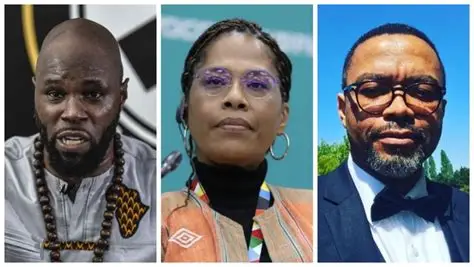
Panafricanism in crisis as kémi séba’s allies abandon him
Once a prominent figure in Africa’s identity-driven activism, Kémi Séba now finds himself in a state of unprecedented isolation. His…
Prime Minister Al Aminou Lo’s inaugural address hints at tensions with Ousmane Sonko
Prime Minister Al Aminou Lo’s inaugural address hints at tensions with Ousmane Sonko During his inaugural address, Prime Minister Ahmadou…