
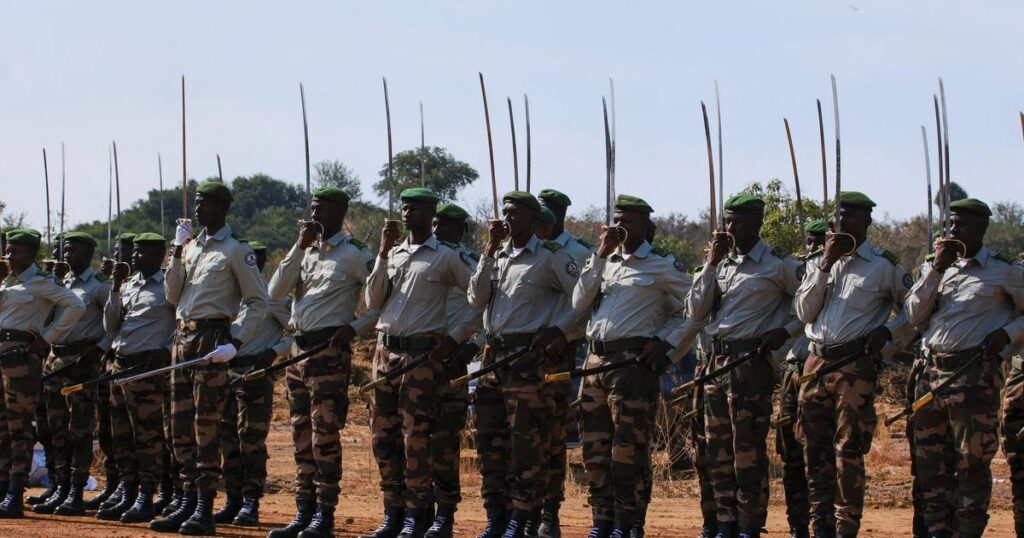
Mali’s military government, supported by Moscow, is currently embroiled in a desperate fight for survival. Recent coordinated offensives by jihadist groups and Tuareg rebels led to the death of the defense minister and compelled Russian mercenaries to withdraw from the northern regions. This volatile situation intensifies concerns that the pervasive instability could trigger a fresh wave of migration towards Europe and accelerate a broader security collapse across the entire Sahel region.
The recent assaults starkly highlighted the profound fragility of the ruling junta, whose future now hangs precariously. However, the repercussions of a destabilized Mali, exacerbated by the wider impact of the Iran war, are unlikely to be contained within its borders. Instead, they threaten to deepen an already deteriorating security crisis throughout one of the globe’s most turbulent areas.
The danger of insecurity spreading across West Africa’s permeable borders, potentially impacting even stable democracies like Senegal and Ghana, is a tangible threat. The profound suffering inflicted by insurgent groups operating in largely ungoverned territories will inevitably compel populations to seek refuge elsewhere.
This unfolding crisis is not isolated; it occurs amidst a complex global backdrop. Fuel price surges stemming from the Iran war are poised to intensify Mali’s economic woes, rendering daily life unbearable for many. As a landlocked nation, its government will struggle to finance essential imports, driving many to seek opportunities abroad. European nations must prepare for an increase in migration from the Sahel, particularly at a time when the Middle East conflict is pushing the eurozone into a troubling combination of stagnant growth and elevated inflation.
Despite its perceived geographical distance, the Sahel is deeply interconnected. Millions of Malians and Burkinabe already form significant labor forces in neighboring Senegal and Côte d’Ivoire. In the coming months, even more will likely relocate to these former French colonies to escape the dire conditions at home, intensifying competition for jobs. Data from the European border agency Frontex indicates that Malians are already among the top three nationalities arriving in Spain’s Canary Islands, a critical transit point for African migrants heading to Europe.
Mali has endured a state of protracted crisis for over a decade, battling a relentless jihadist insurgency, the devastation of farmland due to climate change, and the near collapse of state institutions following coups in 2020 and 2021. This prolonged instability, coupled with the ineffectiveness of Russian forces deployed after Mali’s rejection of French and EU troops, paints a bleak near-term outlook. Amidst this turmoil, Mali’s military leader Assimi Goita recently reappeared after weeks of absence, while Russia claimed to have foiled a coup attempt, underscoring the ongoing political flux.
The withdrawal of Russian elements from much of northern Mali is expected to create a power vacuum, potentially allowing jihadist groups to establish new training camps in these vast, vacated areas. This scenario paves the way for further expansion, a prospect particularly alarming for Algeria.
A void of governance in the north would invariably benefit illicit networks, including arms dealers, drug smugglers, and human traffickers. These groups frequently traverse Mali and neighboring Niger on established routes leading north to Libya and Mauritania, serving as primary conduits from sub-Saharan Africa to Europe.
The insurgency has not only entrenched itself in Burkina Faso and Niger but is now pushing into the Gulf of Guinea nations of Benin and Togo. These coastal countries are far more integrated into global trade than their landlocked Sahelian counterparts. The insurgents, who operate with ease, crossing borders and dominating vast rural areas in Mali and Burkina Faso, now feel emboldened to set their sights on capital cities.
While jihadist forces are currently unable to seize Bamako, the capital, it remains uncertain whether Mali’s military government can withstand the ongoing attacks. The government’s effective control over the nation is now largely confined to Bamako itself. This critical situation demands the urgent attention of governments across West Africa and thousands of miles away in Europe.
You may also like
-
Côte d’Ivoire strengthens digital trust with national pki launch
-
Senegal’s president diomaye faye inaugurates new party amid sonko split
-
President Diomaye issues stern warning amid political shifts in Senegal
-
President Diomaye Faye unveils ‘Kiiraay: the republican patriots’ in Sénégal
-
Rennes Confirme sa Forme face au Club Bruges, Monaco S’est Incliné au Portugal Face au Sporting