drc’s political landscape: opposition challenges tshisekedi’s potential third term bid
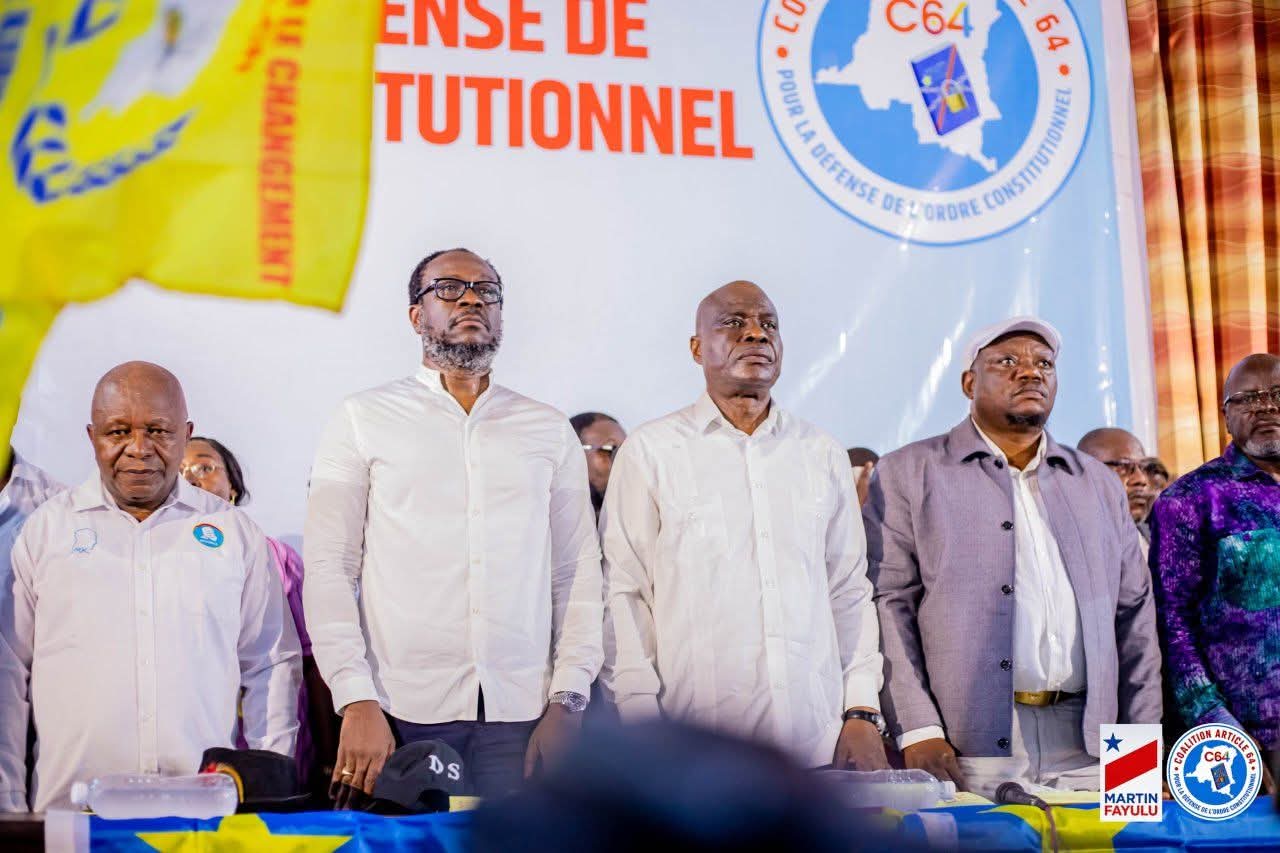
As discussions around a potential constitutional revision advance in the Democratic Republic of Congo (DRC), significant voices are rising in protest, fearing an attempt to consolidate power. On June 3rd, a coalition of political opponents and civil society organizations, known as the C 64, called upon Congolese citizens to observe a ‘dead city’ day. This action was a direct challenge to President Félix Tshisekedi’s perceived ambition to seek a third presidential term. The initial mobilization proved remarkably successful, demonstrating strong public adherence to the call. Kinshasa, typically a bustling metropolis, experienced a noticeable slowdown, with numerous businesses remaining shuttered throughout the day.
DRC constitutional revision: a battle of wills
Encouraged by the success of this inaugural ‘dead city’ protest, the opposition is likely to sustain its mobilization efforts, hoping to compel President Félix Tshisekedi to abandon his pursuit of a third mandate. However, current indications suggest that the incumbent leader, who shows no intention of retiring after his two constitutional terms, will not be easily swayed. To achieve his objective, Tshisekedi appears to favor a referendum, a strategy designed to bypass fundamental legal provisions and create the impression of popular endorsement for his political ambitions. This approach is not new in Africa, where, as exemplified by the late Omar Bongo of Gabon, referendums are rarely organized with the expectation of defeat. Convinced of his path, Félix Tshisekedi seems resolute in seeing his plan through. Already, in a clear counter-move to the opposition’s growing dissent, the Congolese government is mobilizing its own supporters. Pro-constitutional change religious leaders have announced a street demonstration for June 5th, aiming to express their backing for the Head of State. It is becoming increasingly apparent that the fate of the DRC’s constitutional revision will ultimately be determined by the prevailing balance of power on the ground. The proposed changes will likely proceed if the scales tip in Tshisekedi’s favor, but they could be shelved if the opposition effectively leverages its political strength. This dynamic reflects a recurring pattern in African politics, where leaders often repeat past errors while expecting different outcomes. Notably, Félix Tshisekedi himself, when in opposition, fiercely resisted similar attempts by then-President Joseph Kabila to secure another term in 2018. Faced with widespread Congolese mobilization, Kabila eventually retreated, opting to handpick a successor, Emmanuel Ramazani Shadary, who was ultimately defeated in the subsequent election under well-documented circumstances.
Tshisekedi’s priorities questioned amidst national crises
Having ascended to power under widely discussed circumstances, Félix Tshisekedi now appears to succumb to the temptation of retaining power, maneuvering for a third term despite the DRC grappling with a severe security crisis that threatens the very fabric of the nation. Indeed, significant portions of the country’s eastern region remain outside Kinshasa’s effective control, signaling profound peril. Should a sociopolitical crisis compound the existing security challenges, the DRC risks a catastrophic decline. Furthermore, the ongoing Ebola epidemic continues to wreak havoc across the country. Instead of prioritizing these urgent national emergencies, President Tshisekedi seemingly adds another layer of complexity to an already precarious situation. It is worth recalling that prominent religious leaders, in a social pact presented to the Congolese Head of State, had urged him to initiate an immediate, inclusive dialogue with all national stakeholders to find holistic solutions to the DRC’s myriad problems. Several months have passed since then, with no visible progress in that direction. The reasons remain unclear: does Tshisekedi believe he holds a position of unassailable strength? We cannot say for certain. What is evident, however, is a recurring pattern in African leadership, where politicians often fail to learn from the mistakes of others, persisting in their chosen paths until they are ultimately overwhelmed by their own misjudgments.