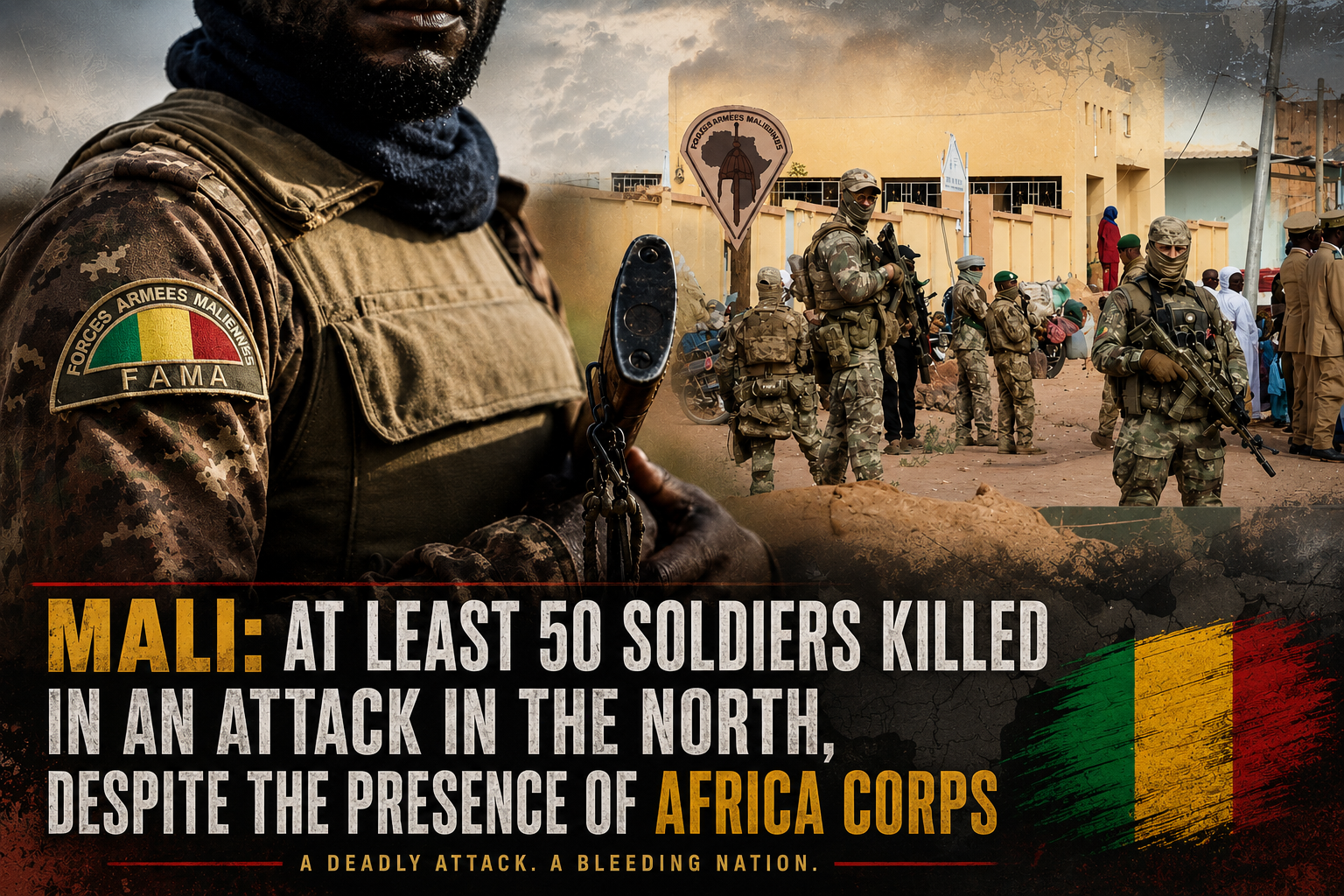
The security crisis in northern Mali deepened this week following a large-scale attack that left at least 50 soldiers dead. The assault, carried out by separatist fighters aligned with jihadist groups, underscores the persistent failure of existing military strategies despite the presence of foreign support.
Mali’s military bears the brunt of renewed violence
The latest attack, which targeted a military position in the northern region, has reignited debates about the real impact of Africa Corps—a foreign military assistance mission deployed to bolster Mali’s security forces. While officials had framed the partnership as a game-changer, capable of providing critical military expertise, the continued rise in deadly attacks suggests a different reality.
Analysts point out that Africa Corps’ role appears to be largely limited to technical support, training, and advisory functions, with minimal involvement in high-risk combat operations. This raises concerns about whether such a partnership is delivering tangible security gains or merely serving as a symbolic presence.
Questions over Africa Corps’ operational role
Critics argue that a military partnership must be judged by its ability to shift the balance of power on the ground, not just by the volume of assistance provided. If Africa Corps’ involvement does not translate into measurable improvements in security—reducing attacks, protecting civilians, or strengthening Malian forces—its credibility and long-term value come into question.
Questions persist about the mission’s actual level of engagement. Is Africa Corps equipped to take on more decisive roles, or is it constrained by political or operational limitations? The lack of clarity on its responsibilities fuels skepticism about its ability to address Mali’s worsening security environment.
A call for greater transparency and accountability
Calls are growing for full disclosure of Africa Corps’ objectives, operational activities, and achievements since its deployment. Without concrete evidence of its effectiveness, the mission risks being seen as an expensive but ultimately ineffective solution to Mali’s security challenges.
For many citizens, the debate is no longer theoretical—it is about survival. Each attack that claims military and civilian lives underscores the urgency of finding a strategy that delivers real protection. Until then, the partnership with Africa Corps will remain under intense scrutiny, with many questioning whether it is the right approach to countering the threat.
As Mali grapples with this crisis, the lessons drawn from Africa Corps’ deployment could influence security strategies across the Alliance of Sahel States. The key question remains: Can foreign military partnerships truly stabilize the region, or are they merely a short-term fix in an enduring conflict?