
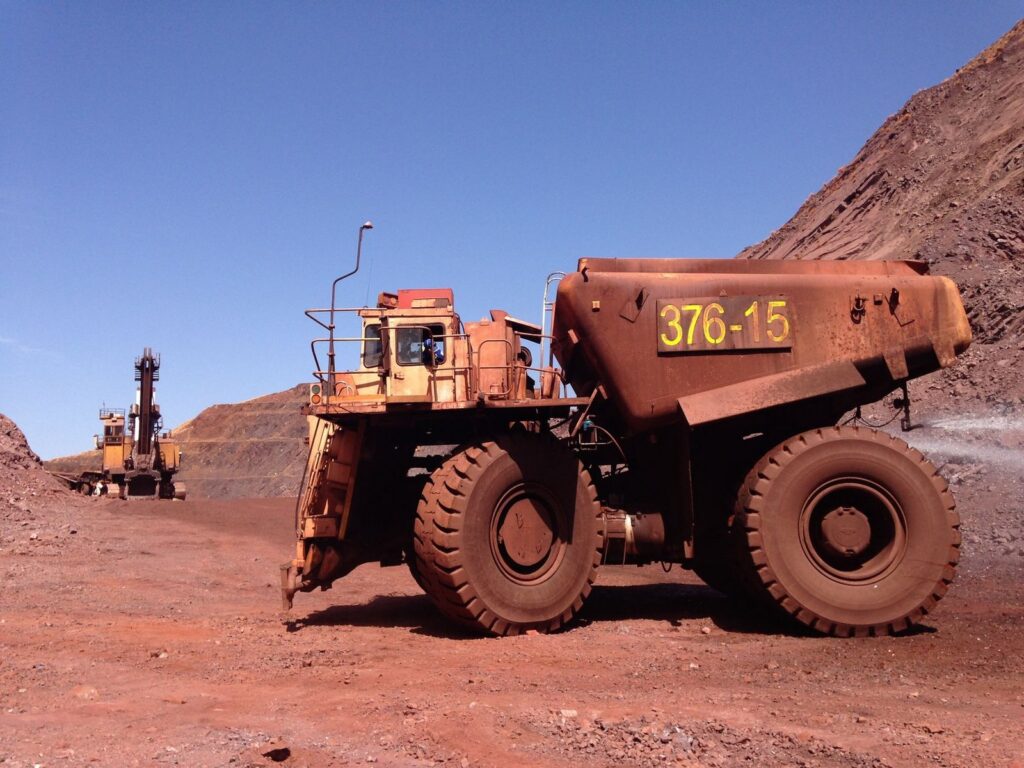
The African continent holds a significant portion of the world’s critical minerals reserves, essential raw materials driving the global energy transition and digital revolution. A pivotal conference, convened on July 27, 2026, under the theme « Africa at a Crossroads: Navigating Global Geopolitical Competition in the Era of Critical Minerals », illuminated the profound challenges ahead. Public policymakers, extractive sector analysts, and civil society representatives shared their perspectives on this strategic shift, which is actively reshaping the continent’s economic and security landscape.
Geopolitical competition reshaping Africa’s political economy
Global demand for cobalt, lithium, nickel, graphite, and rare earth elements is skyrocketing, fueled by the electrification of transport and the expansion of digital infrastructure. Africa, home to nearly 30% of identified strategic mineral reserves, finds itself at the epicenter of a complex geopolitical contest. Major global players like Washington, Beijing, and Brussels, alongside emerging powers such as Abu Dhabi, Riyadh, and Ankara, are actively pursuing bilateral partnerships, equity stakes, and investment opportunities within key mining corridors across the continent.
Speakers at the conference underscored how this intense competition is fundamentally altering Africa’s political economy. Producing nations now possess unprecedented negotiating leverage, yet they remain vulnerable to volatile commodity prices and the allure of resource rent. The Democratic Republic of Congo for cobalt, Guinea for bauxite, Zimbabwe for lithium, and Mozambique for graphite offer diverse case studies, demonstrating how mineral attractiveness can either foster industrialization or exacerbate instability.
Mining governance and security architecture under strain
The issue of governance was a central focus of the discussions. Participants highlighted that, for the most part, value addition continues to occur outside the continent. Refining, chemical processing, and battery manufacturing supply chains are predominantly concentrated in Asia, leaving African producing nations largely confined to raw material extraction. However, several recent initiatives aim to reverse this trend. The agreement between the DRC and Zambia to establish a regional electric battery value chain stands out as a leading example of this ambitious shift.
Concurrently, the extraction of critical minerals frequently takes place in regions grappling with latent or overt conflicts. Eastern DRC, the Sahel, and certain areas of the Gulf of Guinea exemplify this dangerous convergence of rich subsoil resources and institutional fragility. This dynamic sustains a war economy where armed groups exploit opaque export channels. Speakers advocated for strengthened traceability mechanisms, similar to those implemented by the Extractive Industries Transparency Initiative (EITI), and called for more assertive pan-African coordination.
Towards a second independence through local transformation
The phrase « second independence » resonates strongly within African mining circles. It embodies the ambition to break away from a colonial-era model where the continent exports raw materials only to import high-value manufactured goods. Achieving this vision requires substantial investments in energy infrastructure, the training of skilled engineers, the establishment of special economic zones dedicated to metallurgical processing, and a fundamentally rethought mining taxation framework.
Several nations are proactively advancing their strategies. Guinea has mandated the construction of an alumina refinery on its territory as part of the massive Simandou project. Zimbabwe imposed a ban on raw lithium exports as early as 2022. Namibia and Botswana are exploring regulatory frameworks that enforce a minimum percentage of local transformation. These decisive policy choices, which occasionally face resistance from international investors, signify a doctrinal departure from the mining liberalism prevalent in the 1990s.
The deliberations also addressed the crucial role of African financial institutions, which are tasked with structuring appropriate financing vehicles for transformation projects. The African Development Bank (AfDB) and Afreximbank are developing dedicated instruments, while Gulf sovereign wealth funds are showing increasing interest in African mining assets. The struggle for mineral sovereignty will be waged as much in the mines as in the financial markets. This conference confirmed that mastery over critical minerals is now a defining characteristic of 21st-century African power.
You may also like
-
Marafa Hamidou Yaya: the political fall of Cameroon’s former strongman
-
Russian mercenaries Wagner group exploiting centrafrica’s resources through violence and fear
-
Mali’s political crisis: arbitrary detentions and judicial challenges
-
Chad’s deepening authoritarianism: a return to single-party rule?
-
Mali’s shrinking information space and presidential power consolidation