Economy & Finance
China supplies 30% of Chad’s imports while UAE dominates exports — a tale of two trade giants
Two economic powerhouses shape Chad’s trade landscape, but in starkly contrasting roles.
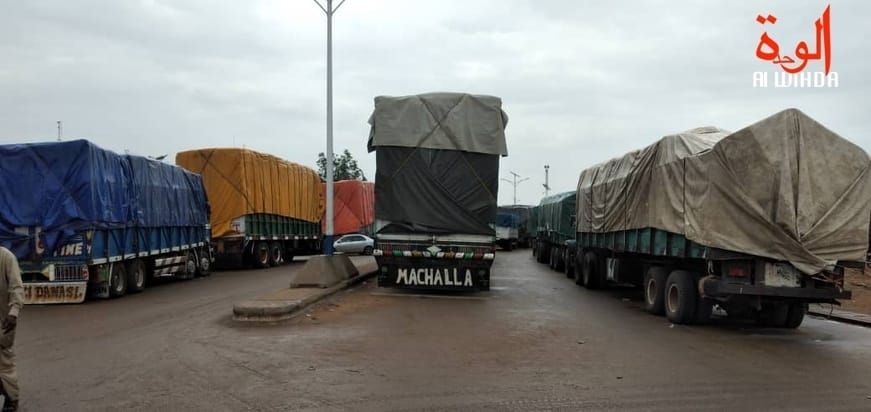
China: Chad’s top import supplier
In 2025, Chad imported goods worth 306.5 billion FCFA from China, accounting for 30.7% of its total imports — a figure that dwarfs every other supplier. Cameroon, the distant second, supplied just 108.4 billion FCFA, less than a third of China’s volume. Libya ranked third with 85.8 billion FCFA (8.6%).
The goods flowing from China into Chad tell a clear story: machinery, industrial equipment, and everyday consumer products dominate. This mirrors the classic North-South trade pattern, where an African nation absorbs Asia’s industrial output in exchange for raw materials — a model China has perfected across Africa over the past two decades.
The UAE: a strategic export hub
The export side of the equation looks entirely different. The United Arab Emirates stands as Chad’s largest buyer, purchasing goods worth 333.3 billion FCFA in 2025 — 26.2% of all exports. It outpaces Malaysia (297.8 billion FCFA, 23.4%) and Germany (279.9 billion FCFA, 22%).
The UAE’s role isn’t just as a final consumer; Dubai and Abu Dhabi function as global trade hubs. Crude oil from Chad often passes through these cities, where it may be refined or blended before being shipped to other markets. While profitable for the UAE, this arrangement means N’Djamena rarely knows the ultimate destination of its own resources.
Key trade statistics at a glance:
- 30.7% of Chad’s imports come from China — a regional high
- 26.2% of Chad’s exports are bought by the UAE
- 79.8% of imports originate from the top 10 suppliers
Western partners lose ground
France, despite its historical ties to Chad, ranks only sixth among import suppliers, providing just 5.1% (50.9 billion FCFA). The United States follows closely at fifth with 53.0 billion FCFA (5.3%). These figures highlight a gradual shift in Chad’s trade partnerships toward Asia, the Middle East, and emerging economies, leaving traditional Western powers behind.
Other key suppliers include India (4.3%), Togo (3.6%), Brazil (2.9%), and Turkey (2.3%), showing Chad’s efforts to diversify import sources — though China remains the dominant player by volume.
A call for trade diversification
The data reveals a stark imbalance: Chad sells to a small group of highly concentrated buyers (the top 10 account for 98.9% of exports) while relying on a slightly broader but still China-dominated pool of suppliers. This dual concentration leaves the country vulnerable to external shocks. Expanding trade partnerships — both for imports and exports — could help stabilize Chad’s economic position in an unpredictable global market.
You may also like
Ivory Coast’s World Bank portfolio: what the $5.3 billion reveal means for jobs and the road ahead
Nanga armored vehicles: mounting fallout, public backlash and where Burkina Faso goes from here
After the eyeglasses verdict in Cameroon, a reckoning for the press and its critics
Mali’s official narrative stirs debate as Goïta’s promises collide with daily struggles
Nanga armoured vehicles: Burkina Faso’s ‘made in Burkina’ claim sparks national debate as questions mount