A sudden oil eruption, environmental concerns, disputes over foreign expert intervention, and an ultimatum to Chinese partners — in Niger, the Goumeri W8 incident has evolved far beyond an industrial accident. It now exposes the strains within a strategic energy partnership, just as Niamey seeks greater control over its natural resources.
Agadem Basin — Oil extraction is rarely a smooth process. Since the eruption at the Goumeri W8 well on September 25, the incident has set off a chain reaction of industrial, financial, and diplomatic pressures that extend well beyond the drill site.
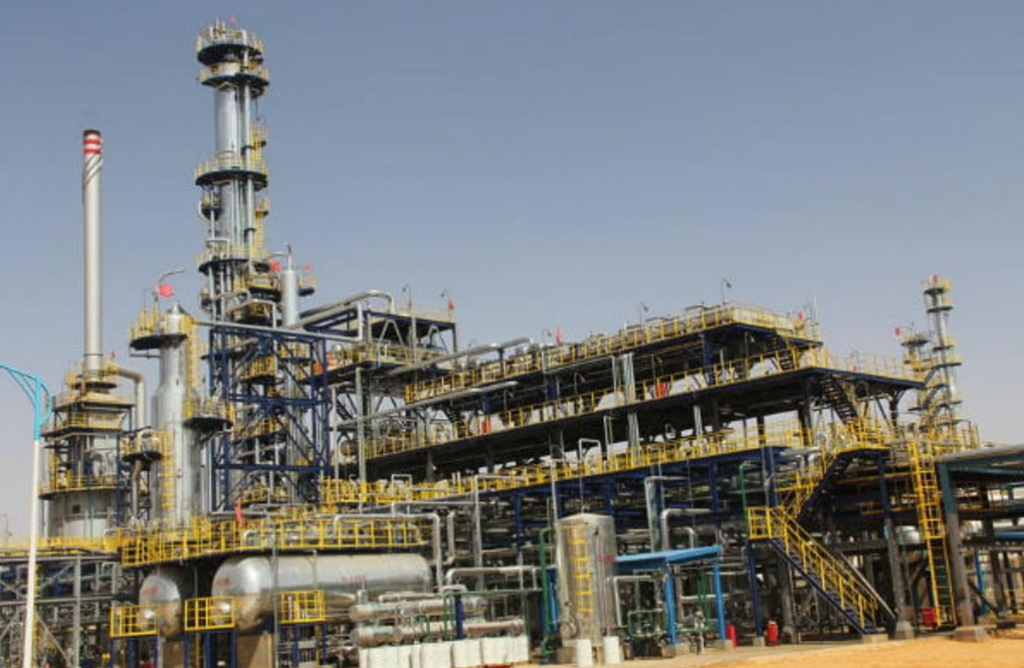
Operated by CNPC Niger Petroleum, this facility lies at the heart of a growing crisis where technical failures, economic stakes, and international relations are now inextricably linked.
Emergency response or coordination breakdown?
On September 25, a violent blowout at Goumeri W8 sent crude oil and gas surging from the well. The force of the eruption damaged the platform and raised immediate concerns for neighboring wells, particularly Goumeri W3 and W4.
On October 12, Niger’s ministry of petroleum acknowledged the incident as exceptionally severe. Two workers exposed during the initial hours were hospitalized. By that date, officials claimed partial containment, though full control of the eruption remained uncertain.
In an industry where precision is critical — where pressure, temperature, and equipment integrity cannot be compromised — every decision carries weight. Poor coordination, delays in implementing solutions, or misjudged risks can deepen an already critical situation.
Yet it is the management of operations that continues to raise the most urgent questions.
According to sources close to the matter, CNPC teams were already working to contain the leak when Nigerien authorities requested support from Algerian technicians. This move reportedly sparked disagreements over operational coordination and the role assigned to the Chinese operator.
While this account demands scrutiny, caution is essential: without verified operational documents or independent corroboration, it cannot be confirmed whether the Algerian intervention occurred against CNPC’s wishes or exacerbated the incident.
Still, one critical question remains unanswered: in an emergency of this scale, who leads the response? Who validates technical decisions? And how do the various actors coordinate their efforts?
The answers are vital. Beyond any partner disputes, the overarching goal must remain the same: stop the blowout and secure the site definitively.
Algeria’s role: assistance or interference?
By enlisting Algerian expertise, Niamey turned to a regional partner with deep experience in hydrocarbon management. The delegation sent to Niger included representatives from Algeria’s Sonatrach, among other sector specialists.
Officially, the mission was framed as technical support for a complex incident — a standard practice in the industry when a major failure occurs. Additional expertise can often accelerate solutions.
Yet the context gives this intervention added significance.
Sources suggest tensions had previously arisen over operational parameters at the SORAZ refinery, where adjustments to hydrocarbon flow reportedly raised technical concerns. These claims, however, remain unverified and do not in themselves imply Algerian responsibility for any incident.
Nonetheless, the issue of coordination cannot be ignored. On a site operated by CNPC, the involvement of specialists mandated by Nigerien authorities must fit within a clear chain of command — with defined responsibilities and strict adherence to safety protocols.
Niger has every right to seek the expertise it deems necessary. But industrial emergencies demand that all mobilized skills operate under coherent protocols, with decisions guided by verifiable technical considerations.
In this case, transparency is all the more crucial given that suspicions spread faster than official explanations.
Surface containment: a short-term fix with long-term risks
Beyond the damaged equipment, concerns extend to the soil, water, and communities in the surrounding region.
To contain the spill, retention systems were deployed. Reports mention the use of bulldozers to create sand berms and earthen barriers around affected areas.
While such measures can help limit surface spread, they do not address a subsurface blowout. Their effectiveness depends on the nature of the flow, terrain conditions, and the ability of teams to recover hydrocarbons without shifting pollution elsewhere.
The risk is clear: oil may disappear beneath the sand, creating the illusion that the problem is solved.
Yet a sand-covered surface is not necessarily a decontaminated one. Hydrocarbons may remain trapped, while certain components could, depending on local conditions, seep into groundwater. Vapors and gases associated with the oil also pose health risks to those nearby.
For local communities, the questions are immediate. Are water resources still safe? Have pastoral lands been contaminated? Do exposed workers and residents receive health monitoring? And who will cover the costs of any damage?
At this stage, available information does not permit a precise assessment of the pollution’s extent. It would be reckless to declare a full-scale ecological disaster. But it would be equally irresponsible to downplay the risks without independent, verifiable analysis.
Regular sampling, mapping of affected zones, and public disclosure of results are indispensable. Remediation must be evaluated based on measurable data, not just the absence of visible oil.
On October 20, Niger’s ministers of petroleum and environment stated that the spill had been contained and that securitization efforts were ongoing. They also mentioned plans for a directional relief well, Goumeri W-8R, with work scheduled between October 24 and December 26.
This step could prove decisive. Yet it does not absolve authorities and the operator from another critical obligation: determining the full extent of the damage and ensuring the restoration of affected environments.
The $400 million factor reshaping the debate
Understanding why Goumeri W8 has become such a sensitive issue requires looking beyond the well itself.
China plays a central role in Niger’s oil industry development. Since the launch of the Agadem Basin operations, investments in production facilities, the Zinder refinery, and export pipelines have transformed the sector’s prospects.
This cooperation enabled Niger to develop an integrated oil industry — but it also created strong interdependence between the state and its Chinese partners. Infrastructure, technical skills, and commercial networks are deeply intertwined. A prolonged deterioration in relations could therefore have consequences far beyond a single site.
In April 2024, the Nigerien government announced an agreement with CNPC for a $400 million advance on future oil revenues. The sum was to be repaid over twelve months from the first export proceeds, at an interest rate of 7%.
This mechanism provided Niger with early access to financial resources. It also underscored that the oil relationship between the two countries is not merely technical — it is built on precise commercial and financial commitments.
The amounts involved are substantial. By June 2026, cumulative investments in the oil sector had reportedly reached $8.34 billion, encompassing contributions from the Nigerien state, CNPC, and SOPAMIN.
However, attributing the entire sum solely to China would be inaccurate. The figure instead illustrates the scale of capital invested in the sector’s development.
In this context, every disagreement takes on added weight. For Niamey, the priority is ensuring that oil revenues truly benefit the country. For Beijing, contractual obligations and operational continuity are essential to protecting its investments.
Both interests can coexist — provided the rules are clear and disputes are resolved based on verifiable data.
Niamey’s ultimatum: a warning with wider implications
On October 13, 2026, Nigerien authorities gave CNPC, WAPCO, and SORAZ a 45-day deadline to address multiple contractual concerns.
The government accused the companies of alleged breaches related to the repatriation of export earnings, the hiring of Nigerien workers, and compliance with state agreements.
According to statements by foreign minister Bakary Yaou Sangaré, authorities claim over 3,000 billion CFA francs in export revenues were not repatriated since April 2024, alongside a shortfall of 17.4 billion CFA francs for the public treasury.
These figures carry serious implications. Yet, at this stage, they reflect the grievances raised by Nigerien authorities. Their final interpretation requires examining contracts, financial flows, and the companies’ potential responses.
Nonetheless, the ultimatum marks a hardening of tone. Niamey is demanding answers and compliance with its requirements, especially as oil remains a major factor in public finances and economic ambitions.
The question now is what will happen when the deadline expires. Will the companies meet the government’s demands? Can negotiations bridge the gaps? Or will the disputes lead to further measures?
For now, it is impossible to predict the outcome of this standoff. But one thing is clear: the Goumeri W8 crisis comes at the worst possible time for a relationship already strained by financial and contractual disputes.
China faces a more demanding partnership
The relationship between Niamey and Beijing is entering a phase where economic cooperation alone is no longer enough to smooth over differences.
The Nigerien government seeks greater control over its oil revenues and stricter enforcement of partner commitments. This push aligns with a broader assertion of economic sovereignty.
Yet sovereignty is not just about issuing ultimatums to foreign companies. It also means controlling operations, auditing accounts, enforcing contracts, and protecting citizens.
CNPC remains a key player in Niger’s oil sector. A prolonged confrontation could complicate operations, erode partner confidence, and hinder efforts to secure Goumeri W8.
This does not mean Niamey should abandon its demands. But their implementation must rely on verifiable evidence, clear procedures, and a strategy that safeguards the country’s long-term interests.
The challenge is substantial: securing greater economic benefits without undermining the very industrial infrastructure that generates those revenues.
Algeria: the third player in a delicate equation
Algeria, too, finds itself at the center of attention.
By requesting Sonatrach’s assistance, Niamey sought regional expertise to address an extraordinary situation. This decision can be seen as a quest for technical support in a moment of crisis.
Yet it occurs in a climate where every action is interpreted through the lens of Niger-China relations.
The arrival of Algerian experts does not, in itself, indicate an attempt to sidelining CNPC. No public evidence sufficiently supports the claim that Algeria seeks to replace Beijing in Niger’s oil framework.
However, questions about the distribution of responsibilities must be taken seriously. Who approves operations? Who is accountable for on-site decisions? How are expert recommendations integrated into the operator’s intervention plan?
Clarifying these points would prevent diplomatic speculation from overshadowing safety imperatives.
Algeria can provide its expertise. CNPC must be able to fulfill its operator responsibilities within a clearly defined framework. And the Nigerien state must ensure oversight, coordination, and the protection of public interest.
Only under these conditions can international assistance effectively contribute to resolving the crisis.
Beyond rivalries: the need for established facts
In this affair, suspicions abound — as do questions. But answers cannot rely solely on anonymous testimonies or political interpretations.
The independent investigation announced by Nigerien authorities must determine the circumstances of the blowout, review early decisions, clarify the responsibilities of all involved, and assess environmental consequences.
It must also explain how teams were coordinated and which measures could have limited the damage.
Publishing its findings would be essential to restoring trust. It would help distinguish technical difficulties from potential breaches, contractual disputes from safety liabilities, and verified facts from unverified accusations.
CNPC, Sonatrach, and Nigerien authorities must each present their accounts and supporting evidence. The severity of the incident demands rigorous examination — not a trial based on assumptions.
Goumeri W8: a test of resource sovereignty
At its core, the Goumeri W8 crisis raises a question Niger cannot avoid: how can it assert sovereignty over its natural resources without compromising the safety of its facilities and the stability of its partnerships?
The $400 million advance, the billions invested in oil infrastructure, Niger’s financial demands, and the presence of Algerian experts each tell part of this story. Together, they paint a picture of a relationship where economic interests, technical choices, and diplomatic balances have become impossible to separate.
Yet oil itself cares little for rivalries between capitals or contractual negotiations. As long as a well remains unsecured and contaminated soil untreated, the risks persist.
For Nigerien authorities, the dual priority is clear: demand answers from partners while ensuring the industrial crisis does not leave lasting harm to people and the environment.
For Beijing and Algiers, the challenge is to demonstrate that their cooperation with Niamey can operate transparently, respect each party’s responsibilities, and deliver tangible results.
At Goumeri W8, the real question is not which partner will emerge stronger from this standoff. It is whether Niger can contain the blowout, protect its citizens, and turn its oil resources into a driver of development — rather than another source of tension.