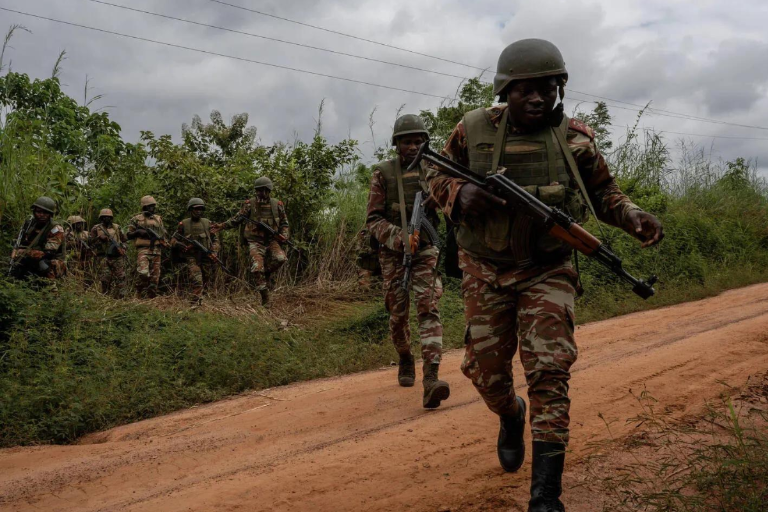
The question is no longer hypothetical: as terror threats surge along Benin’s northern borders, Berlin is recalibrating its military strategy in the Gulf of Guinea. Can this deepening partnership, marked by advanced equipment, expert deployments, and high-level consultations, become a game-changer for regional stability?
From tactical aid to strategic alliance: what’s changing in Benin-Germany military ties
What began as targeted military assistance has evolved into a multifaceted security partnership. Recent years have seen a notable shift from sporadic deliveries to a structured, long-term engagement. The latest move comes as Cotonou faces mounting pressure from armed incursions in its northern departments, including Atacora and Alibori, bordering Burkina Faso and Niger.
Germany’s response is multifaceted: equipment transfers, technical training, and now, the potential deployment of expert advisors. This progression reflects Berlin’s growing interest in anchoring its presence in a region increasingly vulnerable to spillover from the Sahel crisis.
A timeline of escalating cooperation
- 2024 – Delivery of €3 million worth of night vision and personal protection gear
- Early 2026 – Arrival of 550 helmets and 1,266 portable breathing devices
- September 2026 – Presentation of a comprehensive military support plan, including logistics equipment and specialized training
- October 2026 – Announcement of high-level joint staff consultations and a potential new bilateral agreement
- Late 2027 (projected) – Expected deployment of 6-8 German military experts to Benin
The strategic role of high-level dialogues
Military cooperation has now entered a new phase: one defined by dialogue at the highest level. According to Ambassador Stefan Buchwald, bilateral military staff meetings are being set up to align defense strategies and identify joint priorities. These talks signal a shift from transactional support to sustained collaboration.
The ambassador also highlighted a long-standing foundation: over 350 Beninese soldiers have received training in Germany over the past four decades. This historical continuity is now being leveraged to build a more ambitious framework for mutual defense.
Benin’s security challenges and Europe’s regional commitment
The growing instability in northern Benin has made cross-border terrorism a top priority. Germany’s involvement is part of a broader European strategy aimed at preventing Sahel-based extremism from spreading further south. The European Union has already committed €35 million through the European Peace Facility to support Benin’s armed forces, with additional measures under the EU’s security and defense initiative in the Gulf of Guinea.
By strengthening ties with Cotonou, Berlin is positioning itself as a key partner in shaping a coordinated regional security response. This approach not only enhances Benin’s defensive capabilities but also reinforces European strategic influence in West Africa.
What’s next for the Benin-Germany defense partnership?
While the details of the new bilateral agreement remain undisclosed, several developments are imminent:
- Expert deployment – The arrival of German military advisors, expected by the end of 2027, will mark a new phase in technical support
- Technical and logistical reinforcement – Continued assistance to Benin’s engineering corps and defense logistics
- Strategic alignment – Enhanced coordination between Berlin and Cotonou to synchronize defense policies with European initiatives
The ultimate test will be whether this evolving partnership translates into lasting operational capabilities for Benin and a durable security footprint for Germany in West Africa.
A turning point for Gulf of Guinea security?
As terror threats intensify and geopolitical tensions rise, Benin and Germany are navigating uncharted waters. The former’s search for dependable security partners and the latter’s quest to reinforce its strategic presence are converging into a new chapter in regional defense cooperation. Whether this alliance will redefine Gulf of Guinea security remains an open question—but the stakes could not be higher.