Alarm Bells Sound Over North Africa’s Evolving Narcotics Landscape
In a diplomatic firestorm that’s reshaping North Africa’s security calculus, fresh allegations have surfaced alleging foreign financing of psychotropic drug production facilities in eastern Libya. These claims, emerging amid escalating tensions between Algiers and Abu Dhabi, suggest a calculated effort to destabilize Algeria by flooding its streets with synthetic substances. But beneath the headlines, the evidence remains fragmented—and the question everyone is asking is: who is really pulling the strings?
From Transit Hub to Production Powerhouse: Libya’s Shocking Transformation
The Libyan landscape has long been a flashpoint for regional instability, but recent developments paint an alarming new picture. Once a mere transit zone for narcotics moving from the Levant to West Africa, the country now hosts clandestine industrial operations capable of churning out industrial-grade psychotropic tablets.
Judicial records from November 2026 reveal the scale of the crisis. A court in Qubbah, eastern Libya, sentenced six individuals for manufacturing Captagon, a powerful synthetic stimulant. The ringleader received 25 years in prison, while five others—tried in absentia—were handed life sentences. Authorities released stark visual evidence: seized tablets, packaging materials, and industrial presses used for production. This wasn’t a lone incident.
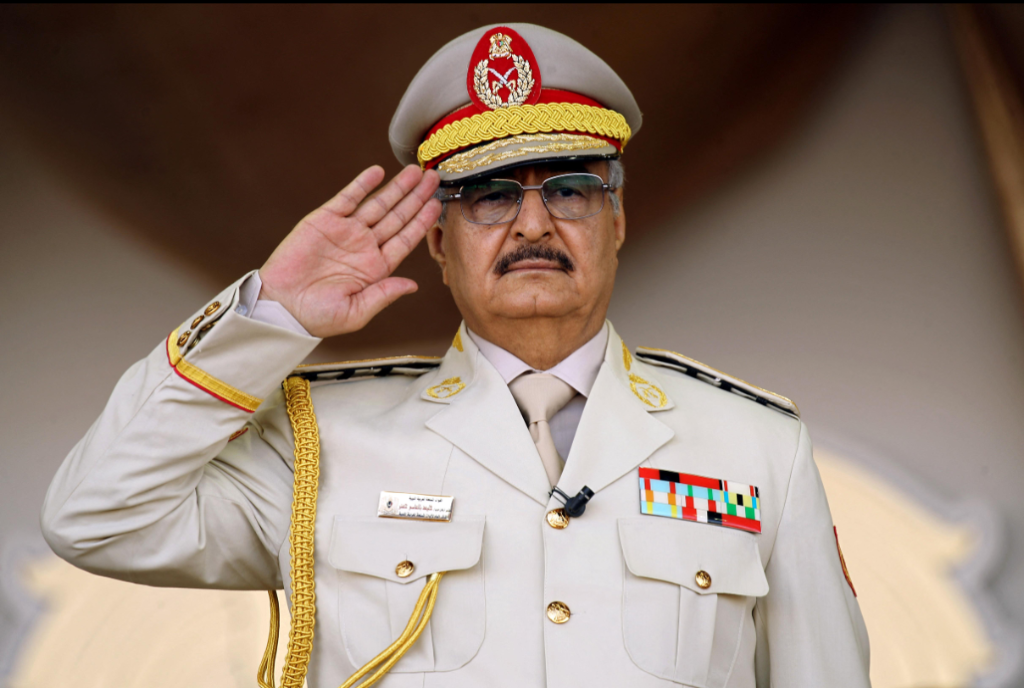
Less than a month earlier, Haftar’s Libyan National Army announced the interception of over 1.3 million Captagon tablets during a raid in Kufra. These seizures confirm a troubling trend: Libya has evolved from a transit corridor into a full-fledged production hub, with eastern regions emerging as key nodes in the synthetic drug supply chain.
Military Presence and Criminal Networks: An Unstable Alloy
The convergence of armed factions and organized crime in eastern Libya creates a fertile environment for illicit enterprise. Controlled loosely by Khalifa Haftar’s forces, this territory lacks central governance, enabling non-state actors to operate with impunity. Within this vacuum, industrial-scale drug labs have taken root—facilities requiring specialized equipment, chemical precursors, and logistical networks.
Yet even as these operations expand, the identities of those bankrolling them remain murky. While Haftar’s administration publicly condemns narcotics trafficking, reports indicate that some mid-level commanders benefit from protection fees and rents extracted from illicit production sites. The line between state security and criminal entrepreneurship blurs dangerously.
Diplomatic Hostilities and the Shadow of Geopolitical Responsibility
The timing of these revelations has ignited a diplomatic powder keg. Algeria severed ties with the United Arab Emirates in September 2026, citing divergent regional strategies and security concerns. In this charged atmosphere, allegations of foreign involvement in psychotropic production—especially those implicating Abu Dhabi—gain outsized significance.
According to prominent Algerian commentator Mehdi Ghezzar, the UAE is directly financing drug manufacturing facilities in eastern Libya, with the stated intent of destabilizing Algeria by targeting its youth. He asserts that these plants are “owned by the Emirates,” equipped with industrial machinery and staffed by specialized personnel. The accusation, though explosive, stops short of drawing legal conclusions. So far, no independent investigations have confirmed state-level UAE involvement.
The UAE’s Regional Role: A Question of Complicity or Culpability?
It’s no secret that Abu Dhabi maintains warm relations with Haftar’s Libyan National Army. The UAE has provided military support, political backing, and economic assistance to Haftar’s forces since 2014, in pursuit of a counter-Islamist agenda and a pro-Egyptian, anti-Turkish regional bloc. But does this alliance extend to tacit support for drug production?
To substantiate such claims, investigators would need to trace financial flows, identify shell companies or front organizations, and map equipment imports. They would also need to establish direct links between UAE officials or state-linked entities and the operational control of these facilities. Without such evidence, accusations remain speculative—albeit within the context of escalating regional distrust.
Algeria’s Leadership Sounds the Alarm on a ‘War Against the Youth’
In a stark address delivered during the opening of the 2026–2027 judicial year, Algerian President Abdelmadjid Tebboune framed the drug influx not as a law enforcement challenge, but as an existential threat. He described the surge in psychotropic trafficking as “a real war against our people and our youth,” signaling a willingness to intervene militarily at sources of production.
Tebboune’s rhetoric reflects a growing national consensus: the fight against synthetic drugs demands a holistic response. It requires dismantling cross-border supply chains, intercepting precursor chemicals, and dismantling financial circuits that enable mass production. But it also requires international cooperation—especially with Libya, Tunisia, and Morocco—to trace illicit flows back to their origins.
What’s at Stake: Public Health, Social Cohesion, and National Security
The proliferation of psychotropic substances in Algeria has triggered a public health emergency. Consumption is surging among young adults, with users often unaware of dosage or contamination risks. The social fabric is fraying as addiction spreads, school dropout rates rise, and community cohesion weakens. Meanwhile, criminal networks exploit economic desperation, recruiting impoverished youth as street-level dealers.
Algerian authorities have responded with aggressive border control, but interdiction alone cannot stem the tide. Prevention programs, rehabilitation centers, and targeted police operations are equally vital. Yet the greatest challenge remains identifying and dismantling the upstream networks—those that finance, supply, and protect the labs where these substances are manufactured.
Who Benefits? Mapping the Hidden Economic Ecosystem
The psychotropic drug trade is not a solo operation. It relies on an intricate web of actors: financiers, chemists, logistics coordinators, corrupt officials, and armed enforcers. In eastern Libya, these roles often overlap within militia structures.
Financial investigations in 2025 uncovered cases where UAE-based trading companies allegedly funneled chemical precursors into Benghazi and Tubruq under the guise of humanitarian or industrial shipments. While these shipments were not directly tied to drug production, they underscore how porous border controls and weak regulatory oversight enable diversion.
Similarly, Turkish and European networks have been implicated in exporting precursor chemicals to North Africa, often repackaged as legitimate pharmaceutical materials. These routes highlight the complexity of attribution—few, if any, direct lines lead from Abu Dhabi to a specific lab in Libya.
Legal Realities and the Burden of Proof
The international narcotics control regime is clear: trafficking is a crime, and state sponsorship is an act of aggression. But proving that a government finances or directs criminal enterprises abroad is legally and politically arduous. It requires admissible intelligence, corroborating witness testimony, and forensic financial evidence.
So far, Algeria has not provided public dossiers linking UAE authorities to drug labs in Libya. Instead, the claims rest on circumstantial evidence, media statements, and geopolitical inference. Until hard proof emerges, the accusations remain a diplomatic weapon—effective in shaping public narrative, but insufficient in a court of law.
What Would Credible Evidence Look Like?
To substantiate the claims, investigators would need to demonstrate:
- A clear financial trail from UAE entities to Libyan production sites.
- Direct ownership or operational control by UAE-linked individuals or shell companies.
- Evidence of state-level approval or protection, such as diplomatic pressure or intelligence sharing.
- Corroborating intelligence from third-party sources, such as intercepted communications or defector testimonies.
Without such findings, any assertion of UAE complicity must be treated as speculative—however resonant it may be in the halls of power in Algiers and Abu Dhabi.
Regional Implications: Could This Become a Proxy Drug War?
The unchecked growth of psychotropic production in Libya risks turning the country into a regional epicenter for synthetic drugs—with ripple effects from the Sahel to the Mediterranean. If foreign backers are indeed fueling this trade, they may be waging not only a criminal campaign, but a geopolitical one.
Egypt, Tunisia, and Algeria have all reported sharp increases in Captagon seizures. Morocco, once the world’s largest hashish producer, now faces a burgeoning synthetic drug problem. The entire Maghreb is becoming a consumer and transit zone for substances manufactured in Libya’s ungoverned spaces.
In response, regional intelligence agencies have intensified cooperation, sharing satellite imagery, financial data, and human intelligence. But these efforts are hamstrung by political divisions, weak institutions, and limited forensic capabilities in conflict zones.
As Libya’s role evolves from transit point to production hub, the international community must decide whether to treat this as a law enforcement issue—or a potential act of transnational aggression with state-level backing.
The Road Ahead: From Accusation to Accountability
The allegations swirling around Libya’s psychotropic boom demand more than geopolitical posturing. They require transparency, independent verification, and a commitment to international law. Algeria’s response—militarized border operations and presidential warnings—addresses symptoms, not causes.
For lasting change, the region needs a coordinated strategy: joint patrols on the Algeria-Libya border, joint investigations into precursor trafficking, and a regional treaty criminalizing synthetic drug production and financing. It also needs a mechanism to audit foreign funding flows into conflict zones.
The question is no longer who is trafficking drugs. It’s who is enabling the factories where they’re made—and what price the Maghreb will pay if these operations are allowed to scale unchecked.
The answer may define North Africa’s security future for decades to come.