Brazil’s 2026 election delivers a razor-thin victory to Lula amid high-stakes contestation
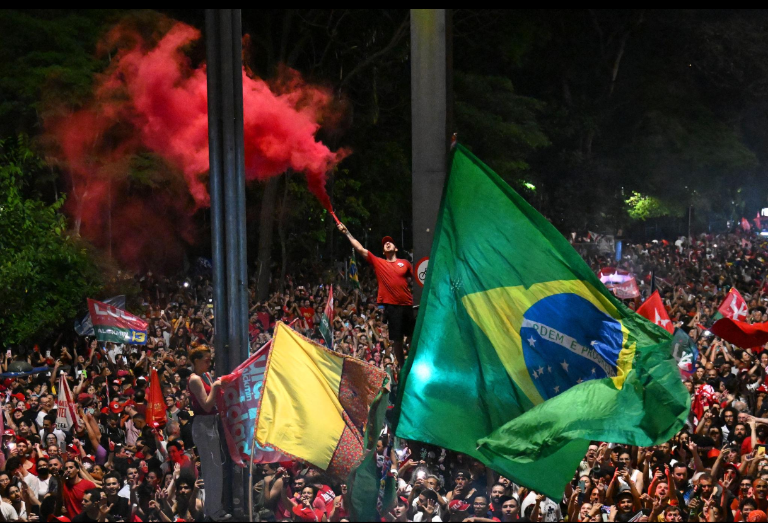
The question on every Brazilian’s mind this morning is not just who won — but whether the election’s outcome will be respected. Luiz Inácio Lula da Silva has secured a fourth term as president, with 51.79% of valid votes, defeating his opponent Flávio Bolsonaro by more than four million ballots. Yet the moment Lula’s victory was declared, the defeated candidate vowed to challenge the result in court, igniting a political firestorm that threatens to undermine the legitimacy of Brazil’s democratic process.
The official turnout data from the Superior Electoral Court (TSE) shows Lula ahead with 64,256,232 votes to Flávio Bolsonaro’s 59,826,041. While the margin appears decisive, the margin between lawful process and legal dispute is even narrower. And in a polarization-ravaged nation, every hour of debate now risks deepening societal fracture.
Why the vote extension has become the center of Brazil’s latest political storm
The legal clash over the election’s validity hinges on a single, contentious decision: a last-minute extension of polling hours on election day. Facing logistical challenges — including disrupted transport in Bahia and São Paulo — the Supreme Court, led by Justice Cristiano Zanin, extended voting until 7:00 PM Brasília time, two hours beyond the scheduled 5:00 PM close.
Flávio Bolsonaro’s camp has seized upon this procedural shift, arguing that it violated electoral equality. “The vote cannot be deemed credible under these circumstances,” he asserted, vowing to file a lawsuit demanding the election’s annulment. His legal team contends that the late change disrupted fairness and compromised voting integrity.
Yet here lies the paradox: both campaigns had requested extensions — just for different reasons. Bolsonaro’s team cited heavy rains in the south, while Lula’s coalition had pressed for relief in urban transport delays. The Supreme Court ruled in favor of extending access, yet now faces accusations from the losing side that it overstepped constitutional boundaries.
Lula begins his fourth term — with half the nation still against him
At 80 years old, Lula da Silva stands as one of the most resilient political figures in modern Brazilian history. Already a three-time president (2003–2010, and re-elected in 2022), he has now defied expectations again, overcoming an early lead by Flávio Bolsonaro in the first round and consolidating support in the runoff.
His victory is historic, but hollow. Forty-eight percent of voters chose the opposing side. That’s nearly 60 million Brazilians who reject his vision for the country. The challenge now is not just governing — it’s reconciling a deeply divided electorate, one whose trust in institutions is being tested in real time.
In a rare moment of unity in tone, Lula struck a unifying note after results were announced. “I will govern for all 215 million Brazilians,” he declared, acknowledging that not everyone voted for him. But whether that message can bridge ideological divides remains an open question — especially when half the nation believes the election was flawed.
From ballots to courtrooms: the high-stakes legal fight ahead
Flávio Bolsonaro’s legal challenge is not yet a coup attempt — but it carries the potential to destabilize Brazil’s young democracy. His team has signaled it will challenge the vote extension, the conduct of polling stations, and the role of the judiciary in shaping the electoral process. The argument is not one of fraud per se, but of procedural irregularity that, in their view, invalidates the entire result.
The risk is not hypothetical. Brazil has seen contested elections before. In 2022, legal challenges by Jair Bolsonaro’s camp stretched for weeks, eroding public confidence even as Lula was ultimately certified as president. This time, with the country’s political temperature already red-hot, any prolonged dispute risks deepening mistrust in both the electoral system and its guardians in the judiciary.
Can Brazil’s democracy withstand a contested transition?
The political landscape Lula inherits is one of sharp divides. On one side stands his legacy: social programs, poverty reduction, and a narrative of inclusion. On the other, Flávio Bolsonaro represents a conservative movement rooted in traditional values, law-and-order policies, and opposition to progressive reforms. The son of former president Jair Bolsonaro — now serving a 27-year prison sentence for attempted coup — Flávio bolsters his father’s legacy while positioning himself as the next standard-bearer of the right.
With a conservative-leaning Congress and a polarized electorate, Lula’s fourth term begins under a cloud of judicial and political uncertainty. The question now is whether Flávio Bolsonaro’s legal challenge will remain within constitutional bounds — or escalate into a legitimacy crisis that could test Brazil’s democratic resilience.
One thing is certain: Lula has won the election. Whether Brazil accepts that result — or spirals into further division — now depends on the courts, the constitution, and the collective will of a nation caught between hope and skepticism.
The road ahead: governance or gridlock?
As the legal dust settles, the focus shifts to governance. Lula must now navigate a fractured polity, a skeptical Congress, and a population deeply split over his leadership. Early signs suggest a conciliatory approach, with appeals for national unity. But with every new legal filing from Bolsonaro’s camp, the space for cooperation narrows.
Brazil stands at a crossroads. The world is watching. The question is no longer just who will lead — but whether the country can move forward together.