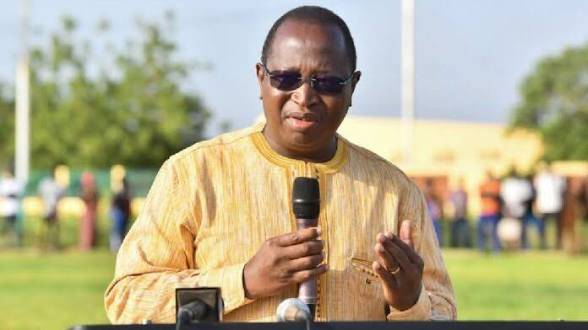
The Burkina Faso government’s latest move toward academic repression has raised a critical question: Is the country silencing the very voices it claims to need most? During a recent flag-raising ceremony at the Ministry of Education, Higher Education Minister Professor Adjima Thiombiano delivered a scathing rebuke to diaspora students who had dared to voice concerns online about the country’s educational system and national realities. Instead of fostering dialogue, the minister issued a blunt ultimatum: ‘If you aren’t satisfied, then leave.’
From criticism to criminalization: The cost of dissent in Burkina Faso’s universities
What began as a routine administrative event quickly exposed the regime’s intolerance for opposing views. By labeling diaspora students as ‘misguided youth’ and warning that ‘they will face every Burkinabè’ for their critiques, the minister framed dissent not as civic participation but as a national betrayal. This shift in perception is dangerous: it equates intellectual questioning with ideological subversion, turning academic spaces into surveillance zones where students are pressured to conform or face retribution.
The minister’s call for educators to ‘stand as a bulwark against behavior bordering on rebellion’ goes beyond mere rhetoric. It institutionalizes a culture of fear, where professors and administrators are encouraged to report, track, and suppress critical voices under the guise of maintaining order. But in doing so, the government isn’t just stifling debate—it’s dismantling the very foundation of higher education: the free exchange of ideas.
Diaspora students: Exiles or enemies of the state?
At the heart of this clampdown lies a fundamental contradiction. The government actively recruits skilled Burkinabè from abroad, urging them to return and contribute to the nation’s development. Yet, once they arrive—or even while they remain overseas—these students are met with suspicion if they dare question the status quo. Is Burkinabè citizenship now contingent on unconditional loyalty? The minister’s ultimatum suggests as much.
This double standard reveals a deeper issue: the regime views the diaspora not as assets but as potential threats. Students trained overseas often bring back diverse perspectives, innovative solutions, and a willingness to challenge inefficiencies. By dismissing them as ‘lost children’, the government risks alienating the very talent it claims to value, pushing them toward disengagement or permanent exile.
The NEKRÉ Pact: A hollow promise of educational reform
The minister’s attacks on dissent are framed within the launch of Burkina Faso’s NEKRÉ Pact, a sweeping initiative aimed at revamping the education system from preschool to university. But can a system truly be rebuilt when its architects fear critical thought? The pact’s vision—championed as a ‘rebirth of Burkinabè education’—lacks one crucial element: intellectual freedom.
Historically, universities have thrived as spaces for debate, inquiry, and dissent. Yet under this regime, academic halls risk becoming ideological barracks, where unquestioning obedience replaces scholarship. When a nation’s educators and students are discouraged from questioning, innovation stagnates—and so does progress. The NEKRÉ Pact, in its current form, risks becoming less a foundation for renewal and more a monument to repression.
Why Burkina Faso’s future depends on embracing—not silencing—its youth
This crackdown sends a chilling message: if you are young, educated, and unafraid to speak your mind, your place may no longer be here. For a country already grappling with instability, economic challenges, and social unrest, this approach is not only counterproductive—it’s self-destructive. Talented students, researchers, and professionals, whether at home or abroad, are the backbone of any nation’s advancement. When a government drives them away, it doesn’t just lose their skills; it loses its future.
The minister’s ultimatum to diaspora students is more than a policy statement—it’s a referendum on Burkina Faso’s values. Will the country cling to an authoritarian model that silences its best and brightest? Or will it rediscover the courage to engage with its youth, listen to their concerns, and foster an environment where ideas—critical or otherwise—can flourish? The answer will shape not just the fate of its universities, but the very soul of the nation.