The Cameroonian head of state has not been seen in public for 57 days, and sweeping military appointments are stoking fears of a power vacuum and ethnic succession struggle.
President Paul Biya, now 93 years old, has been absent from Cameroon for nearly two months following what was officially described as a brief private visit to Europe. Yet, as the days pass without a public appearance, the silence surrounding his whereabouts has become deafening. Meanwhile, a series of controversial military reshuffles has sent shockwaves through the corridors of power in Yaoundé.
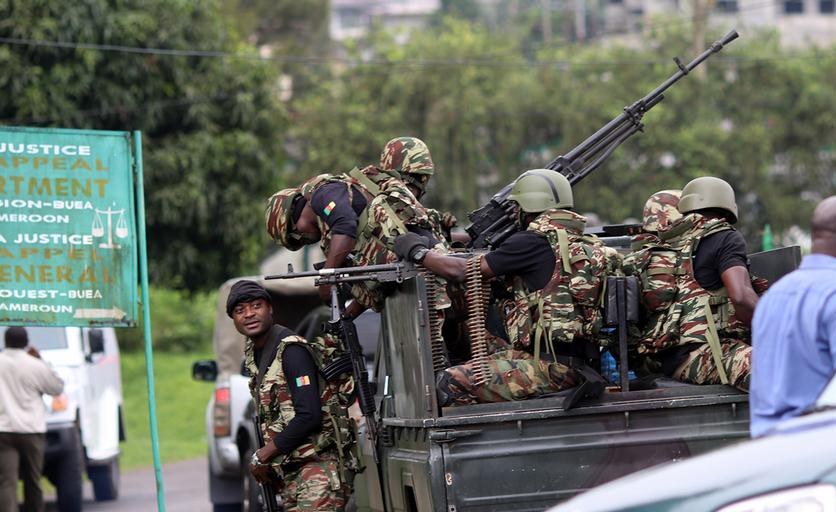
On August 3, 2026, a presidential decree (No. 2026/265) named General Beko’o Abondo Raymond Jean Charles as the new head of the Presidential Guard—a critical security unit responsible for protecting the president and ensuring the integrity of the presidency. This appointment was just one of several high-stakes changes within the armed forces, raising serious questions about who truly holds decision-making authority in the absence of the head of state.
The reshuffle did not stop there. The government also appointed:
- Five new brigadier generals
- A new Major General of the armed forces, General Ebaka Hippolyte
- Six new territorial commanders across four of Cameroon’s five military regions
These rapid-fire nominations, unprecedented in their scale and timing, have left many Cameroonians—and international observers—grappling with a single, unsettling question: Who is really in charge of Cameroon’s security?
An absence shrouded in secrecy
President Biya left Yaoundé on June 7, 2026, accompanied by his wife, Chantal, for what authorities described as a short private stay in Geneva. Two months later, he remains out of public view. Government officials insist he is alive and in good health, with a return expected soon. Yet, these assurances ring hollow for many, especially as rumors of health complications following a knee surgery in early July circulate unchecked. Cameroonians are demanding answers: Why risk destabilizing the country with such prolonged secrecy?
Roger Justin Noah, Secretary-General of the Movement for the Renaissance of Cameroon (MRC), voiced the frustration of many: “If the president is facing health issues, the Cameroonian people deserve transparency. Hiding in Switzerland while the nation waits is not governance—it’s abandonment.”
The specter of ethnic divisions and military factionalism
Within the walls of the Palais d’Etoudi, Cameroon’s power elite is fracturing into competing factions. Two dominant blocs have emerged:
- The Biya family clan, centered around the president’s eldest son, Franck Biya, seen as the guarantor of the regime’s continuity.
- The First Lady’s faction, led by Chantal Biya and Ferdinand Ngoh Ngoh, the powerful Secretary-General of the Presidency, who wields immense influence over state affairs.
The power struggle has intensified since April 2026, when parliament approved a constitutional revision reintroducing the office of vice-president—ostensibly to ensure a smooth transition in case of a power vacuum. Yet, the position remains vacant, leaving Cameroon without a clear line of succession. The result? A paralyzed state apparatus and a dangerous vacuum of authority.
Could Cameroon follow Rwanda’s tragic path?
Analysts warn that the current trajectory mirrors a perilous pattern seen in Rwanda before its 1994 genocide, where ethnic divisions were weaponized within the military. In Cameroon, where ethnic tensions simmer beneath the surface, the fear of one group monopolizing power is a ticking time bomb. As filmmaker and commentator Jean-Pierre Bekolo warned, “We are witnessing the militarization and ethnicization of succession—a path whose destination no one can predict.”
The opposition’s urgent call for constitutional clarity
The political opposition, led by Maurice Kamto of the MRC, has taken a bold stance. Deputies have formally petitioned the Constitutional Council to declare a vacancy of power, with legislator Jean-Michel Nintcheu declaring, “The Council must recognize that the state’s highest office is vacant.”
Yet, the constitutional mechanism is crippled. Without a vice-president, the procedure to trigger a succession cannot be activated. Cameroon is trapped in a legal and political deadlock—one that risks spiraling into chaos if left unresolved.
What could avert disaster?
While the situation is dire, experts suggest three critical steps to de-escalate tensions:
- Transparency: The government must publicly disclose President Biya’s health status and expected return timeline.
- National dialogue: A structured dialogue among political forces to address communal grievances and prevent further polarization.
- Restoring constitutional order: Appointing a vice-president to secure the line of succession and restore institutional trust.
The weight of silence
As Jean-Pierre Bekolo noted, “History remembers not only the actions taken but also the silences and blindness of those in power.” For over four decades, Cameroonians have endured an entrenched system. Yet, the current opacity and military power grabs threaten to push the nation toward an irreversible crisis. The warning is clear: Playing with fire will have consequences.
You may also like
Niger’s August mutiny: the fallout, the unanswered questions, and what lies ahead
What Benin’s AirBadminton gold over Mauritius really changes for the sport
Benin’s CCI budget for 2027 sparks debate: what the 6.6 billion FCFA plan means for businesses
Bambali agro park: what the launch means for Sédhiou and Senegal
Senegal’s palm oil deal with Indonesia: reactions, debate and what happens next