The immediate impact: a national team diverted from competition
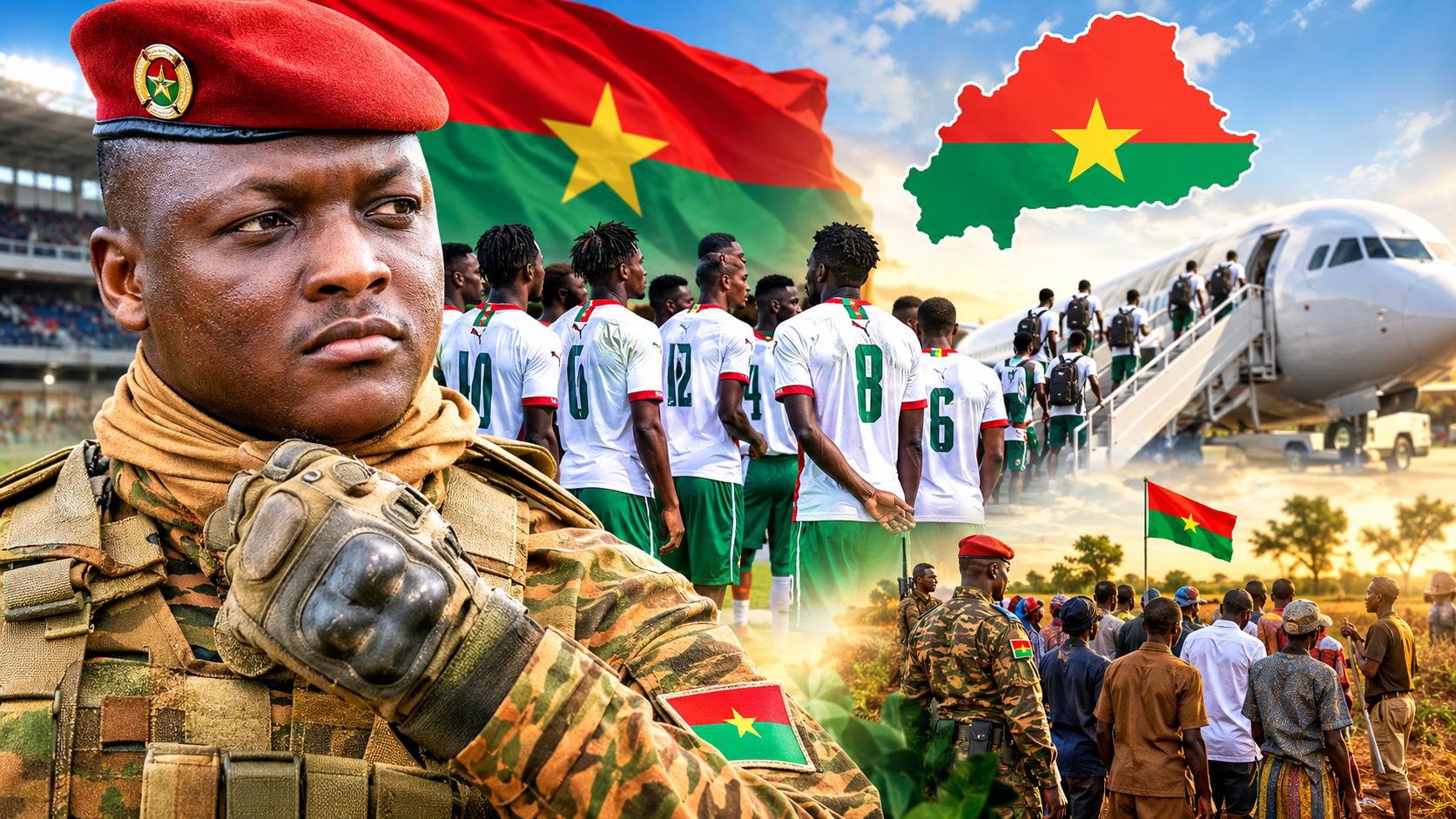
The reported absence of Burkina Faso’s senior national football team from a scheduled engagement in Argentina has triggered widespread concern. Information reaching this publication indicates that the entire squad was requisitioned at the behest of Captain Ibrahim Traoré under the framework of a so-called “patriotic insertion.” Should this account be substantiated, it would raise profound questions about the allocation of national priorities—and, more critically, about the tangible consequences for the country’s sporting ecosystem and its broader economic fabric.
From sporting ambition to patriotic duty: what is at stake for the nation
According to the information obtained, the players were summoned to participate in activities presented as part of a patriotic commitment. Such a scenario, if verified, would directly account for the team’s non-appearance in Argentina. The implications extend far beyond a single missed fixture: they touch upon the livelihoods of athletes, the morale of supporters, and the international standing of Burkinabè football.
An economy of sport left in limbo
The consequences of such a decision are not confined to the pitch. A national team’s participation in international fixtures generates revenue through broadcasting rights, sponsorship, match-day income, and tourism. When the squad is withdrawn, these economic benefits evaporate. Local businesses that rely on match-day traffic—from transport operators to hospitality providers—suffer a direct hit. Moreover, the uncertainty surrounding the team’s availability undermines investor confidence in the domestic sports sector.
Citizens caught in the crossfire of mobilisation
Beyond the economic dimension, the requisition of national players raises serious questions about the treatment of citizens who happen to be public figures. The players are not merely athletes; they are employees, family members, and community role models. Their sudden conscription into patriotic activities, without transparent justification, sets a precedent that could extend to other sectors. If the state can redirect a football team at will, what does that imply for ordinary workers, entrepreneurs, or students whose lives and livelihoods depend on predictability?
The incident also fuels a broader debate: to what extent can the mobilisation of citizens and institutions be justified in the name of patriotic effort? Burkina Faso has for several years experienced a pronounced militarisation of public life and the mobilisation of various segments of society around national endeavours. While the authorities justify these measures by citing security imperatives, their extension into domains such as sport demands rigorous documentation and explanation—particularly when the economic and social costs are borne by ordinary citizens.
The need for official clarity and accountability
It is essential to exercise caution. At this stage, the elements at our disposal rest on testimony transmitted by a correspondent and do not, by themselves, definitively establish that the entire senior squad was requisitioned on the orders of Ibrahim Traoré. Only official confirmation from the Burkinabè Football Federation, the Ministry of Sports, or the relevant authorities would clarify the exact circumstances of this absence.
Nevertheless, if the facts are confirmed, a critical question remains: is Burkina Faso progressively transforming all its sectors of activity into spaces of patriotic mobilisation, to the point where even the national football team may be called upon to prioritise other objectives over sporting competition? The answer will determine not only the future of Burkinabè football but also the broader impact on a society already navigating significant economic and social pressures.