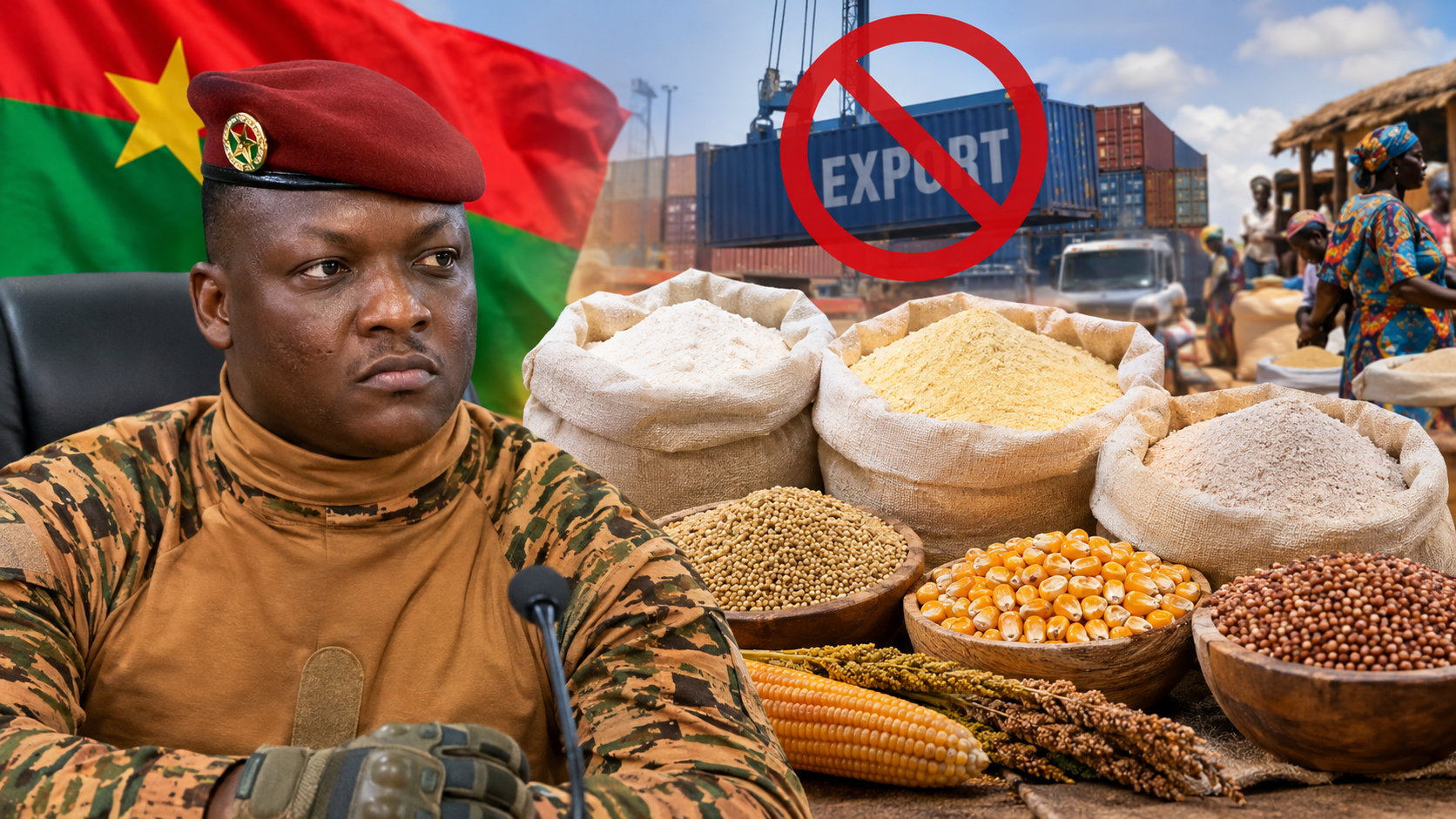
A controversial measure and its immediate context
In Burkina Faso, the government has suspended the export of certain locally produced flours until further notice. According to a directive issued by the Minister of Commerce, the ban applies to millet, maize and sorghum flours as well as their derived products. Special export permits previously granted for these goods have also been revoked.
Authorities justify the decision as a means of ensuring that these staple products remain available on the domestic market. In a context where food security is a major concern, the stated objective appears legitimate. Yet the measure raises a broader question: to what extent can a government restrict economic activities in the name of protecting the national market?
Reactions and the limits of executive action
The ban has sparked debate about whether Burkina Faso operates as a state governed by the rule of law, where citizens and economic operators can voice their concerns, or as a system in which government decisions are imposed without genuine public discussion.
Restricting exports may indeed keep more products within the country, but it does not automatically guarantee lower prices or better access for consumers. Much will depend on the actual availability of stocks, production capacities and how authorities monitor distribution channels.
Another question arises: do all Burkinabè consumers share the same dietary habits? Can everyone rely exclusively on locally produced flours? By limiting export opportunities, the government also risks weakening producers and traders who depend on those outlets to sustain their businesses.
Economic freedoms and the risk of expanding restrictions
The issue extends beyond the flour trade. It touches on the space afforded to economic freedoms, consultation with affected stakeholders and the right of citizens to question their leaders’ choices.
Burkina Faso increasingly gives the impression of a country where state decisions occupy a growing place in daily life. Comparisons with North Korea, often associated with particularly strict social control, may seem excessive, but they reflect a concern: that restrictions will multiply in the name of objectives set by the authorities, without citizens always having sufficient room to debate them.
Today, millet, maize and sorghum flours are affected. Tomorrow, what will be the next restriction? Should there be concern for other products, for internet access or for other individual freedoms?
What comes next: accountability and concrete expectations
An export ban alone does not mean a country is becoming a dictatorship. However, in a state that aspires to respect the rights of its citizens, such a restrictive measure deserves to be explained, properly framed and regularly reassessed. Protecting the domestic market should not become a pretext for shutting down any discussion of the economic and social consequences of public decisions.
Beyond official statements, Burkinabè citizens have the right to expect tangible results: accessible products, affordable prices, fairly paid producers and traders able to continue their activities within a predictable framework.
The real question is not only whether the government can ban flour exports. It is also whether this decision will genuinely improve people’s living conditions.
Protecting consumers is not just about restricting trade. It also means safeguarding their purchasing power, supporting production and being accountable for the results achieved.