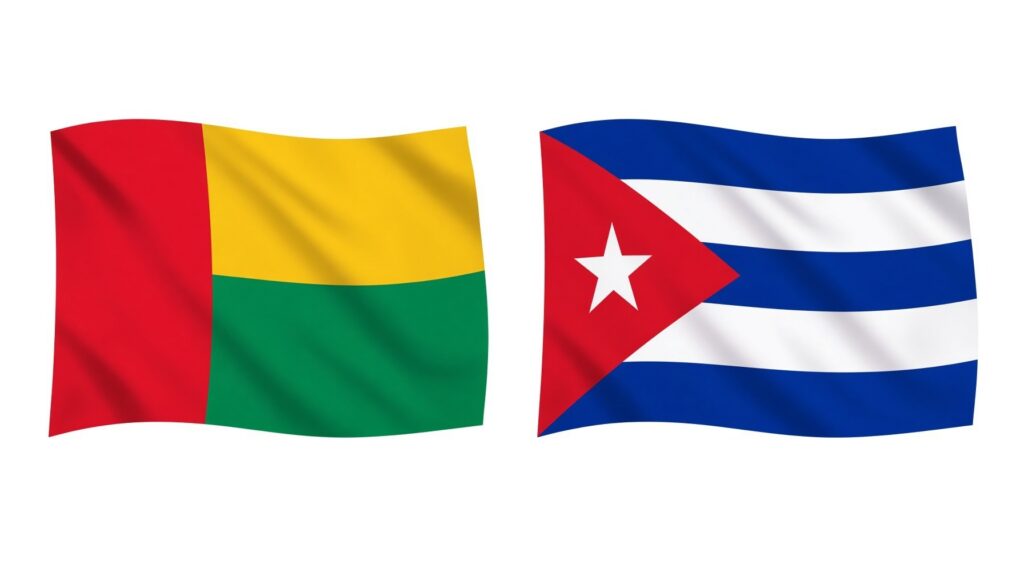
A diplomatic meeting that has set off a wider conversation
Something shifted in Cotonou this week, and it was not just another ribbon-cutting photo opportunity. When Cuba’s ambassador to Benin, Denisse Amaro Salabarría, sat down with the leadership of Benin’s Chamber of Commerce and Industry (CCI Bénin), the two sides did more than exchange pleasantries. They openly committed to breathing new life into a trade relationship that has existed on paper for decades — and the announcement has already sparked debate about whether words will finally translate into cargo, contracts and jobs.
The reaction has been mixed but lively. Business figures in Cotonou see a door opening. Analysts urge caution. Ordinary citizens, for now, are watching to see whether any of it reaches their daily lives.
A friendship with deep roots — and a long pause
Benin and Cuba are not strangers. Their ties stretch back through years of South-South solidarity, cultural exchange and shared political history. Institutionally, the foundation was laid in a 2002 framework agreement between the two countries’ chambers of commerce. But like many well-intentioned accords, momentum faded.
Now, with global trade routes shifting and economies everywhere under pressure, both capitals appear to agree that the old framework needs more than a dusting off. The goal, as presented in Cotonou, is to turn a symbolic partnership into something measurable — a genuine driver of growth rather than a diplomatic footnote.
What Cuba is putting on the table
The Cuban side used the meeting to spotlight recent economic reforms on the island, reforms that Havana says are designed to welcome foreign investment and joint ventures. For Beninese entrepreneurs, that opens questions as much as doors: which sectors are genuinely accessible, what protections exist, and how quickly can deals move from handshake to shipment?
Several priority areas were identified during the discussions:
- Agro-industry and food production
- Renewable energy
- Tourism and cultural engineering
- Biotechnology and pharmaceuticals — a field where Cuba’s expertise is recognised worldwide
To move beyond talk, Beninese companies were invited to take part in the Havana International Fair (FIHAV), one of the Caribbean’s biggest commercial gatherings. Whether that invitation converts into real participation will be an early test of the reset.
Benin’s counter-offer: a gateway to West Africa
The CCI Bénin delegation was equally direct about what Benin brings to the table. Its pitch rests on geography and infrastructure: Benin sits as a natural logistics and commercial platform for the wider West African sub-region. The ongoing modernisation of the Autonomous Port of Cotonou was held up as proof that the country can serve as a reliable entry point for Cuban goods and operators looking to reach markets beyond its borders.
It is a compelling argument on paper. The harder question — the one now circulating in business circles — is whether port capacity, customs procedures and transport corridors are ready to handle a genuine surge in two-way trade.
Public debate: hope, scepticism and the question of follow-through
The announcement has triggered the kind of public discussion that rarely accompanies diplomatic communiqués. Supporters point to Cuba’s pharmaceutical and biotech credentials, arguing that technology transfer could strengthen Benin’s health sector and agricultural productivity. Sceptics counter that historical agreements between the two nations have often stalled at the implementation stage, and that without a clear timeline, this could follow the same path.
Others raise a broader point: in a region where several economies are competing for the same investors and markets, can a Benin–Cuba axis truly stand out, or will it remain a complementary channel rather than a transformative one?
What comes next
According to the roadmap outlined in Cotonou, the emphasis now shifts to regular monitoring of the commitments made. That is a modest but significant step — it suggests both sides recognise that past partnerships faltered not for lack of goodwill, but for lack of follow-up.
The immediate milestones to watch are concrete: Beninese participation at FIHAV, the first joint ventures to be registered, and any movement on the sectors identified. If those boxes get ticked, the debate will shift from whether the partnership can work to how far it can go. If they do not, the sceptics will have their answer.
For now, the reset is real on paper. The fallout — and the outlook — depend on what happens in the months ahead.
You may also like
One year on, Marguerite Gnakadé’s case still stirs debate about Togo’s direction
Designing locally or importing forever? the stakes behind Benin’s first sustainable engineering master’s
Can Benin’s tax administration win over Parakou, Comè and Lokossa taxpayers with online services?
Sevilla vs Barcelona: can La Liga’s biggest mismatch produce the night’s biggest shock?
General Moussa Salaou Barmou’s American training: what is really at stake for Niger’s special forces?