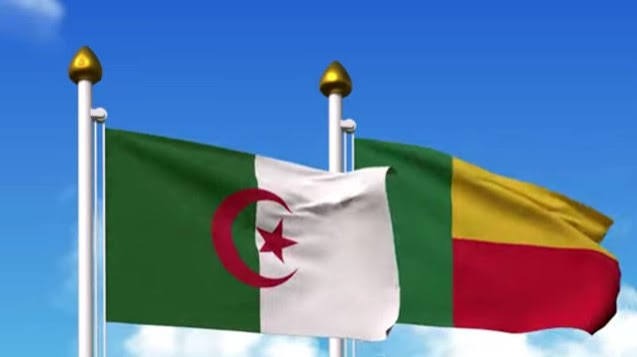
When Benin’s defense minister sat down with a high-level Algerian diplomatic and military delegation at the national defense ministry in Cotonou, the meeting marked more than a routine diplomatic exchange. It signaled the formalization of a bilateral defense partnership — and it has already triggered a broader conversation about what this realignment means for Benin, for Algeria and for a West African region still reeling from security shocks.
The reactions: a mix of relief, caution and curiosity
Inside Benin, the announcement has drawn a largely positive response from security analysts who see Algeria as a logical partner. The Algerian military’s track record in countering insurgent movements across semi-arid terrain and its experience in managing long land borders are viewed as directly relevant to Benin’s own challenges in the north. For many observers, the move reflects a pragmatic recognition that traditional partnerships alone have not fully contained the spillover of jihadist violence from the Sahel.
Yet the debate is not one-sided. Some voices question whether a framework agreement — however promising — can translate into rapid operational gains. Others wonder how this new channel will coexist with existing security arrangements involving Western partners. The prevailing mood, however, is one of cautious optimism: a sense that Cotonou is widening its options rather than abandoning old ones.
Why Algeria’s counterterrorism model is drawing attention
The Algerian army’s expertise in combating armed groups, controlling desert and semi-desert frontiers, and gathering tactical intelligence has earned international recognition. For Benin’s armed forces, access to Algerian training academies and tactical centers represents a tangible pathway to upgrading elite units and command structures. The appeal is not merely symbolic — it is about acquiring skills that address the specific threat environment of northern Benin, where porous borders and rugged terrain have facilitated militant movement.
The diversification strategy: no exclusive alignments
Benin’s decision to engage Algeria fits a broader pattern of strategic pragmatism. Cotonou has been steadily multiplying its military cooperation channels — from logistics training to intelligence technology — without tying itself exclusively to traditional Western partners or rigid alignment schemes. This approach is designed to maximize flexibility and reduce dependency on any single external actor. The Algerian partnership is thus both a practical response to a pressing threat and a statement of sovereign choice.
What was actually agreed: a framework and a hotline
The talks produced concrete steps. The two sides laid the groundwork for a defense framework agreement that would institutionalize enhanced technical cooperation, continuous training for Beninese military officers, and the transfer of expertise in crisis management and tactical electromagnetic intelligence. In addition, they agreed to establish a direct and regular communication channel to coordinate threat assessments of cross-border destabilization affecting the Sahelo-Saharan space and the Gulf of Guinea.
The regional fallout: Algeria’s return and Benin’s strategic lock
Algeria’s willingness to deepen security ties in sub-Saharan Africa signals a diplomatic and security re-engagement on the continent. For Benin, the pact reinforces its posture as a strategic lock protecting the West African coast. The move is likely to be watched closely by neighboring states and by other external powers with interests in the region. It may also encourage similar diversification efforts elsewhere in West Africa, as countries facing Sahelian spillover seek new partnerships.
The road ahead: from signature to implementation
The real test will be implementation. Formalizing the accord, deploying training programs and making the permanent consultation channel operational will require sustained political will and administrative follow-through. If successful, the partnership could become a model for how coastal West African states build resilience against jihadist threats by combining regional expertise with their own strategic autonomy. For now, Benin has made clear it intends to meet the regional security crisis proactively — by training its forces, broadening its support base and leaning on the experience of a major continental player.
You may also like
Burkina Faso’s 80 % NGO rule: the debate, the fallout, and what comes next
Gabon’s un vice-presidency: reactions, debates and the road ahead
Djenné attack aftermath: Mali’s fuel blockade sparks debate over army’s next move
Benin reacts to Candide Azannaï detention ruling: what the decision changes for the coup inquiry and the country’s future
Benin’s supreme court ruling on General Houndégnon: reactions, debate and what happens next