
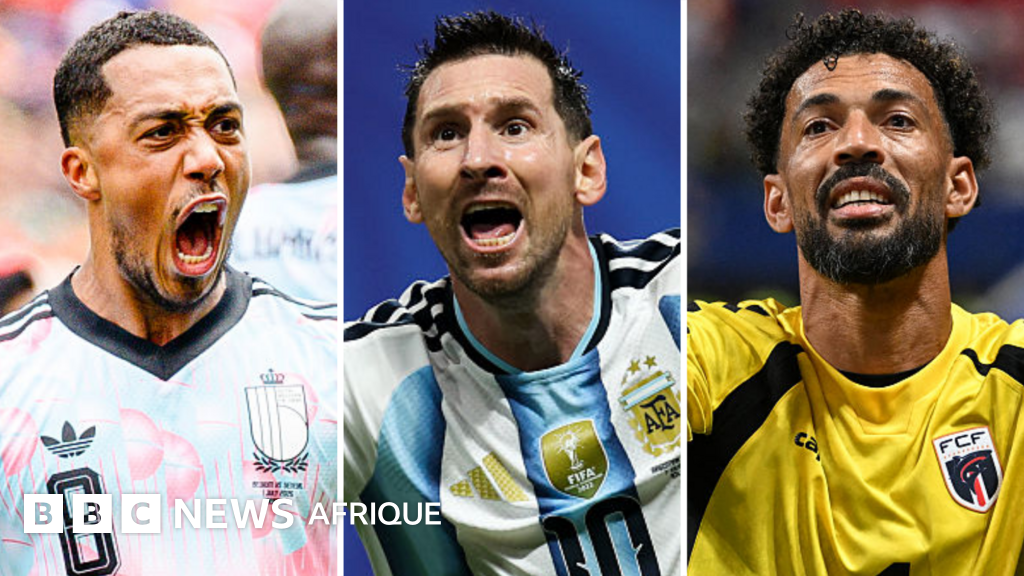
Unprecedented goals, heart-stopping comebacks, edge-of-the-seat suspense, and jaw-dropping upsets—this World Cup has redefined football excitement.
With the quarter-finals just days away, eight more high-stakes matches remain in this global football extravaganza.
For the first time, 48 teams from across the globe have converged on Canada, Mexico, and the United States to compete in what is undeniably the most expansive World Cup ever held—spanning 23 editions since 1930.
But has it been the greatest?
Beauty lies in the eye of the beholder, and World Cups carry different meanings for every fan. For some, it’s the thrill of their first-ever tournament; for others, it’s the journey of their national team that makes it unforgettable.
Yet, when it comes to on-field action, the numbers speak for themselves. This tournament has shattered records, delivering a breathtaking average of 2.92 goals per match across 104 games—surpassing even the legendary 1970 edition in Mexico, which averaged 2.97 goals in 32 matches.
Compare that to recent tournaments: 2.69 in Qatar 2022, 2.64 in Russia 2018, 2.67 in Brazil 2014, and 2.27 in South Africa 2010. The highest-scoring match so far? Germany’s 7-1 demolition of Curaçao, with six other games producing seven goals and 13 others netting five.
Offensive football has dominated, with 74.6% of goals scored in open play—the highest proportion in World Cup history—while just 5% came from penalties, the lowest ever recorded.
dramatic finishes and unforgettable showdowns
The late drama has been a defining feature. In 24 knockout matches, eight were decided by a goal scored after the 85th minute, including Argentina’s tense extra-time victory over Cape Verde, a tournament favorite among underdogs. Four matches were settled on penalties.
Enzo Fernández’s last-gasp winner for Argentina against Egypt marked the 10th goal scored in the 90th minute or later—a World Cup record.
July alone has delivered at least three unforgettable clashes: Belgium, Argentina, and England each overcame two-goal deficits to win 3-2 against Senegal, Egypt, and Mexico, respectively. Belgium and Argentina became the first teams since 1970 to achieve multiple two-goal turnarounds in a single tournament.
England’s triumph came despite a 40-minute numerical disadvantage—after Jarell Quansah’s red card—and a heroic stand in the electrifying atmosphere of Mexico City’s Azteca Stadium.
Eight clean sheets have been recorded, a World Cup high, but is this a sign of defensive mastery or a reflection of balanced competition?
fans and stars unite in record-breaking attendance
Early concerns about empty stadiums due to exorbitant ticket prices and long travel distances were quickly dispelled.
The FIFA reports a staggering 99.7% stadium occupancy rate, with over 4.4 million fans attending group-stage matches and more than 6.2 million across the first two knockout rounds. That’s an average of over 65,000 spectators per game—the highest since the 1994 edition in the United States, which averaged just under 69,000.
The tournament hasn’t just drawn crowds—it’s drawn the world’s best players. The race for the Golden Boot is fiercely competitive: Lionel Messi (Argentina) leads with eight goals, followed by Kylian Mbappé (France) and Erling Haaland (Norway) with seven each, and Harry Kane (England) with six.
This is the first time three players have scored seven or more goals in a single World Cup.
Despite the expanded field, no matches have been one-sided. Tiny Curaçao—football’s smallest-ever World Cup qualifier—rebounded from a 7-1 loss to Germany to earn a draw against Ecuador. Qatar, despite a 6-0 thrashing by Canada, fought back to draw 1-1 with Switzerland, a quarter-finalist.
Cape Verde, led by 40-year-old goalkeeper Vozinha, authored one of the tournament’s most inspiring underdog stories: three draws against Spain, Uruguay, and Saudi Arabia secured their place in the Round of 16, where they pushed Argentina to extra time before falling 3-2.
controversies and challenges overshadow the spectacle
No World Cup is without controversy. Sky-high travel, accommodation, and ticket costs have strained fan budgets like never before.
Hydration breaks, introduced for player safety in extreme heat, drew mixed reactions—cheered in sweltering conditions but booed during rain or in air-conditioned, roofed stadiums.
The tournament’s length—spanning nearly five weeks from June 11 to July 19—has drawn criticism for player fatigue, with the Premier League set to resume just over a month after the final.
Questions have also been raised about refereeing standards and the impact of additional matches on player welfare.
The most glaring controversy involved American striker Folarin Balogun, sent off in a Round of 16 clash with Bosnia and Herzegovina. Reports confirmed a direct call from U.S. President Donald Trump to FIFA President Gianni Infantino, influencing the decision to suspend Balogun’s one-match ban under FIFA’s disciplinary code.
Balogun played in the next match—a 4-1 loss to Belgium—despite an automatic suspension, marking the first time since 1962 that a player avoided punishment after a red card, a decision shrouded in allegations of political interference.
UEFA, Belgium’s federation, and England manager Thomas Tuchel have since criticized the ruling, with Belgian players citing it as added motivation.
can the final deliver the magic?
The FIFA can rightfully celebrate this tournament as a resounding success: packed stadiums, electric atmospheres, and unforgettable football.
As the quarter-finals approach, the stage is set for more drama—despite the absence of the three host nations and the hefty price tags.
The legacy of a World Cup often hinges on its climax. Mediocre finals have tarnished otherwise brilliant editions, while a sensational showdown in Qatar four years ago redeemed its reputation.
With the world’s top four ranked teams—Argentina, Spain, France, and England—all in scintillating form and through to the quarter-finals, the stage is set for a finale that could cement this tournament as the greatest in history.
Whatever happens, this World Cup will remain a must-watch spectacle.
You may also like
Monaco vs Marseille: where to watch the big ligue 1 clash live
Suivez Lille – PSG : Où Regarder, Compos et Cotes
Eintracht Frankfurt (f) and Paris-SG (f) clash in champions league qualifier
Fenerbahçe and Lyon clash in Champions League qualifier
Crystal palace signs israeli winger from union saint-gilloise for €24.5m