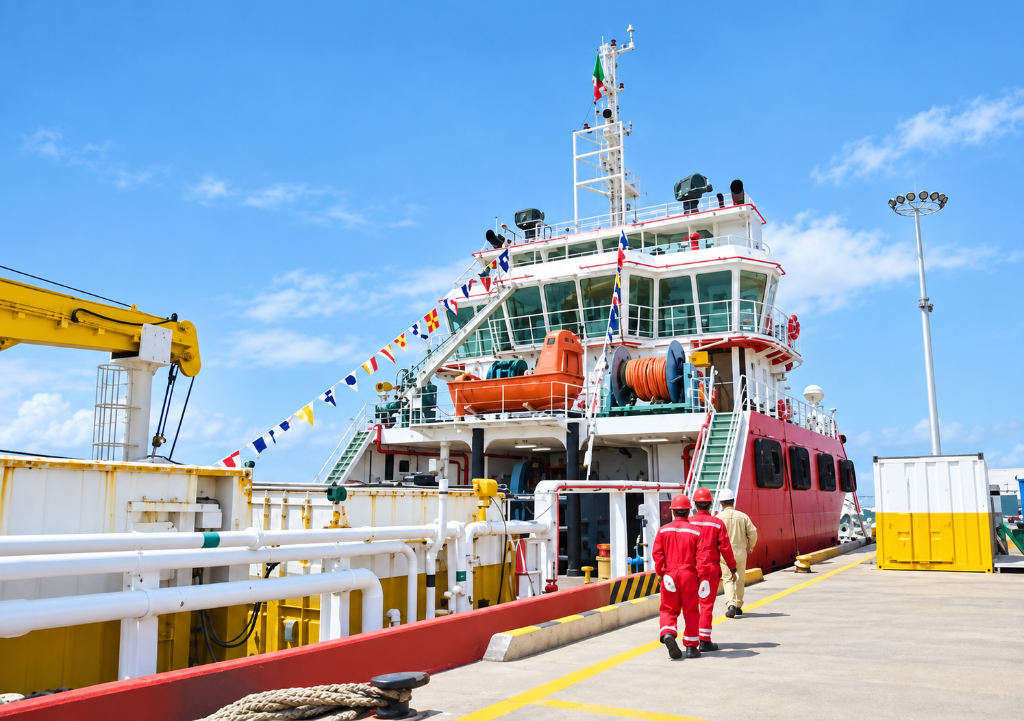
Benin is about to write a new chapter in its economic history. In October 2026, the country will ship its first cargo of crude oil from the revived offshore Sèmè field — roughly 250,000 barrels destined for international markets. The announcement has triggered a wave of reactions across the country, from cautious optimism in Cotonou’s business circles to pointed questions from citizens who want to know how the revenues will be used. Beyond the symbolism, the shipment raises a broader public debate about what comes next for a nation long known as a trading crossroads and agricultural powerhouse in West Africa.
A strategic shift that goes beyond one cargo
For decades, Benin’s growth model rested on logistics, trade and agriculture. The decision to reactivate the Sèmè offshore block signals a deliberate move to diversify. This first sale — the result of years of geological studies, technical negotiations and infrastructure investment — effectively returns Cotonou to the ranks of hydrocarbon-producing nations. It opens a new stream of potential revenue for the state treasury and has already set off discussions about how that money should be managed.
The comeback of a historic field
Lying off Benin’s southeastern coast, close to the maritime border with Nigeria, Sèmè is not a new discovery. It was first tapped in the late 1960s and produced intermittently through the 1980s and 1990s before being mothballed due to technical hurdles, low oil prices and declining yields. What changed? Advances in offshore drilling technology, new reservoir management techniques and a global energy landscape that has made the field viable again. The push to revive Sèmè fits squarely within the government’s action plan to maximise the value of national resources. Recent characterisation studies pointed to significant recoverable reserves, prompting authorities to forge partnerships and secure the investment needed to rebuild extraction infrastructure.
What 250,000 barrels actually deliver
The initial cargo is more than a symbolic first step. On the world market, a maiden delivery establishes the “identity card” of Beninese crude for refiners and traders. Laboratory analyses will determine its density, sulphur content and overall quality, setting its price relative to benchmarks such as Brent. For the national budget, the direct effects are already being felt:
- Foreign exchange inflows: the arrival of hard currency will bolster reserves and help stabilise the balance of payments.
- Tax and royalty receipts: production-sharing arrangements guarantee the state a direct share of extracted volumes, on top of taxes on petroleum activities.
- Sovereign rating leverage: a new source of predictable income strengthens Benin’s financial standing with lenders and rating agencies.
In a global economy marked by commodity price swings, diversifying state revenue is a vital macroeconomic buffer.
Capital injections and the local industrial fabric
The economic footprint of the Sèmè project stretches well beyond selling crude. The revival phase has already mobilised substantial capital, generating spillovers for local private firms and the maritime supply chain. Offshore operations demand heavy logistics: platform support, tug services, technical maintenance, advanced equipment and engineering services. Beninese companies in shipping, construction and logistics are gradually winning subcontracts, which helps transfer skills and create skilled jobs for young people.
What’s more, the growing oil hub near Cotonou and Sèmè is driving the development of coastal infrastructure. Storage, transport and primary processing of crude require upgraded port facilities, turning the shoreline into an integrated industrial platform.
A strategic complement to the Niger–Benin pipeline
The resumption of domestic production comes at a pivotal moment for Benin’s energy sector, which also hosts the maritime terminal of the pipeline carrying crude from Niger’s Agadem fields to the port of Sèmè-Kpodji. Though legally and operationally separate, the two projects create clear synergies. Benin is increasingly positioning itself as a strategic oil crossroads in the Gulf of Guinea. The expertise gained from managing Nigerien crude export infrastructure strengthens the local technical know-how needed to run its own offshore resources efficiently. This dual role — producer and transit hub — gives Benin greater visibility in regional and international energy forums.
The road ahead: governance, transparency and public expectations
The central challenge for Benin’s economic authorities now lies in managing these future oil windfalls sustainably and transparently. To avoid the pitfalls seen in other producer countries, regulatory oversight and governance of extractive revenues are top priorities. Income from Sèmè crude is intended to feed development funds targeting education, health, road infrastructure and agricultural modernisation. The ultimate goal is to use this exhaustible resource as a catalyst for structural transformation of the wider economy.
Public debate is already focusing on accountability: citizens and civil society groups are calling for clear rules on how revenues will be tracked and spent. The October 2026 cargo is not an end point but the opening chapter of a renewed industrial strategy. While 250,000 barrels may seem modest by the standards of global oil giants, its symbolic weight and economic multiplier potential lay the groundwork for what could be lasting prosperity — if the promised governance holds.
You may also like
Sévaré attack aftermath: Mali’s security debate and the road ahead
After Dioura: how the AES security gamble became the Sahel’s biggest open question
Olympe Bhêly-Quenum at 100: how the literary world is reacting and what lies ahead
Mali reacts to Goïta’s independence day address: what the war-and-dialogue pledge means now
Rosenior fallout: Strasbourg fans, Ligue 1 panel and the road ahead