
UNHCR urges global action as Sahel displacement crisis worsens
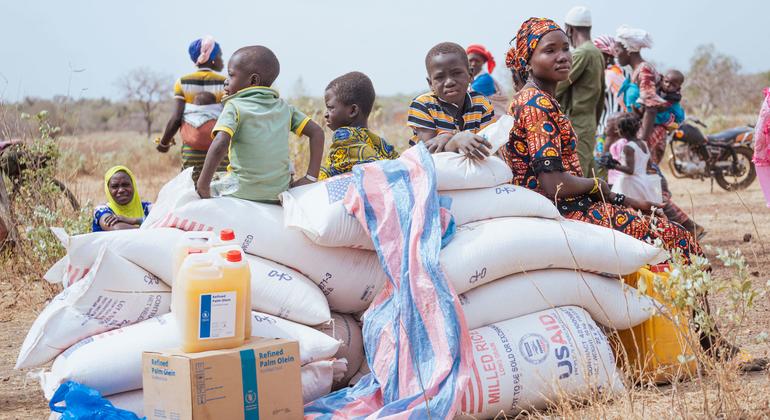
The United Nations High Commissioner for Refugees (UNHCR) has issued an urgent plea for global assistance to bolster its operations across the Sahel region. The area is currently grappling with an alarming displacement crisis, affecting nearly 4 million individuals in Burkina Faso, Mali, Niger, and neighboring nations. This figure represents a staggering two-thirds increase over the past five years, driven by persistent insecurity, restricted access to essential services, and the intensifying impacts of climate change.
Abdouraouf Gnon-Konde, Director of the UNHCR’s Regional Bureau for West and Central Africa, highlighted the growing strain during a press briefing. He noted that while most uprooted individuals remain within their national borders, cross-border movements are on the rise, placing immense pressure on host communities and national infrastructure. These ongoing population shifts are occurring amidst severe challenges to humanitarian access and dwindling financial support. Since 2022, humanitarian needs in the Sahel have dramatically escalated, while available resources have sharply declined.
Critical funding shortfalls
The UNHCR is urgently advocating for a renewed and robust international commitment to address the profound crisis gripping the central Sahel. The nations within the region are simply unable to manage these multifaceted challenges independently. Alarmingly, the agency has secured less than a third of its requested $409 million funding appeal for the current year.
This severe budget deficit has profoundly impacted crucial services, including registration, documentation, education, healthcare, and shelter. Mr. Gnon-Konde underscored that “over 212,000 refugees and asylum seekers across Burkina Faso, Mali, and Niger remain unregistered, severely restricting their access to vital services and heightening their vulnerability to arbitrary detention and harassment.”
These financial cutbacks are occurring against a backdrop of ongoing violence perpetrated by jihadist groups. The pervasive insecurity throughout the region leaves populations exposed to brutal violence, forced recruitment, severe movement restrictions, and arbitrary detention.
A staggering 80% of those forcibly displaced in the region are women and children, making gender-based violence an alarmingly widespread and critical concern. Data from the inter-agency protection monitoring system for West and Central Africa indicates a significant surge in incidents affecting individuals this year.
Education and health facilities under siege
Amidst this climate of pervasive insecurity, more than 900 health facilities have been forced to cease operations, consequently denying millions access to fundamental medical care. Across the entire region, by mid-2025, over 14,800 schools had shut down, leaving 3 million children without access to education and safe learning environments. This dire situation further exposes “forcibly displaced youth to increased risks of forced recruitment and human trafficking.”
Furthermore, food insecurity has emerged as an increasingly significant driver of displacement. The percentage of displaced individuals and members of host communities citing food scarcity as a reason for their movement has doubled in recent years.
The UNHCR also reports that climate-related shocks exacerbate existing vulnerabilities. These shocks intensify competition for scarce natural resources like land and water, thereby creating additional impediments to peaceful coexistence and social cohesion between displaced populations and their host communities.
You may also like
-
The political eclipse of edgar alain mebe ngo’o in Cameroon
-
Senegal launches first green bond for food self-sufficiency and energy transition
-
Codes pastef alliance aims to safeguard Senegal’s transformative agenda
-
17 billion FCFA financing deal to boost Ivorian SMEs and startups
-
Us military strikes planned for Mali amid growing terror threats