un voices deep concern over alleged human rights abuses by Sahel armies
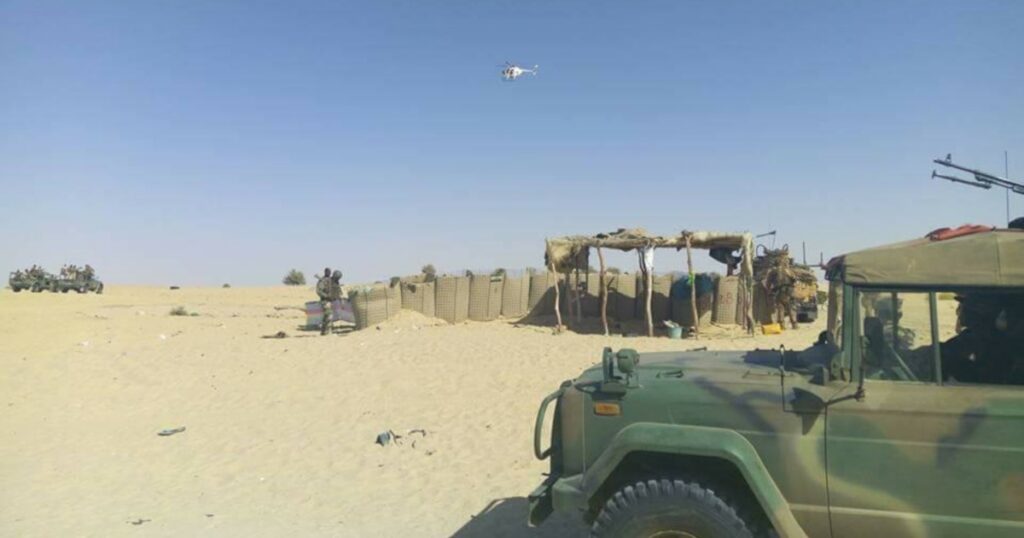
Reports of severe human rights violations, including forced disappearances and summary executions, are increasingly being leveled against soldiers from Mali, Burkina Faso, and Niger. These accusations, stemming from operations against jihadists in the Sahel, have sparked significant alarm within the United Nations.
During a recent UN Security Council videoconference dedicated to the Sahel, Jean-Pierre Lacroix, the UN Assistant Secretary-General for Peace Operations, stressed the imperative for the G5 Sahel Joint Force and its member nations to prioritize human rights. He urged them to “spare no effort” in this regard.
This escalating concern has been consistently voiced for several months, coinciding with ongoing denunciations of jihadist atrocities and inter-communal violence across the region.
In early April, the UN mission in Mali (MINUSMA) highlighted a disturbing “proliferation” of alleged abuses attributed to national military forces. Guillaume Ngefa, director of MINUSMA’s human rights division, confirmed that between January and March, 101 extrajudicial executions by the Malian army and approximately 30 more by the Nigerien army on Malian territory were meticulously documented, complete with names and circumstances.
In mid-May, Burkina Faso witnessed the deaths of 12 individuals in gendarmerie cells; they had been apprehended on suspicion of collaborating with jihadists. Relatives and non-governmental organizations allege these were civilians who were summarily executed, prompting judicial authorities to pledge thorough investigations.
– “very serious allegations” –
A list that circulated in April claimed that 102 people were killed by the army in Niger’s Tillabéri region. While the Defense Ministry praised the troops’ “professionalism,” it also committed to launching an inquiry into these reported disappearances.
Consistently, human rights organizations publish lists of names and photographs, lamenting the disappearance of individuals following military engagements. A disproportionate number of those reported missing are from the Fulani ethnic group, who are often unfairly linked to jihadist complicity.
An anonymous official from the Malian Fulani association Tabital Pulaaku expressed deep frustration, stating, “We submit reports, denounce that so many Fulani have been killed and thrown into wells, or show the world a mass grave, but nothing is done afterwards.” Abou Sow, president of Tabital Pulaaku, told the press that while it’s undeniable some Fulani have joined jihadist movements, it is “naive” to confine jihadism to a single ethnicity.
Sahelian governments have typically stood in solidarity with their armed forces, which, despite often being under-equipped and undertrained, have made significant sacrifices in the ongoing battle against jihadism.
Speaking before the Security Council on behalf of the G5 Sahel (Mauritania, Chad, Niger, Burkina Faso, and Mali), Mauritanian Foreign Minister Ismail Ould Cheikh Ahmed affirmed that achieving the Joint Force’s full operational capability necessitates its complete grasp of the human rights dimension. He assured that Mauritania was undertaking actions to ensure adherence to the law. Niger’s Ambassador, Abdou Abarry, a non-permanent Council member, reinforced this commitment, declaring, “We fully adhere to human rights,” even as nations like Belgium expressed concern over “very serious allegations.”
– “related objective” –
In a statement issued Friday after its meeting, the Security Council acknowledged the measures announced by several Sahelian governments in response to these human rights violation claims and encouraged their finalization.
These accusations against national armies emerge at a critical juncture for the Sahel region. The UN, for its part, faces skepticism from some Security Council members regarding the scope of its Mali mission, which numbered 13,000 personnel by mid-June.
France also re-evaluated the terms of its engagement in the Sahel following the loss of 13 French soldiers in November.
Despite the presence of French forces, MINUSMA (whose mandate is due for renewal), and the G5 Sahel Joint Force (established in 2017), the region has experienced an unabated surge in violence, leading to thousands of deaths and hundreds of thousands displaced since 2012.
Ibrahim Maïga, from the Institute for Security Studies (ISS) in Bamako, noted that “civilian protection is merely a secondary objective,” with the primary focus of military forces being to “neutralize” jihadists. When questioned by AFP in May about the alleged abuses by national armies, General Pascal Facon, commander of the French anti-jihadist force, deemed them “intolerable” and potentially damaging to the “credibility of the forces.”