
Published on May 12, 2026 Reading time: 2 minutes.
Generated file on
A dozen road transport companies have suspended their routes to and from Bamako following a jihadist-imposed road blockade of the capital and attacks on vehicles.
Mali has been grappling with escalating and coordinated attacks since April 25 and 26, 2026. These were carried out by militants from the Group for the Support of Islam and Muslims (JNIM), an Al-Qaeda affiliate, and the predominately Tuareg Azawad Liberation Front (FLA). The assaults targeted strategic positions held by the ruling military junta.
Since April 30, jihadists have enforced a road blockade around Bamako, cutting off several vital supply routes to the capital. As a landlocked nation, Mali relies heavily on road imports, making the blockade particularly impactful.
“We’ve decided to halt operations to protect our passengers and minimize losses,” shared a transport agency manager with AFP on Monday. The manager revealed that six buses were lost in incidents on Saturday along the Ségou route in central Mali.
More than a dozen transport companies have officially declared the suspension of services. However, some have quietly discontinued routes out of fear of government retaliation, which could force them to resume operations, according to the manager who spoke on condition of anonymity. While major transport companies have ceased operations on all six primary routes leading to Bamako, smaller minibuses continue to enter the city via alternative paths.
Fuel, power, and water shortages grip Bamako
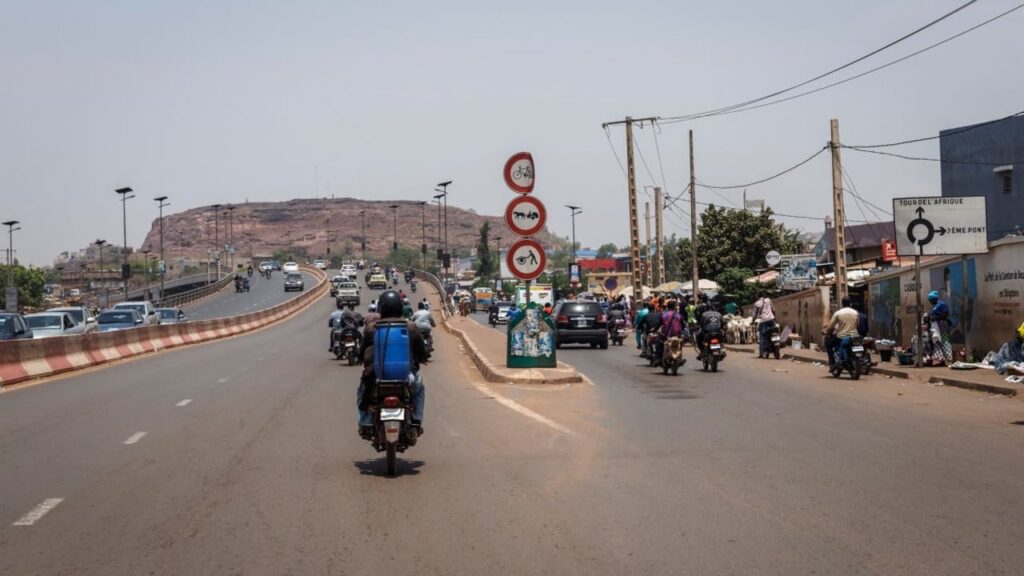
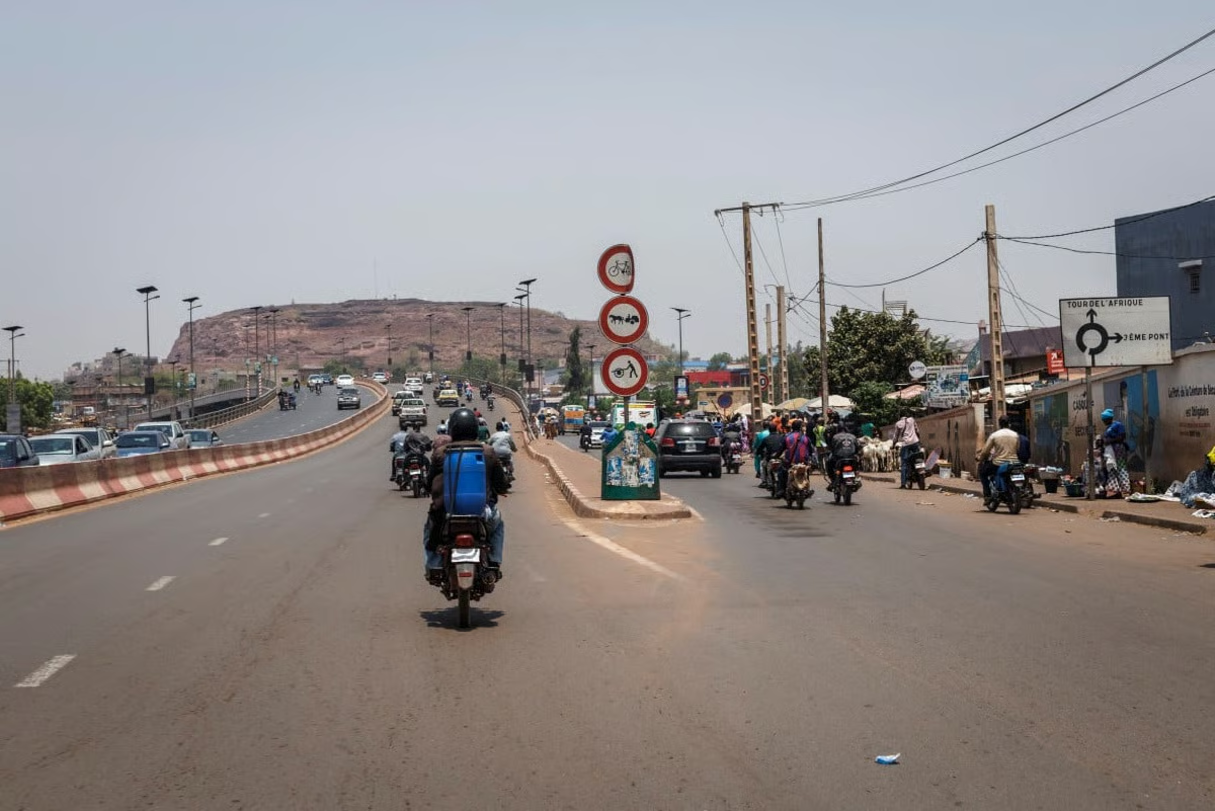
The impact of the blockade is starkly visible on the streets of Bamako. Long queues formed at gas stations on Monday as diesel became nearly unavailable, as observed by AFP. Authorities announced on Saturday that over 700 fuel tankers had successfully entered Bamako via the route from Côte d’Ivoire. In recent days, jihadists have set ablaze multiple convoys carrying goods and passenger buses.
Electricity supply in the capital has also deteriorated significantly over the past few days. “We’ve gone 72 hours without power. It returned on the fourth day for just three hours before failing again,” a Bamako resident told AFP on Sunday evening. The national power utility, Énergie du Mali (EDM), reported major disruptions on Sunday, attributing them to “an incident” without further details. An anonymous EDM official stated on Monday that the disruptions were due to sabotage by “terrorists” affecting the electrical grid.
The blockade has also disrupted the supply of clean water in several districts of Bamako, the Malian Water Management Company announced on Sunday.
You may also like
Le carnet de Malian relance l’enquête sur la migration clandestine au Sénégal
Mamadi Doumbouya de retour à Conakry après une visite d’État en Côte d’Ivoire
Elversberg vs Bayern Munich: kick-off time, tv channel and team news
Gabon : l’association Force ouvre un espace de propositions pour la rentrée
Dakar 2026 : Diomaye Faye confie la flamme olympique à la jeunesse sénégalaise