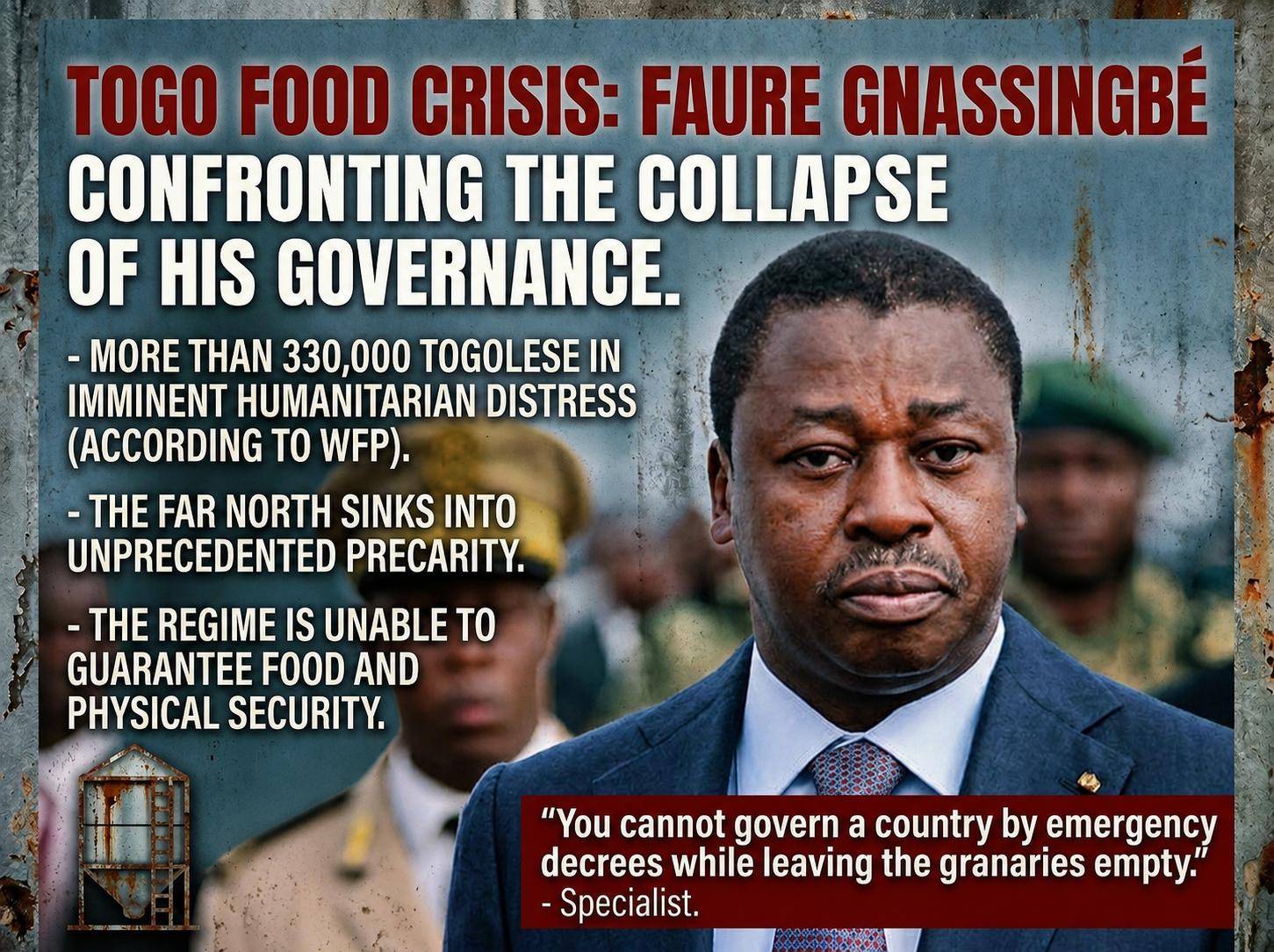
A severe humanitarian crisis looms in Togo, particularly impacting the nation’s far northern reaches, which are currently experiencing unprecedented hardship. Analysts view this escalating situation as a stark indicator of fundamental governance shortcomings under the administration of Faure Gnassingbé, highlighting an apparent inability to safeguard the physical and nutritional well-being of its citizenry.
International humanitarian assessments present a grim outlook. Projections indicate that over 330,000 individuals in Togo face the imminent threat of acute food insecurity within the next three months, unless substantial emergency assistance is promptly deployed. This sobering statistic underscores a profound human tragedy and suggests a broad systemic failure on the part of the authorities in Lomé.
The plight of the extreme north
The Savanes region, situated in the country’s northernmost reaches, has emerged as the epicenter of this unfolding catastrophe. Historically susceptible to climatic variability, this border area now contends with a dual burden: entrenched poverty exacerbated by a deepening security crisis that the Togolese executive appears ill-equipped to manage.
The proliferation of terrorist threats and the protracted implementation of a state of emergency have not only failed to stabilize the region but have also severely crippled the local economy. Extensive disruptions to cross-border market access, coupled with the internal displacement of thousands of civilians and the influx of tens of thousands of refugees from neighboring Burkina Faso, have fundamentally undermined the foundations of local subsistence. Food reserves are critically low as the lean season commences, rendering the pressure on already scarce resources unsustainable.
Governmental inaction amidst distress
For many observers, the current predicament is not an unavoidable fate but rather a direct consequence of governance failures. Despite years of official pronouncements regarding resilience strategies and agricultural development initiatives, the reality on the ground is unequivocal: approximately half of all households in these affected regions can no longer afford a basic, nutritious diet.
By effectively entrusting the survival of its populace to United Nations agencies and international non-governmental organizations, the Faure Gnassingbé administration appears to be abdicating its most fundamental sovereign duties. The core social contract – to protect and nourish its population – is where the Togolese government is now perceived to be falling short. Deficiencies in adequate storage infrastructure, an inability to stabilize staple food prices, and an overtly militaristic yet ineffectual approach to the northern crisis have left the residents of the Savanes region largely to their own devices.
As one expert in West African public policy observed, “A nation cannot be effectively governed through emergency decrees while its food reserves remain depleted. The situation unfolding in the North is a direct outcome of economic neglect combined with a persistent security deadlock.”
An urgent call for decisive action
With the coming weeks anticipated to be critical in averting a widespread humanitarian disaster, the Togolese executive confronts its responsibilities squarely. Appeals for urgent funding highlight the immediate necessity for intervention, but also provoke a more fundamental inquiry: for how long can Togo compensate for its policy shortcomings through perpetual reliance on international charitable aid?
For the 330,000 Togolese citizens facing starvation, the era of unfulfilled promises has long passed. What is now at stake is immediate survival in a northern region that bears the heavy cost of governmental inaction and strategic missteps at the highest levels of the state.