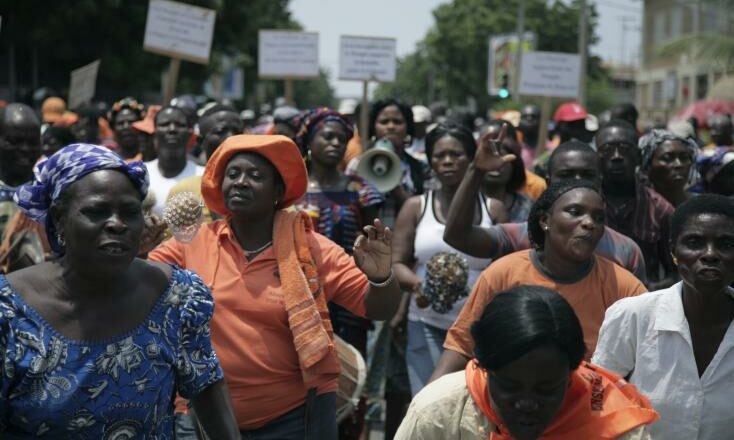
Hundreds of demonstrators took to the streets in Vogan, southern Togo, on Sunday, voicing their strong opposition to the 2024 constitutional reforms. Critics argue that these changes pave the way for President Faure Gnassingbé to extend his grip on power, a claim that has sparked renewed public anger.
Opposition coalition stages second major protest in three months
The gathering was spearheaded by the National Consultation Framework for Change in Togo (CNCC), a coalition uniting opposition parties and civil society groups. Held about 60 kilometers from Lomé, this demonstration marked the group’s second large-scale mobilization in recent months, following an initial protest in early May. Such public displays of dissent remain rare in the country’s current political climate.
Slogans echo demands for democratic integrity
Protesters carried signs with powerful messages like “No to unconstitutional government changes” and “Constitutional coup d’état”, condemning what they describe as an illegitimate overhaul of the nation’s legal framework.
David Dosseh, spokesperson for the Civic Front Togo Standing (FCTD), one of the driving forces behind the movement, delivered a fiery address. “The 2024 Constitution is nothing short of illegal. This is a constitutional coup that the people of Togo will never accept,” he declared, underscoring the depth of public frustration.
Key changes fuel political controversy
The revised Constitution, enacted in 2024, introduced sweeping institutional reforms. It abolished the direct presidential election process and transitioned the country to a parliamentary system. Under the new framework, the position of Council President—now the highest executive role—has been assumed by Faure Gnassingbé, who has led the nation since 2005.
While opposition figures and civil society activists warn that the reforms are designed to indefinitely prolong Gnassingbé’s leadership, government supporters argue that the changes enhance institutional representativeness and democratic accountability.
Violent clashes erupt amid rising tensions
Protests against the reforms turned deadly in 2025, with civil society reporting seven fatalities, though prosecutors cite five drowning-related deaths. The unrest highlights the deep divisions gripping the country as citizens challenge the legitimacy of the constitutional amendments.
In a landmark ruling on January 29, the ECOWAS Court of Justice determined that the reforms constituted an “unconstitutional change of government.” The Togolese government swiftly rejected the verdict, asserting that the court lacked the authority to rule on domestic constitutional matters. Officials contended that its mandate is strictly limited to overseeing human rights compliance and community law adherence, not the legality of national legislation.
You may also like
-
Niger’s three-year crisis: a population trapped in political and economic limbo
-
Chad’s bold move to exit the international criminal court raises sovereignty questions
-
Security situation in Mali: Bamako’s gains vs central regions’ struggles
-
Maroc Demande Aide Financière Deux Grandes Banques pour le Gazoduc Africa Atlantique
-
Chad withdraws from the International Criminal Court amid criticisms