
The government of Chad has formally initiated its withdrawal from the International Criminal Court (ICC) by submitting a notification to the United Nations Secretary-General. This decision, announced on 27 July, sends a clear message about Chad‘s dissatisfaction with the court’s perceived bias against African nations and the Global South.
Diplomatic shift away from The Hague
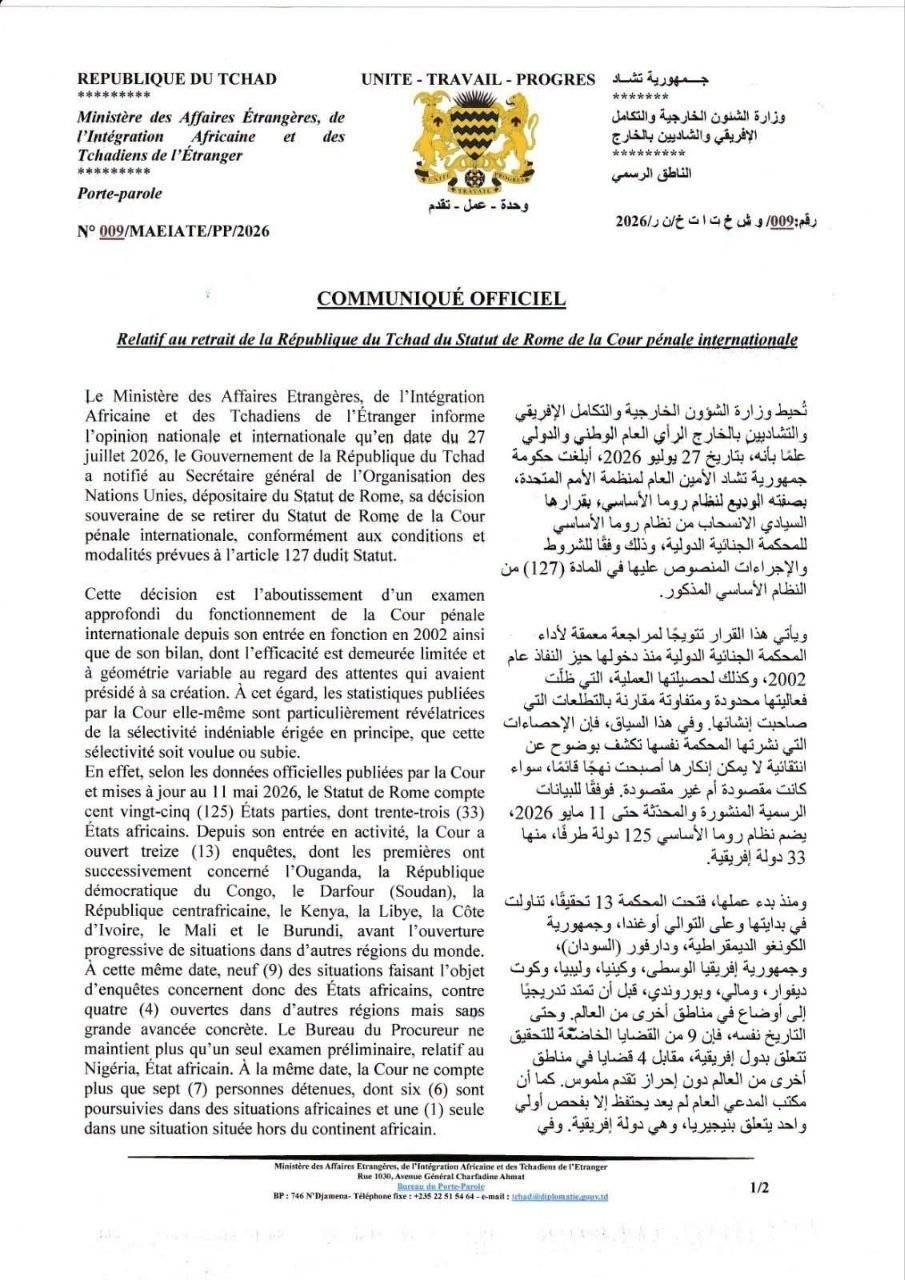
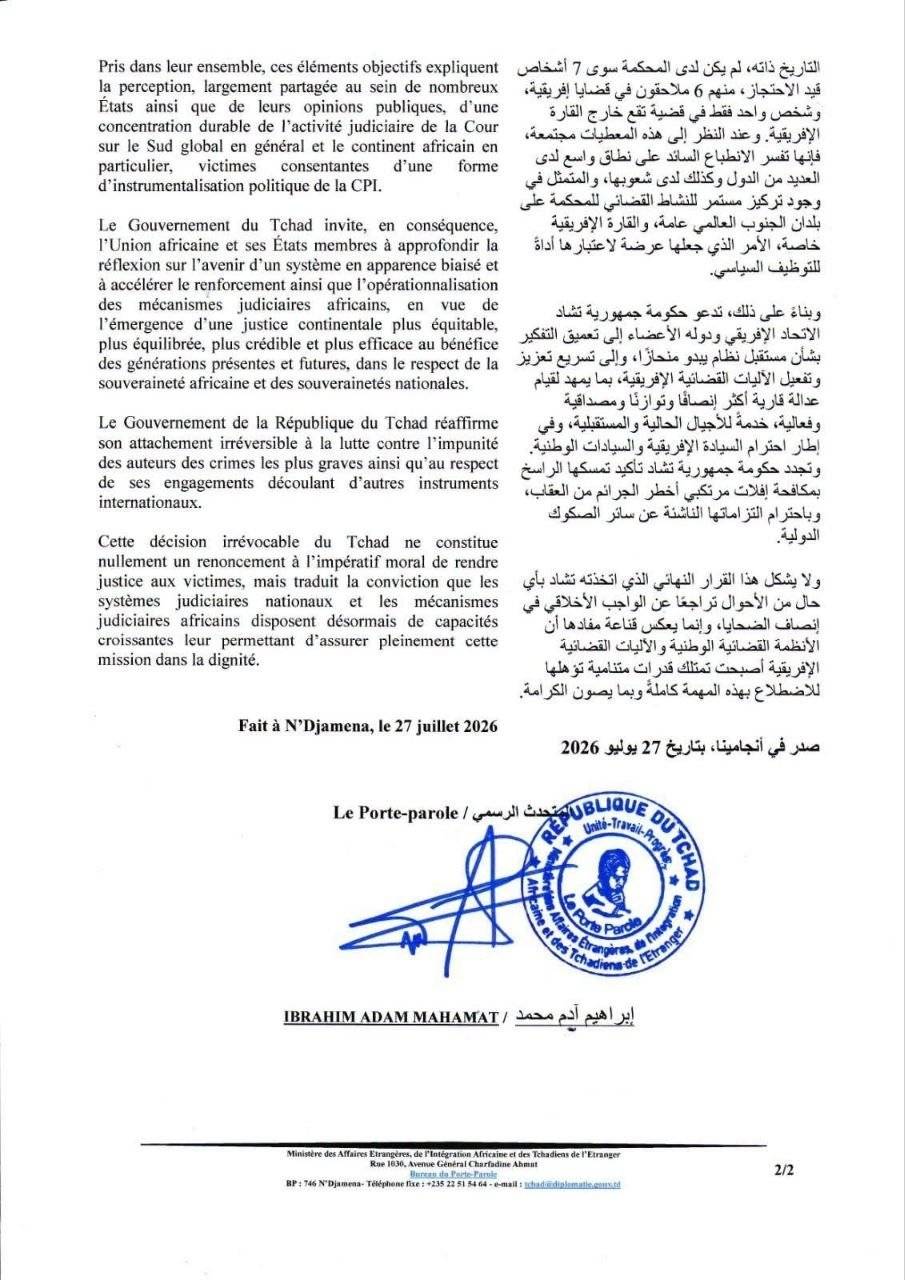
In a formal letter dispatched to the United Nations headquarters in New York, N’Djamena has begun the legal process to exit the Rome Statute, the foundational treaty of the ICC. The move comes after years of criticism from African leaders who argue that the court disproportionately targets leaders and officials from developing nations while overlooking crimes committed elsewhere. The Chadian government has gone further, declaring the ICC “ineffective” and citing a “geographical imbalance” in its prosecutions. The withdrawal reflects a growing divide between several African states and the Hague-based court, which was established to prevent impunity for war crimes, crimes against humanity, and genocide.
Local justice at risk after ICC departure
While the announcement carries significant diplomatic weight, its most immediate consequences will be felt within Chad‘s borders. For ordinary citizens, the withdrawal removes a critical safeguard against grave human rights violations.
The ICC operates under the principle of complementarity, meaning it only intervenes when national courts fail to investigate or prosecute such crimes. By leaving the Rome Statute, Chad severs its citizens’ access to an independent international judicial body in cases of mass atrocities or state-led abuses.
The test for Chad’s judicial independence
The burden now falls entirely on Chad‘s judicial system to deliver justice. Victims of abuse by state actors or armed groups will depend solely on the capacity and integrity of national courts to conduct fair and impartial trials. Civil society groups have already voiced concerns that this withdrawal could embolden perpetrators and deepen a culture of impunity.
Challenges for victims and human rights defenders
For activists documenting violations, the absence of an international legal backstop complicates their work. Without the possibility of ICC intervention, gathering evidence and ensuring witness protection may become even more perilous.
Sovereignty or isolation? The diplomatic gamble
The move is part of a broader trend in West Africa and the Sahel, where governments increasingly prioritize national sovereignty over international oversight. While Chad frames this as a reassertion of judicial independence, the decision carries risks.
Many Western partners and development donors traditionally link financial aid to commitments on human rights and the rule of law. Additionally, foreign investors often rely on the presence of independent legal recourse before committing to long-term projects. Despite past criticism of the ICC by the African Union, member states remain divided on strategy, and Chad‘s withdrawal represents a radical departure from the status quo.
Will Chad’s courts deliver justice?
Proponents of the withdrawal argue it will strengthen national institutions, asserting that Chad‘s courts are capable of handling domestic cases. However, this claim hinges on substantial reforms: increased funding for courts, stronger safeguards for judicial independence, and robust witness protection mechanisms.
The one-year transition period outlined in Article 127 of the Rome Statute offers a window for reflection. During this time, the ICC retains theoretical jurisdiction over crimes committed before the withdrawal notice. Yet, practical cooperation from Chad may dwindle, raising questions about accountability.
A defining moment for African justice
The formalization of this withdrawal on 27 July marks a pivotal shift in Africa’s relationship with global governance institutions. While many observers echo the frustration over perceived double standards in international justice, the practical implications of this break remain uncertain.
Chad has chosen the path of sovereignty, but the true measure of its success will be seen not in diplomatic halls or courtrooms abroad, but in the daily lives of its people. Will its citizens find justice within their own legal system? The government’s next steps will determine whether this bold move strengthens the rule of law or leaves victims without recourse.