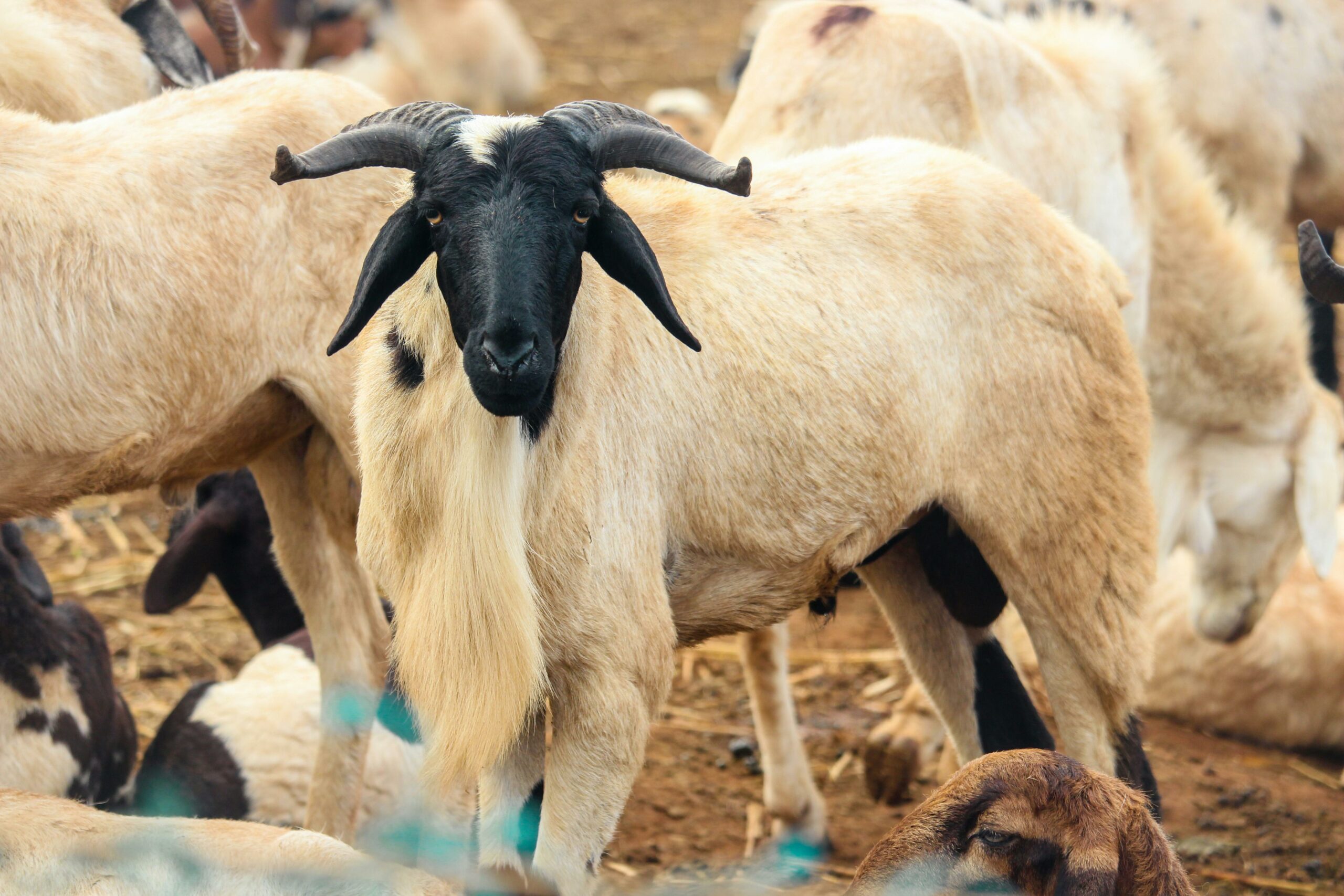
Tabaski in Senegal: the rising burden of sheep prices on households
Every year, millions of Senegalese plunge into debt to purchase a sheep for Tabaski. From rotating savings to microfinance loans and informal lenders, an entire ecosystem of indebtedness has emerged around a religious celebration now burdened by social pressure.
Two weeks before Tabaski, anxiety grips fathers across Dakar’s neighborhoods, from the working-class districts to the Almadies. The price of sheep has surged once again. Yesterday, a decent animal cost 120,000 CFA francs. Today, it’s 150,000—sometimes 200,000. For “prestige” sheep—the ones displayed on WhatsApp—prices reach 300,000 CFA francs or more.
“How can I possibly afford this?” This question haunts men every year, like an inescapable penalty. Tabaski has transformed from a religious observance into a status symbol, a social obligation with severe financial consequences.
Sheep purchases: from faith to financial strain
Mamadou Sall lives in the Sacré-Cœur neighborhood and earns about 60,000 CFA francs monthly. By May, stress sets in. By July, he must spend 150,000 francs—over two and a half months of his salary—on a sheep. Not for food, but to uphold tradition, to impress neighbors, to maintain his family’s dignity.
Banks won’t lend to him for a sheep. So he turns to his local tontine, a rotating savings group. They advance him 150,000 francs—but at what cost? Interest rates in tontines during Tabaski climb to 30% per year, sometimes 50%. On a 150,000-franc loan, that means immediate fees of 3,750 to 6,250 francs, followed by 12 months of repayments.
Mamadou is far from alone. Between 35% and 45% of all microfinance loans in Senegal during Tabaski go toward sheep purchases. Nearly one in two loans in those weeks is for an animal that will be eaten within the year.
Soaring sheep prices: a 15-year inflation crisis
In 2010, a sheep cost 60,000 to 80,000 francs. Today, prices range from 150,000 to 250,000—a surge of 87% to 275% in less than 15 years. This inflation isn’t tied to general price increases in Senegal; it’s driven by concentrated demand over two months. During Tabaski, demand is inelastic: people must buy, regardless of cost. Breeders and middlemen exploit this, driving prices higher with little fear of backlash.
Senegal’s minimum wage (SMIG) is 60,239 francs monthly. To buy a 150,000-franc sheep, a minimum-wage worker must allocate two and a half months of full salary. That’s before factoring in Tabaski’s other expenses: clothing, food, gifts. For the 60% of the population living below the poverty line, debt is the only option.
Who borrows for a Tabaski sheep?
For Tabaski 2024, Senegal’s microfinance institutions saw a 62% spike in loan applications compared to ordinary periods, with average requested amounts between 120,000 and 200,000 francs. A flood of credit demands concentrated into two months.
The hidden architecture of indebtedness
Faced with the inaccessibility of traditional bank loans, a complex web of borrowing has flourished during Tabaski. Rotating savings groups, microfinance institutions, and private informal lenders all thrive in this seasonal economy.
| Credit source | Regular period rate | Tabaski period rate |
|---|---|---|
| Local tontines | 15–30% per year | 30–50% per year |
| Formal microfinance | 24–36% per year | 36–48% for short-term loans |
| Private informal lenders | 30–40% per year | 50–60%+ per year |
| Commercial banks | Almost inaccessible | Almost inaccessible |
Tontines accelerate their rotation cycles during Tabaski. Informal credit interest rates during this period range from 30% to 50% annually, turning a 150,000-franc loan into a total repayment of 172,500 to 225,000 francs over a year.
Microfinance institutions offer slightly better terms, with annual effective rates of 24% to 36%, or up to 48% for short-term loans (three to six months). Families borrowing in July for August’s Tabaski face immediate finance charges of 3,000 to 6,000 francs on a 150,000-franc loan.
Social media amplifies the pressure
A 2023 study by Cheikh Anta Diop University found that 67% of young people in Dakar feel social pressure to buy a sheep for Tabaski. Among them, 48% say this pressure stems from what they see on social media. Influencers showcase lavish Tabaski celebrations, with families proudly displaying expensive sheep. Videos of wealthy households purchasing high-end animals go viral.
Meanwhile, poorer families feel they’re falling short. They borrow to keep up. This burden disproportionately affects men, who traditionally purchase the sheep. In Senegalese culture, a man who can’t afford a sheep risks shame, judgment, and the perception of failing his family.
The hidden cost: reduced household consumption
Households that borrow for Tabaski reduce food and healthcare spending by 18% to 25% in the three months following the holiday. Children’s school fees go unpaid, essential medications go unfilled. The true economic cost of maintaining appearances during Tabaski far exceeds the price of the sheep itself.
Worse still, some farmers divert agricultural loans—meant for seeds and fertilizer—toward sheep purchases. Between 8% and 12% of Senegal’s agricultural loans are misused for Tabaski consumption. A farmer who could have boosted next year’s harvest by 30% instead spends the credit on social prestige. When the next farming season arrives, they lack the means to invest.
Morocco’s solution: a model for Senegal?
In 1999, Morocco’s king implemented a groundbreaking policy: every poor Moroccan would receive a sheep for Tabaski—not as charity, but as a right. The government recognized that a religious celebration shouldn’t be subject to market forces.
Since then, Morocco has distributed millions of sheep. In 2023 alone, over 2.8 million sheep were provided through the Zakat Al-Fitr royal program. The cost? About 450 million Moroccan dirhams annually, or roughly 43 billion CFA francs. Relative to Morocco’s national budget, this amounts to less than 0.1% of total spending—a small price to ensure all citizens can celebrate Tabaski without debt.
Morocco acknowledged a simple truth: a religious celebration whose access depends on personal wealth isn’t truly a religious observance. It’s a social distinction mechanism disguised as tradition. By treating Tabaski as a public good rather than a private purchase, Morocco made a political decision. Senegal could follow the same path.
Senegal’s stark contrast: debt and despair
Senegal, however, has no such program. The government allocates almost nothing. A few municipalities and private religious organizations offer limited support, but the rest of the country is left to the whims of predatory lending and the crushing weight of social expectations.
Debt collectors report a disturbing trend: household over-indebtedness peaks three months after Tabaski. Families struggle to repay Tabaski loans while trying to survive. Food consumption drops. Healthcare goes unpaid. Children are pulled from school.
The mental health toll is equally severe. A 2022 study by the Dakar Mental Health Research Center found a sharp rise in calls to helplines three weeks before Tabaski. Among men aged 30 to 55, the number of calls doubles. The fear of not affording a sheep, the shame of falling short, the dread of social judgment—these pressures weigh heavily on mental well-being.
How did we reach this breaking point?
On one hand, there’s the culture of appearances. Tabaski has evolved from a religious duty into a display of social status. Urban conspicuous consumption has merged with tradition, and social media has amplified this shift. Tabaski is now about showing off: “Look at my sheep. See how wealthy I am. See how respected I am.”
On the other hand, there’s a glaring absence of public policy. The Senegalese government doesn’t address Tabaski as a social issue. No national debate exists. Politicians rarely mention it. Media coverage is sparse. Meanwhile, millions of households sink into debt every year.
Mamadou Sall is already fielding calls from his tontine. Tabaski 2025 is approaching. Sheep prices are climbing. Interest rates are rising. The cycle of debt and despair is about to begin anew.