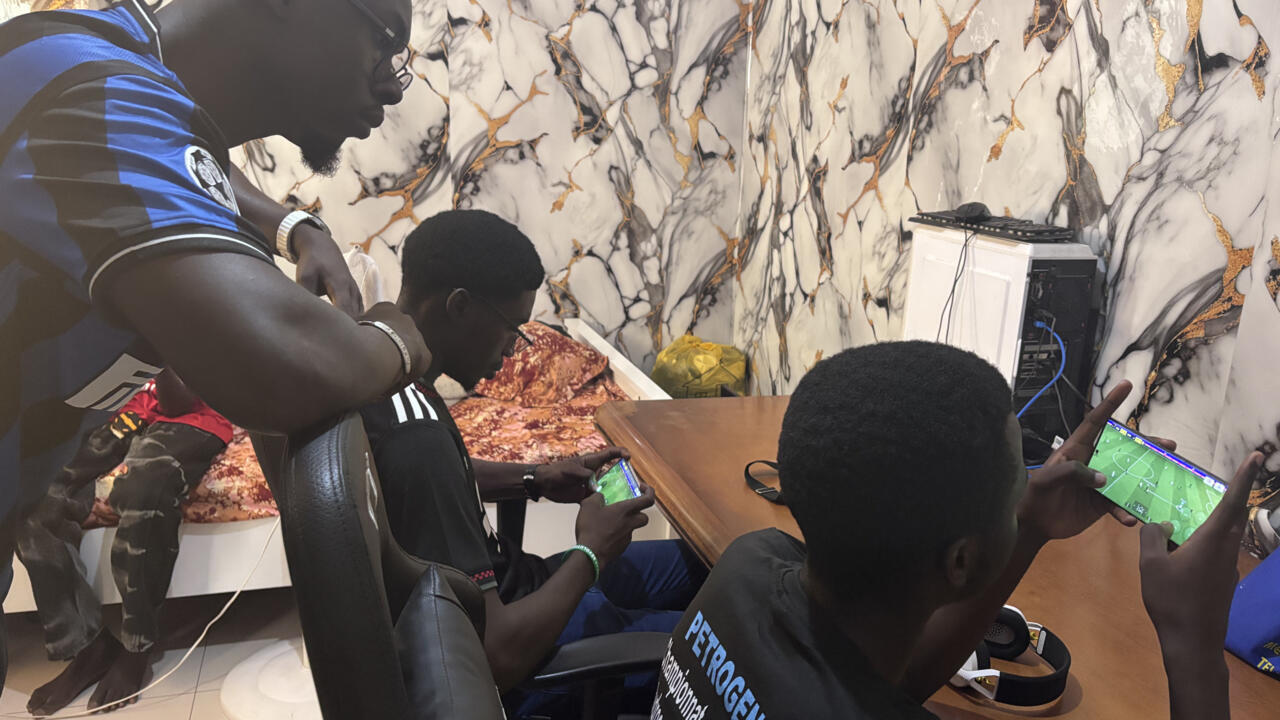
On the screens of their phones, they dedicate hours each day to practice. eFootball, the popular mobile soccer game from Japanese studio Konami, has become a massive phenomenon across West Africa, particularly in Senegal, a nation where real-world football is a deep-seated national passion. More accessible than console versions, this mobile title now surpasses their popularity. Here in Senegal, highly organized teams are setting their sights on professional status and championship titles. In Dakar, several talented players are currently honing their skills, preparing for the upcoming eFootball World Cup qualifiers.
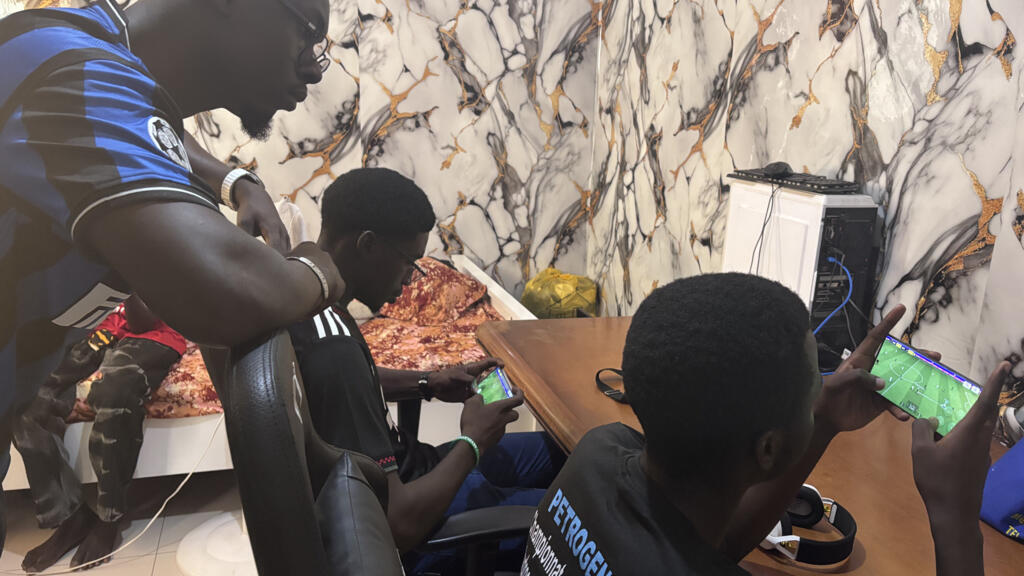
With their mobile phones firmly in hand, players are deeply focused. In just a few hours, they will compete in the crucial qualification rounds for the eFootball World Cup, an international tournament scheduled for November in Riyadh. Ibrahima Diop, widely known as Ibzo, the national team coach, is delivering his final strategic instructions.
Ibzo has assembled the country’s most skilled players, a testament to their prowess after his team secured the top spot in the African rankings last March. The game’s free-to-play model has propelled its popularity beyond that of console-based titles. Mohamed, a 17-year-old player nicknamed Medzo, who traveled from Saint-Louis for these qualifiers, shared his enthusiasm. ‘It’s a source of immense enjoyment,’ he explained. ‘There’s a strong competitive spirit; you challenge others, saying, ‘You won’t beat me.’ It’s incredibly easy to play. Plus, you don’t need an expensive phone; just a modest device with 3GB RAM, and you’re ready to go. Senegalese players are talented, numerous, and exceptionally dedicated to the game.’
Like Medzo, Pape Mouhamed Saloum Sow, a law student, dreams of a full-time professional career in esports. ‘I aspire to reach the highest level,’ he stated. ‘I believe eFootball has evolved beyond just a game. We started as strangers, but now we’ve grown into a real family.’
Connectivity challenges
However, these ambitious Senegalese players must contend with several significant disadvantages. One hurdle is related to platforms like TikTok: the popular social media platform, where many publish game analyses and tips, currently does not allow content monetization in Africa, unlike in Europe or the United States. More critically, persistent connection issues severely handicap them against certain international opponents. ‘Here in Senegal, we face a major server problem,’ Ibzo elaborated. ‘Across Africa, there’s only one server, and it’s located in South Africa. You attempt a pass, and it takes an agonizing two minutes for the action to register.’
To provide structure for the burgeoning esports scene, Ibzo took the initiative to establish his own club. His efforts are further bolstered by the national electronic sports federation, Fesseda, which was founded two years ago. El Hadji Mansour Jacques Sagna, Fesseda’s president, detailed their plans: ‘We have signed an agreement to implement what we call ‘e-navétanes’ – electronic versions of traditional local competitions. This initiative will enable a vast number of young people to participate in organized tournaments across the national territory.’
Looking ahead, the federation has announced the imminent launch of an e-sport analysis and performance center. This cutting-edge facility will be established at the Léopold-Sédar-Senghor stadium, designed to further support the professionalization of the discipline.