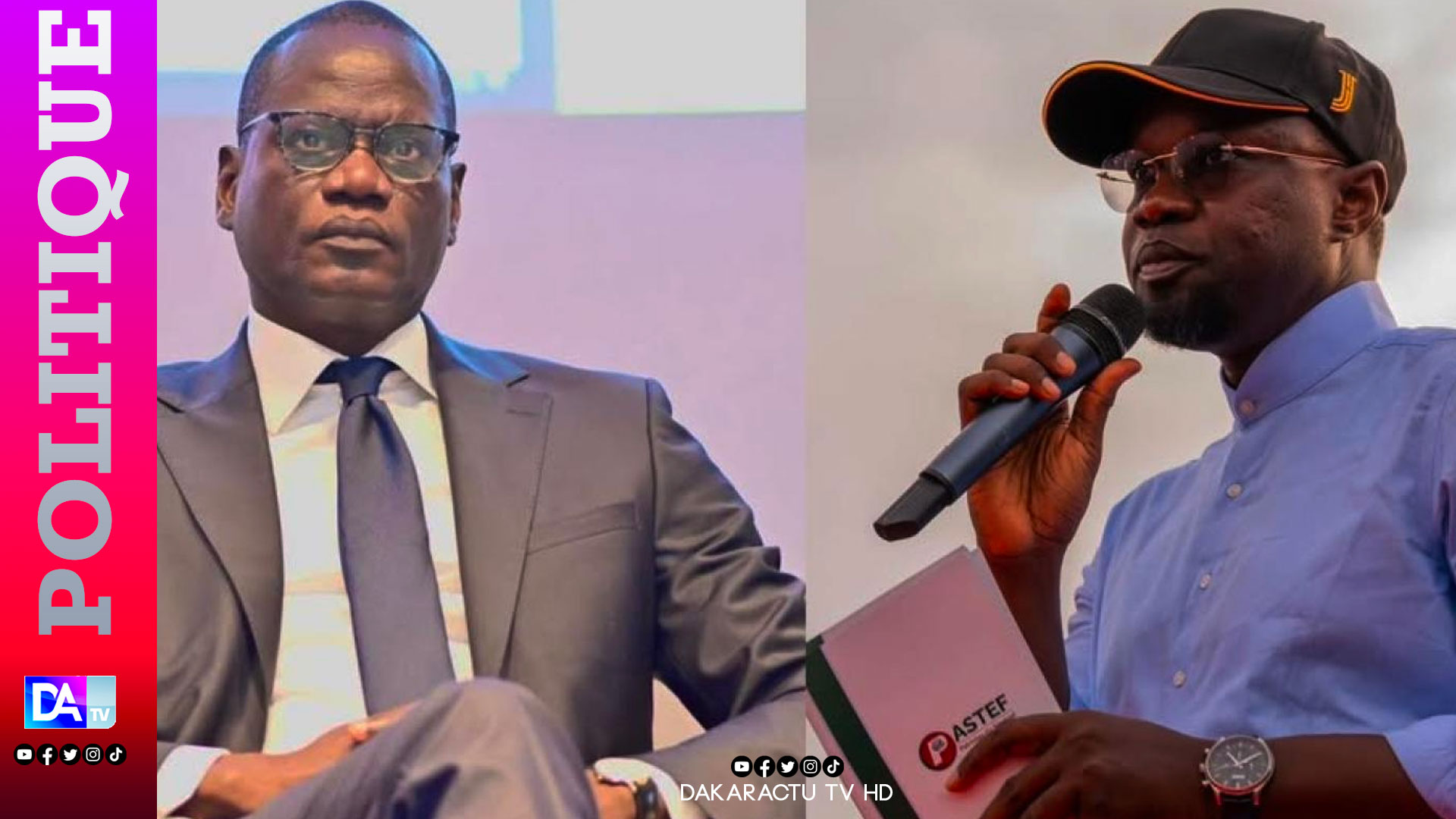
In the latest political confrontation gripping Sénégal, the President of the Awalé party, Abdourahmane Diouf, has launched a scathing critique of Ousmane Sonko, the newly elected President of the National Assembly. The exchange unfolded in the aftermath of Sonko’s controversial declaration in Touba, where Diouf, a former Higher Education Minister, took to social media to denounce what he describes as a flawed leadership takeover.
The former Energy Minister pulled no punches in his public statement, addressing a nation already divided by the escalating tensions between supporters of President Bassirou Diomaye Faye and those backing Sonko’s political rise. Diouf did not mince his words, accusing Sonko of lacking the moral authority to lead, stating: “Procedures are brushed aside without comprehension; the morality you preach suffocates under your inability to embody it; analytical rigor crumbles beneath the weight of glaring intellectual emptiness; and truth gives way to excessive manipulation, paving the way for a hollow revolution devoid of substance.”
a charged political climate in Sénégal
The sharp rebuke from Abdourahmane Diouf underscores the deepening divisions within Sénégal’s political landscape. The National Assembly, a key institution in the country’s governance, has become a battleground for competing visions and leadership styles. Sonko’s ascent to the Assembly’s presidency has been met with both enthusiasm and skepticism, fueling debates about competence, integrity, and the future direction of the nation.
The clash between Diouf and Sonko is more than a personal feud—it reflects broader questions about governance, accountability, and the role of elected officials in shaping Sénégal’s trajectory. As political factions dig in their heels, the public watches closely, wary of the potential consequences for stability and progress.
what’s next for Sénégal’s political arena?
The fallout from this confrontation raises critical questions about the path forward for Sénégal. Will the Assembly leadership be able to unite a divided nation, or will the rhetoric of distrust and division continue to dominate? With key political figures trading barbs and the public caught in the crossfire, the stakes could not be higher.
The coming weeks will be pivotal in determining whether Sénégal can navigate this turbulent period with resilience or succumb to further polarization. One thing is certain: the words exchanged between Diouf and Sonko have set the stage for a high-stakes political drama that will unfold in the halls of power—and beyond.