
Senegal’s strategic response to rising Sahel threats
Stretching over 400 kilometers along the border with Mali and maintaining deep commercial ties with its eastern neighbor, Senegal is taking decisive steps to safeguard its territory amid escalating instability in the Sahel region. While maintaining a low profile in its counterterrorism strategy, Dakar is quietly reinforcing its defenses against a growing jihadist threat that shows no signs of abating.
Transportation networks between the two countries have been disrupted in recent weeks, with Senegalese truckers stranded in Mali and convoys coming under attack. When pressed for details, officials from the Ministry of Foreign Affairs responded with measured caution: “We are closely monitoring the situation, particularly regarding transporters. At this time, no repatriation requests have been received, but we remain vigilant.”
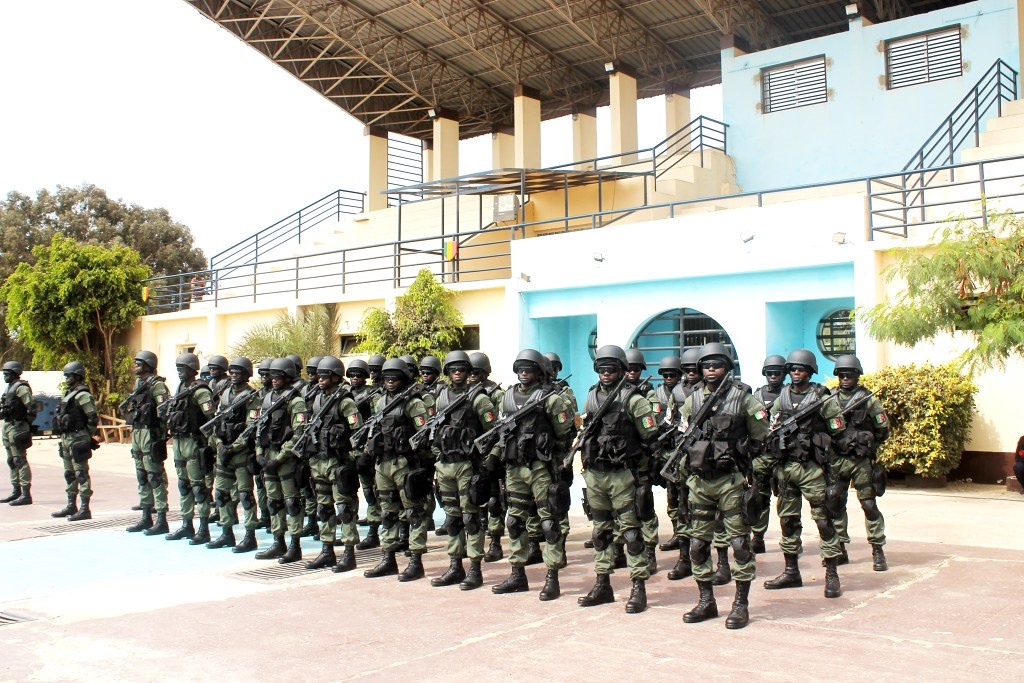
Despite its discreet approach, Senegal has significantly strengthened its border security apparatus in recent years. The regions of Tambacounda and Kédougou, both located in the country’s southeastern corner, have seen substantial investments to enhance monitoring capabilities. The most recent developments came on April 8-9, 2026, with the inauguration of three new operational bases for the Groupe d’action et d’intervention rapide (Garsi 2) in Saraya, funded by the European Union.
Garsi and Cico: the backbone of Senegal’s security framework
The establishment of these new bases is part of a broader strategy to combat terrorism and cross-border threats. According to military authorities, these facilities serve as forward observation posts that enhance response times and strengthen operational capacities in the Garsi 2’s area of responsibility. “We have 420 kilometers of border with Mali. It’s impossible to station troops every kilometer, but we can focus on critical transit points. These bases allow us to respond rapidly when needed,” explained a high-ranking military officer.
The officer also highlighted the operational effectiveness of the Garsi units: “They are well-equipped and trained to handle these threats. We currently have two bases—one in Kidira and another in Saraya (Kédougou region)—that conduct coordinated patrols along the frontier.”
In addition to the Garsi’s rapid-response capabilities, Senegal relies on the Cadre d’intervention et de coordination interministériel (Cico), a specialized framework designed to orchestrate the country’s response to terrorist threats. This includes coordinating medical facilities, evacuation units, security forces, and military assets to ensure a swift and comprehensive reaction to any incident.
Recent months have seen further enhancements to this security architecture, including the opening of a legion headquarters in Kédougou, the establishment of a research section, and the deployment of additional technical units. Senegal stands out in the region for its substantial defense investments, ranking among the top importers of military hardware in sub-Saharan Africa.
Between 2020 and 2025, the country accounted for 8.8% of regional arms imports, according to data from the Stockholm International Peace Research Institute. Notably, Senegal acquired Puma M36 armored personnel carriers from South Africa’s OTT Technologies—vehicles specifically designed to withstand mine and IED attacks, a critical consideration given the tactics used in Sahel conflicts. The country has also secured major defense contracts with Turkey in recent years.
Social cohesion as a defense against extremism
While military measures play a crucial role, Senegal’s resilience against jihadist infiltration is also attributed to its strong social fabric. Professor Bakary Sambe of the Timbuktu Institute emphasizes that the country’s ethnic and religious communities maintain harmonious relations, which act as a natural barrier against divisive tactics employed by groups like the Jamāʿat nuṣrat al-islām wal-muslimīn (JNIM).
In the Kédougou region, a key border area, this cohesion is reinforced by interethnic marriages and mutual respect among groups such as the Bassari, Bédik, and Fulani. “This cultural and social shield makes it difficult for extremist groups to gain a foothold,” explains Prof. Sambe. He also highlights the pivotal role of religious leaders—particularly Sufi brotherhoods—in preventing radicalization, despite their influence being less pronounced in the eastern border regions.
The absence of widespread radicalization in Senegal is partly due to the collaborative efforts between religious figures, government authorities, and community leaders. These leaders are recognized as key actors in the country’s counter-radicalization strategy, working alongside security forces to maintain stability.
President Faye advocates for regional solidarity
President Bassirou Diomaye Faye has underscored the need for collective action to address the shared threat of terrorism and insecurity across Africa. Speaking to local media on May 2, he stressed that no nation is immune to this menace, citing examples from Nigeria to the United States as evidence of its global reach. “Even the largest country in ECOWAS is affected. The U.S. itself has faced attacks that were once unimaginable. This proves that terrorism spares no nation—hence the urgent need for collaboration, intelligence sharing, and unified responses,” he stated.
The President also expressed regret over the withdrawal of Sahel states from ECOWAS, emphasizing that Senegal cannot remain indifferent to the challenges facing Mali. “We share a common history, a shared motto, and a united past at independence. What happens in Mali directly impacts Senegal because we are one people,” he asserted, reaffirming his country’s readiness to support Mali through dialogue and solidarity. “The Malian people can always count on the active solidarity of both the Senegalese government and its citizens. We are prepared to engage in all necessary efforts to restore peace in Mali—though some measures must remain discreet for strategic reasons.”
Despite the challenges posed by porous borders and the intertwined lives of communities across the region, Senegal continues to prioritize both military preparedness and diplomatic engagement to safeguard its stability and that of its neighbors.
You may also like
Le carnet de Malian relance l’enquête sur la migration clandestine au Sénégal
Mamadi Doumbouya de retour à Conakry après une visite d’État en Côte d’Ivoire
Elversberg vs Bayern Munich: kick-off time, tv channel and team news
Gabon : l’association Force ouvre un espace de propositions pour la rentrée
Dakar 2026 : Diomaye Faye confie la flamme olympique à la jeunesse sénégalaise