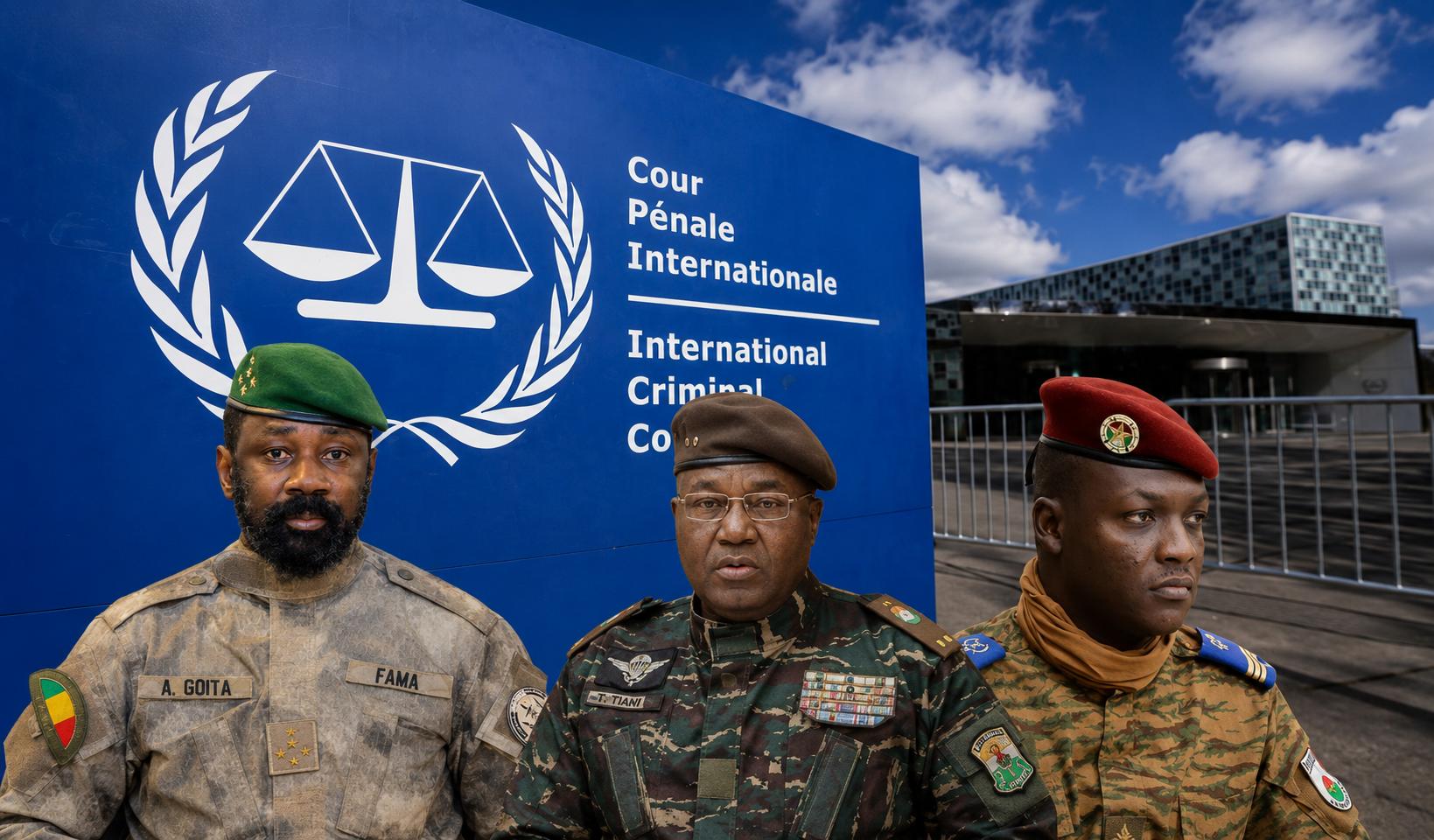
The military-led governments of Niger, Mali, and Burkina Faso have formally severed ties with the International Criminal Court (ICC), deepening a rift with global justice mechanisms. What these regimes call a defense of “sovereignty” against a supposedly “biased” judicial system reveals a more cynical truth: a deliberate move to shield leaders from accountability for grave violations.
a coordinated retreat from international justice
Within weeks of Niger’s announcement, Mali and Burkina Faso followed suit, each submitting withdrawal notifications to the United Nations regarding the Rome Statute—the foundational treaty of the ICC. This synchronized withdrawal signals more than political alignment; it reflects a shared strategy among Sahelian juntas to dismantle external oversight and consolidate unchecked power.
The official narrative is familiar: the ICC is framed as a tool of “neo-colonialism,” a Western-controlled court applying a double standard. Yet this populist rhetoric obscures a far less idealistic motive. By exiting the ICC, these governments are not merely rejecting foreign influence—they are erecting a legal shield for their own conduct. Crimes under investigation, including potential war crimes and crimes against humanity, now fall beyond the reach of international scrutiny.
the cost of impunity in a region under siege
The Sahel’s crisis is not confined to attacks by armed groups. Reports consistently document grave human rights violations committed not only by extremist factions but also by state forces and allied militias—including foreign mercenary units operating in Mali. As these regimes withdraw from the ICC, they effectively grant themselves and their forces immunity, ensuring no future reckoning for atrocities committed during active conflicts.
This pattern is not new. History shows that authoritarian regimes retreat from international courts precisely when they fear prosecution. The withdrawal of states from the ICC has often paralleled waves of repression, curtailment of dissent, and suppression of civil society—hallmarks of emerging dictatorships. The juntas of the Alliance of Sahel States (AES) are applying this playbook, using “sovereignty” as a pretext to silence critics and isolate their nations from global accountability.
who really pays the price?
While the juntas trumpet their break from the ICC as a victory, the true losers are the people of the Sahel. Trapped between brutal insurgencies and increasingly unchecked state violence, civilians in Niger, Mali, and Burkina Faso are left without recourse. Even if past crimes remain within the ICC’s jurisdiction—since acts committed while the Statute was in force cannot be erased—this withdrawal sends a dangerous message: that violence by the state can be normalized, unchallenged, and permanently excused.
History warns that impunity does not bring stability or longevity to authoritarian rule. Instead, it stores up deeper resentment, intensifies cycles of violence, and guarantees that when accountability finally comes—it will come at a far greater human cost.