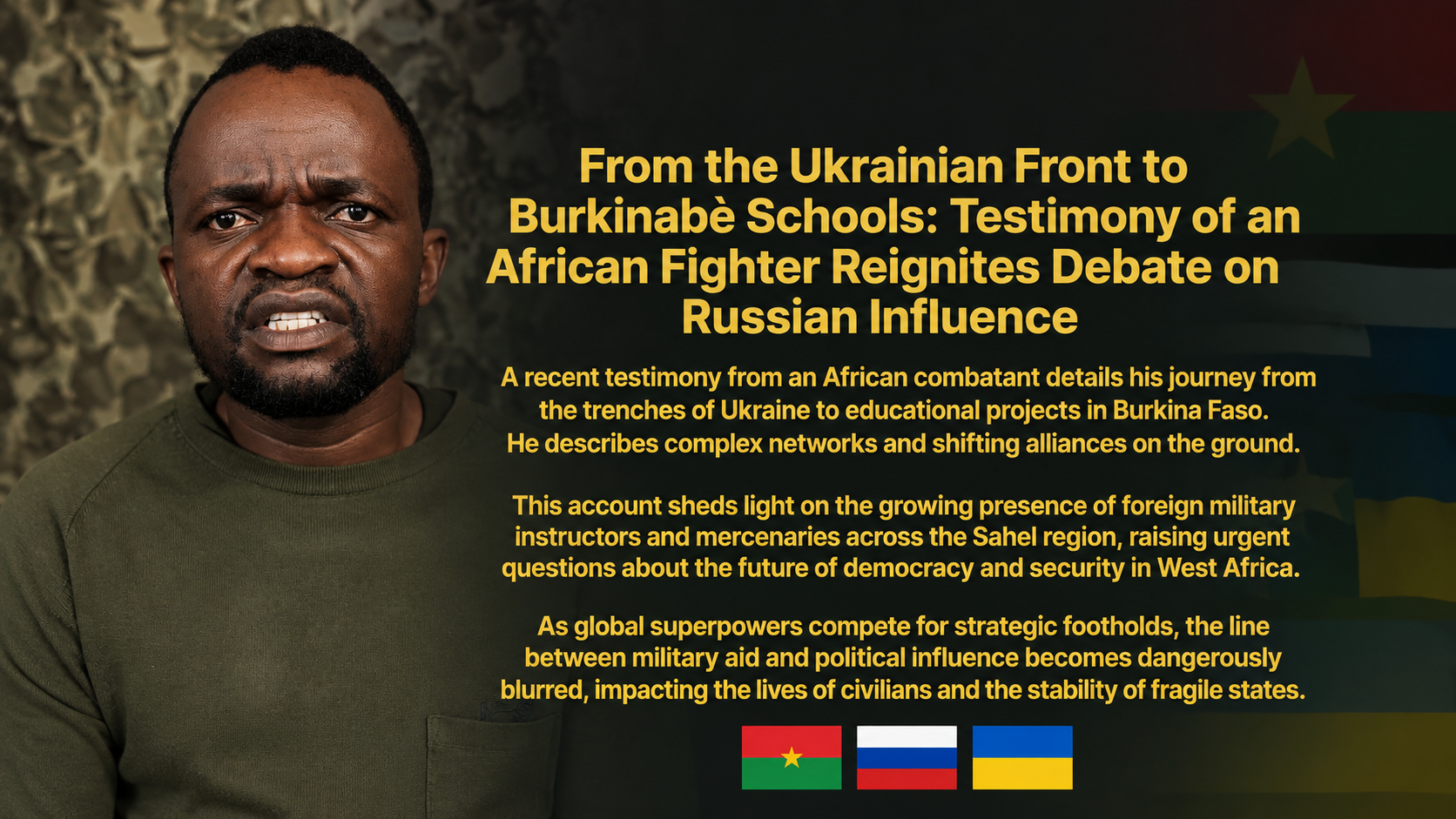
An African fighter’s harrowing account from the frontlines of Ukraine has reignited concerns over Moscow’s recruitment tactics on the continent, casting a spotlight on the broader implications of Russia’s expanding presence in Africa. The testimony of Tatenda Tarwire, a Zimbabwean national who fought alongside Russian forces, reveals a grim reality marked by relentless combat, staggering casualties, and families left in the dark about their loved ones’ fates. His warnings to fellow Africans about the deceptive promises made by certain recruiters underscore the human cost of foreign conflicts.
While Tarwire’s experience is deeply personal, it intersects with a broader geopolitical shift. Over recent years, Russia has intensified its diplomatic, military, economic, and cultural engagements across Africa, capitalizing on a global landscape reshaped by the war in Ukraine. This strategy has extended to Burkina Faso, where the government has announced plans to integrate the Russian language into the national curriculum starting with the next academic year. Officially framed as an effort to diversify international partnerships, broaden academic opportunities for students, and foster deeper ties with the Russian Federation, the move is not without controversy.
education or strategic alignment?
Critics argue that the decision transcends mere educational reform, interpreting it as a step toward a deeper strategic alignment between Ouagadougou and Moscow. They advocate for transparent discussions on what this cooperation entails, questioning its long-term objectives and potential consequences for Burkina Faso’s sovereignty. Supporters, however, contend that as a sovereign nation, Burkina Faso has every right to diversify its international alliances without facing undue scrutiny.
The debate over the Russian language itself is not new. Like English, Mandarin, Arabic, or Spanish, it serves as a gateway to scientific research, academic exchanges, and professional opportunities. The contention arises from the timing and context of its introduction, particularly as Russia remains embroiled in a large-scale war and actively pursues influence across multiple continents. This raises legitimate concerns about the motivations behind the initiative and the potential risks it may pose to Burkina Faso’s educational independence.
the human toll of foreign recruitment
Tarwire’s account also highlights the dangers faced by African nationals lured by promises of financial compensation, training, or overseas opportunities. Investigations have documented cases of foreign fighters recruited for combat roles, often with little understanding of the realities they would face. The human toll—whether physical, psychological, or economic—extends far beyond the individuals directly involved, impacting families and communities left grappling with loss and uncertainty.
In Burkina Faso, the discussion on integrating the Russian language must be grounded in verified information, rigorous analysis, and a balanced examination of perspectives. Citizens deserve clarity on the specifics of this cooperation, including the agreements that accompany it, the opportunities it may create for Burkinabè youth, and the safeguards in place to protect the national education system from external pressures. The future of Burkina Faso’s youth hinges on the quality of their education, the diversity of knowledge they acquire, and their ability to critically assess the world’s complexities.
As the country navigates this pivotal moment, decisions on education must be made with transparency, integrity, and a steadfast commitment to serving the nation’s long-term interests. Only then can the choices of today lay a solid foundation for the generations to come.