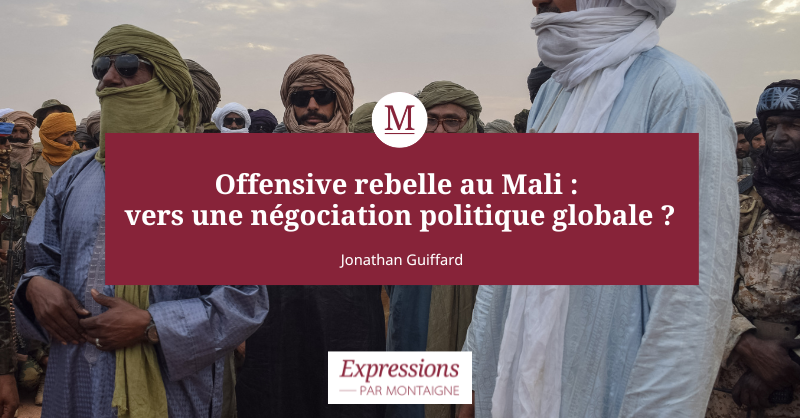
The military junta led by Colonel Assimi Goïta in Mali, closely aligned with Russian interests, faces unprecedented pressure following a coordinated offensive launched on April 25, 2026, by the Jama’at Nusrat al-Islam wal-Muslimin (JNIM) and the Front de Libération de l’Azawad (FLA). This alliance of jihadist and separatist factions has targeted key cities across the country, reigniting fears of a territorial takeover reminiscent of the 2012 crisis—though the current context presents stark contrasts.
Military escalation and shifting power dynamics
The offensive, the most ambitious in recent years, struck Bamako, Kidal, Gao, Sévaré, and Mopti, signaling a new level of coordination between the JNIM and FLA. Unlike previous confrontations, this campaign has avoided indiscriminate violence, instead prioritizing negotiated withdrawals of Malian and Russian forces. In Kidal, for example, Russian mercenaries were reportedly permitted to leave their bases without resistance, a tactic mirroring Russian withdrawal strategies in Syria.
Key military and political figures have been directly affected:
- The assassination of General Sadio Camara, Mali’s Defense Minister, and the severe wounding of General Modibo Koné, head of the National Security Agency, have exposed deep fractures within the junta.
- Reports suggest Assimi Goïta was briefly evacuated to Turkey before reappearing publicly alongside Russian officials, raising questions about the junta’s stability.
- Unconfirmed rumors of an internal power struggle involving General Malick Diaw further underscore the regime’s vulnerability.
A strategy of strangulation and negotiation
The rebels have adopted a dual approach: military pressure combined with offers of dialogue. By seizing northern towns like Kidal, Tessalit, and Anéfis, the JNIM and FLA have encircled strategic cities such as Gao and Tombouctou. Meanwhile, a blockade of Bamako has been enforced, with the capital now relying on precarious supply routes.
Civil society voices, including prominent figures like politician Oumar Mariko and former minister Mamadou Ismaïla Konaté, have renewed calls for negotiations, criticizing the junta’s reliance on military force alone. The Alliance des Démocrates du Sahel (ADS), a Brussels-based initiative, has also advocated for a political solution.
The Islamic State’s Wilaya Sahel (EIWS) has remained active in the northeast, launching attacks on Ménaka—though they were repelled by Russian-Malian forces. While the EIWS did not participate in the JNIM/FLA offensive, its presence adds another layer of complexity to Mali’s security crisis.
Historical parallels and future prospects
The current offensive bears similarities to the 2012 takeover of northern Mali, but critical differences may prevent a repeat of that scenario:
- The JNIM and FLA have avoided brutal governance, opting instead for negotiated control and a softer application of Islamic law, a strategy influenced by past failures in 2012–2013.
- Russian involvement has proven counterproductive, alienating local populations and failing to curb jihadist expansion.
- The junta’s internal divisions are more pronounced, with key pro-Russian figures now sidelined or eliminated.
In the coming months, the rebels are likely to consolidate control over northern Mali, particularly if Russian mercenaries withdraw from Gao and Tombouctou. The FAMA’s dwindling morale and the junta’s inability to regain initiative suggest a de facto partition of the country is increasingly probable.
Regional and international responses
The crisis has forced neighboring countries to reassess their strategies. While Algeria and Mauritania maintain channels with rebel factions, most regional actors—including Burkina Faso, Niger, and Senegal—are unlikely to intervene militarily. The junta’s reliance on Russia may weaken further, leaving Bamako increasingly isolated.
The international community faces a dilemma: military intervention, once a default response to jihadist expansion, is now unfeasible. Western powers have disengaged from the Sahel, and regional armies lack the capacity to reverse the tide. This leaves political negotiations as the most viable path, though the JNIM’s continued allegiance to Al-Qaeda complicates the prospect of normalization.
Long-term implications for Mali and the Sahel
The emergence of a jihadist proto-state in northern Mali would reshape the region’s security landscape, much like in Syria or Afghanistan. For European powers, this means heightened vigilance against potential terrorist spillover, necessitating closer collaboration with African and Arab partners to contain and stabilize the new actors on the scene.