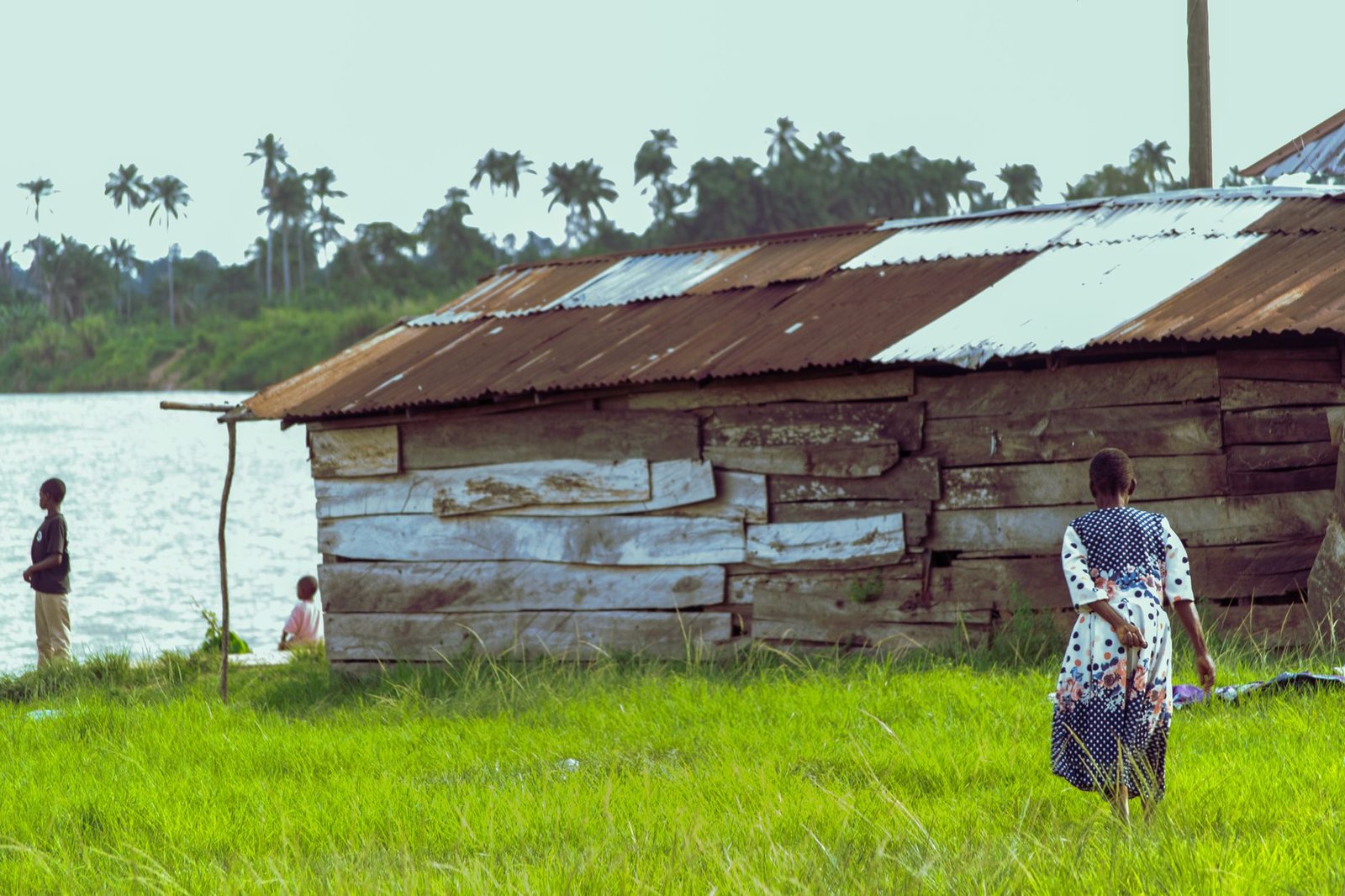
Nestled in Gabon’s far south, bordering the Republic of the Congo, the province of Nyanga remains one of the country’s least populated and most isolated regions. Yet beneath the national narrative of Gabon’s high human development ranking lies a sobering reality: over 77% of its residents live below the poverty line. This stark figure, tucked away in the 219-page 2026 National Human Development Report (RNDH), starkly contrasts with the country’s broader economic success story.
Poverty in Nyanga challenges Gabon’s official development narrative
Tchibanga, the provincial capital, serves as the primary hub for public services in a region where access to clean water, electricity, and healthcare remains scarce. While the high poverty rate may not surprise local stakeholders, it sharply contrasts with Gabon’s macroeconomic standing. As one of sub-Saharan Africa’s wealthiest countries by GDP per capita, Gabon consistently ranks among the continent’s top performers in the United Nations Development Programme’s Human Development Index (HDI).
This national success story, however, masks severe regional disparities. The 2026 RNDH documents these gaps but fails to prioritize them. The Nyanga data, buried within the report, lacks synthesis or actionable policy recommendations. While the report celebrates Gabon’s economic progress, it offers little insight into how such disparities persist—or how they might be addressed.
Transparency in public statistics: a gap between reporting and action
A national human development report should guide policy decisions and allocate resources where they are most needed. Yet when a province reports a poverty rate three to four times the national average, such data should drive budgetary priorities. Instead, the treatment of Nyanga’s figures suggests mere compliance with documentation standards, with no political follow-through.
Gabon is not alone in this challenge. Several mineral-rich Central African nations boast impressive macroeconomic indicators, yet their rural populations endure deep poverty. Historical centralization, administrative neglect, and investment concentration in economic hubs like Libreville and Port-Gentil have left border regions like Nyanga behind. Infrastructure and public services in these areas remain woefully underdeveloped.
Nyanga as a case study in Gabon’s regional divides
For Gabon’s transitional authorities, who took power in August 2023 with a mandate to reform institutions, this data presents a critical political test. Official discourse emphasizes restoring territorial equality and unblocking landlocked provinces. Recent commitments include road rehabilitation, rural electrification, and agricultural revival programs. The real measure of progress, however, will lie in the next budget allocations—where rhetoric must meet resources.
Nyanga’s story also highlights the disconnect between potential wealth and actual living conditions. Once a regional leader in agriculture and cattle ranching, the province now struggles with deteriorating ranches and a youth exodus to Libreville. This brain drain perpetuates a cycle of impoverishment that national statistics alone cannot capture.
The 2026 RNDH provides a valuable data foundation—but only if sensitive figures like Nyanga’s are not lost in the report’s depths. The question is no longer about knowing the poverty rate but about how Gabon’s government plans to address it—and by when. Without clear prioritization, even the most revealing data risks becoming another forgotten statistic.