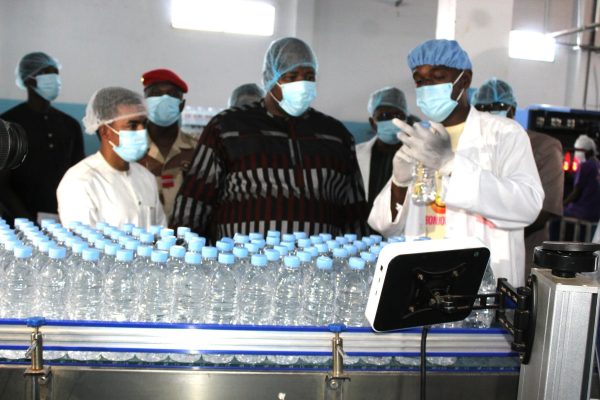
Niamey, July 15, 2026 — Economic independence in Niger is no longer just a matter of policy declarations. It is now being forged in the heart of production lines across the country. Minister of Commerce and Industry, Abdoulaye Seydou, has intensified his field visits to industrial facilities, determined to turn local production ambitions into measurable achievements.
On Tuesday, July 14, the minister continued his inspection tour by visiting Sahel Agro Ingénierie, followed by the mineral water production plants of Benie and Belvie. This initiative goes beyond mere protocol; it reflects the government’s commitment to assessing the health of the national industry and pinpointing the obstacles still hindering its growth.
From groundnut oil to bottled water: exploring Niger’s industrial fabric
At Sahel Agro Ingénierie, a key player in transforming local crops like groundnuts, sesame, and tiger nuts into edible oils, discussions centered on production capacity and scaling opportunities. The company currently produces around 1,000 liters of oil daily, a figure authorities aim to boost to gradually reduce the nation’s reliance on imported cooking oils.
The minister’s next stops were the Benie and Belvie bottled water factories. Here, he examined the entire production chain—from water purification to bottle packaging—with a sharp focus on compliance with health standards, industrial quality benchmarks, and existing quality control mechanisms.
Power, logistics, and investment: tackling industry’s core challenges
This tour provided a platform for direct engagement with industry leaders. The talks highlighted persistent hurdles: unreliable energy supply, logistical bottlenecks, and the urgent need for investment to expand production capabilities.
Addressing these concerns, Abdoulaye Seydou underscored the government’s priorities: ensuring products meet international quality standards, maintaining transparent pricing in the domestic market, and actively fostering an industrial ecosystem that strengthens Niger’s economic self-reliance.
Local production as the backbone of Niger’s economic sovereignty
This latest field mission follows a recent tour of other industrial sites across Niger, reflecting the government’s hands-on approach to monitoring local manufacturing progress.
Local processing is now seen as a critical driver of value addition, a tool to cut import costs, and a foundation for national economic sovereignty. Through this sustained engagement, authorities are positioning Niger’s industrial sector at the core of its development agenda, turning local production into a robust engine of growth and a cornerstone of the country’s independence.