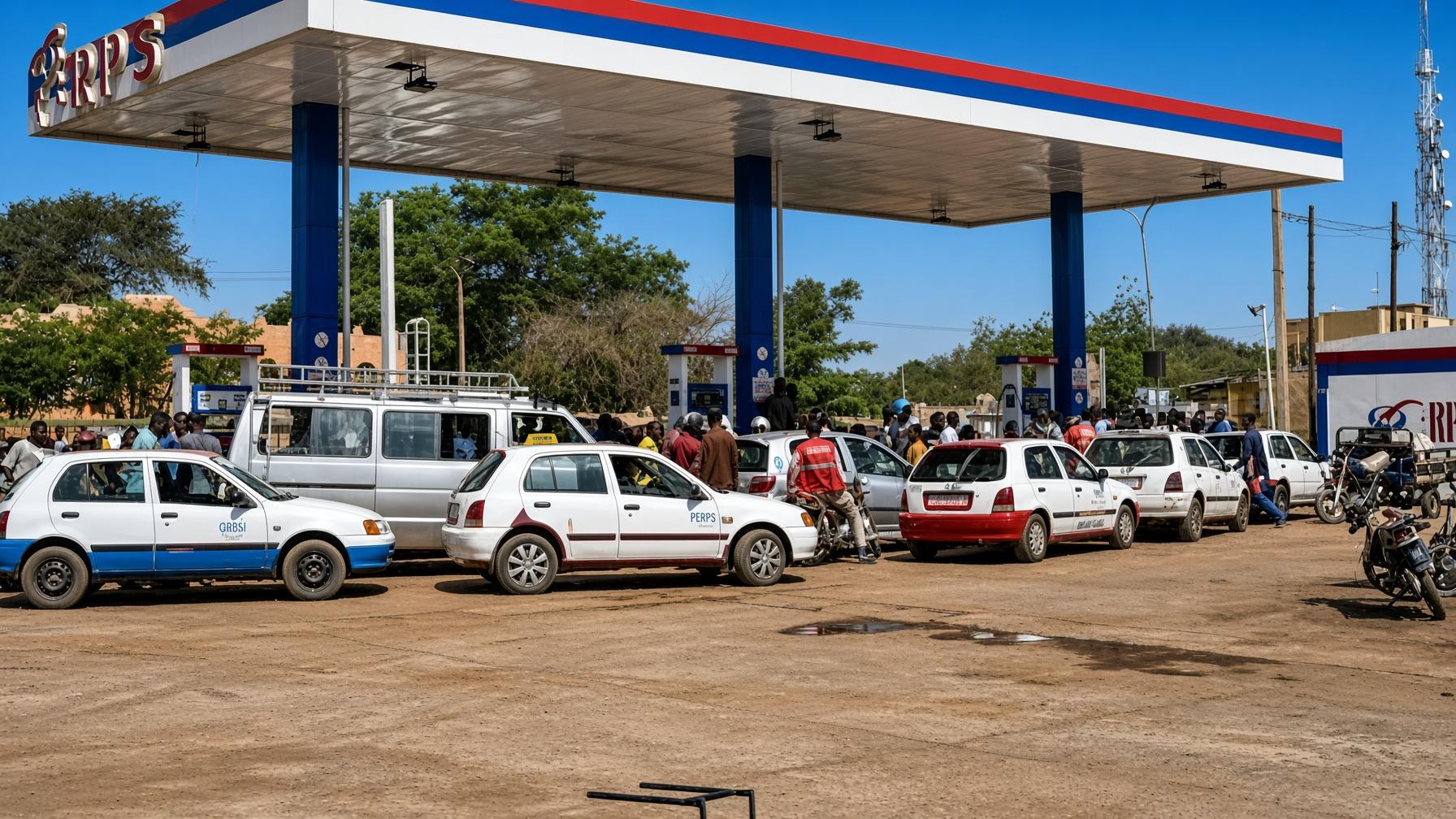
Niamey is caught in a spiral of energy chaos, where long waits at gas stations and empty fuel pumps have shifted from a passing annoyance to a systemic breakdown. The struggle for fuel has turned into a relentless daily ordeal, draining time, resources, and patience from the city’s residents. What began as a logistical hurdle has morphed into a crisis that exposes deeper fractures in Niger’s governance and economic stability.
How poor planning turned a manageable shortage into systemic failure
The roots of Niamey’s fuel crisis run deeper than global market fluctuations or regional conflicts—it stems from a chronic failure in domestic strategy. Niger’s sole operational refinery, Soraz in Zinder, operates far below its potential, producing just a fraction of the fuel the nation requires. While theoretically capable of refining 20,000 barrels per day, primarily diesel, the facility falls short in meeting gasoline demand. This shortfall has expanded into a widening gap, with gasoline shortages hitting 196.62 million liters and diesel shortages at 52.60 million liters during the first eight months of 2026—a staggering deficit rooted in years of mismanagement rather than unforeseen circumstances.
Smuggling’s collapse: the government’s blind spot in fuel dependency
The abrupt halt in affordable fuel imports from Nigeria—a direct result of Abuja’s subsidy reductions—was not an unexpected shock but a foreseeable turning point. Yet instead of preparing contingency plans, Niger’s Ministry of Petroleum remained passive as informal fuel supplies vanished overnight. The collapse of this unofficial network left the country’s already weak distribution system exposed, forcing authorities into a costly and chaotic scramble to import fuel through official—and often inefficient—channels. Despite its symbolic value, the Soraz refinery has been structurally incapable of compensating for this loss, highlighting a glaring gap between national pride and operational reality.
Empty pumps, empty assurances: the government’s failed attempts at damage control
In a bid to demonstrate control, authorities released a list of the few stations still receiving fuel deliveries, only to ignite chaos rather than relief. Motorists rushed to these locations, transforming rationing into a chaotic and desperate scramble. Rather than implementing a clear, transparent fuel distribution plan, the government resorted to reactive, uncoordinated measures: erratic deliveries, unclear rationing rules, and a lack of accountability. Citizens now navigate each day in uncertainty, unsure whether they will secure fuel or find the pumps dry. Official statements, when they materialize, offer little beyond vague reassurances and deflection. Accusations of corruption are leveled without proof, while demands for transparent stock reports and fair distribution schedules remain unaddressed. This lack of clarity has eroded public trust and magnified frustration.
The real cost of failure: who bears the burden of this crisis?
The fuel shortage is not just a inconvenience—it is an economic and social toll that disproportionately affects Niger’s most vulnerable. Daily wage earners waste hours in queues that consume their earnings. Small businesses struggle to operate when fuel never arrives, and transportation costs skyrocket beyond affordability. Meanwhile, unregulated street vendors exploit the scarcity, selling adulterated fuel at inflated prices, further damaging vehicles and draining household budgets. The state’s inability to secure a stable fuel supply has not only crippled economic activity but has also surrendered control of a critical public resource to unchecked profiteers. This is not simple inefficiency—it is the failure of the state to fulfill its most fundamental duty.
A crisis with no clear path forward: Niger at a governance crossroads
Niamey’s fuel crisis has evolved beyond a temporary disruption—it now serves as a stark indicator of Niger’s governmental distress. Repeated admissions of severe shortages, a refusal to publish verified stock data, and a reliance on short-term fixes all point to a system struggling to meet its core obligations. Without a concrete plan for modernizing refineries, diversifying supply chains, and enforcing transparent governance, the cycle of scarcity and speculation will continue to deepen. The city—and the nation—remains trapped in a cycle of dependence, where symbolism has been mistaken for sovereignty and promises have replaced progress. The time for real solutions is long overdue.