Mali’s successful HPV vaccination drive: a year of progress in cervical cancer prevention
One year after the introduction of the human papillomavirus (HPV) vaccine, the initiative has gained significant traction across Mali. Both in the capital city and surrounding communities, an increasing number of 10-year-old girls are receiving their essential doses to protect against cervical cancer. Despite persistent hurdles such as initial hesitations, widespread rumors, and logistical constraints, healthcare professionals, community associations, and families are celebrating this as a crucial step forward for women’s health.
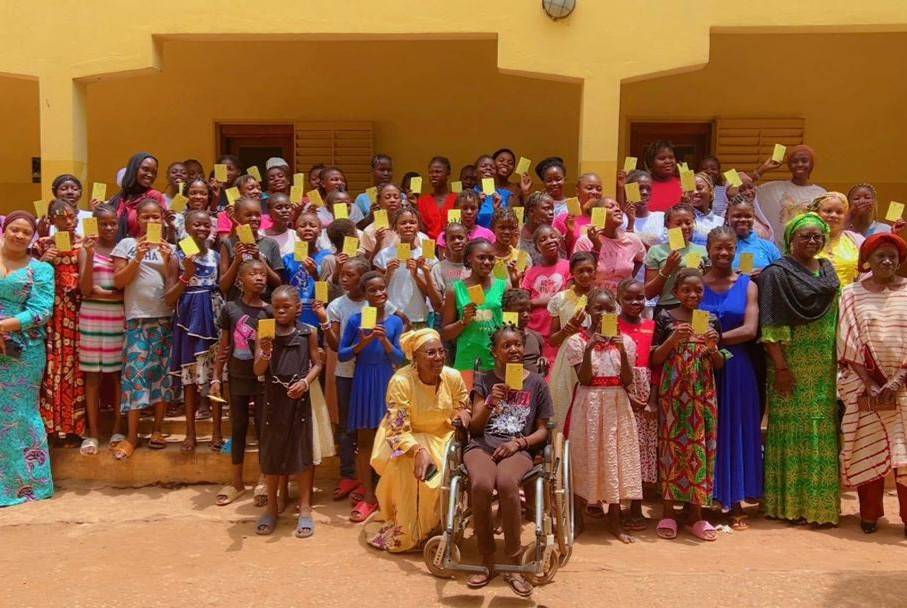
On Thursday, October 30, a vital information session brought together women and young girls at the civil registry office in Bamako’s Korofina district. Amin Dem, a midwife, initiated the discussion. “Initially, there was considerable hesitation. Girls were scared, and so were their parents. However, through ongoing awareness efforts, attitudes have shifted,” she explained.
According to Dem, the primary concern continues to be the misconception that the vaccine causes infertility. “When we take the time to explain, especially in their local language, they begin to understand.”
A significant leap in preventive healthcare
Launched in November 2024, the HPV vaccine marks a pivotal moment for Mali. Utilizing a single-dose regimen, which now provides full protection, over 145,000 girls aged 10 were successfully vaccinated between January and September 2025. The majority, just over 113,000, are enrolled in school, while approximately 32,400 out-of-school girls also received their doses. Authorities acknowledge that more concerted efforts are necessary to reach this latter group, who are often at higher risk of being overlooked.
For Dr. Ibrahima Téguété, a gynecologist-obstetrician at the CHU du Point G, this advancement brings Mali closer to the WHO’s 90-70-90 targets: vaccinating 90% of girls against HPV, screening 70% of women at two crucial ages, and ensuring 90% of those with lesions receive treatment. “The vaccine’s introduction is a great source of satisfaction. It finally allows us to engage in primary prevention,” he emphasized. However, he remains realistic about systemic limitations: “We only have one radiotherapy unit. The final ’90’ will still be challenging to achieve.”
Collective engagement: a vital catalyst
While the vaccination campaign relies on public health infrastructure, civil society also plays a crucial role. In Bamako, the NGO Solidaris223 has conducted numerous awareness sessions since the launch. “We intervened in all communes. Mothers came to us asking where to vaccinate their daughters,” recounted Amina Dicko, the organization’s president.
At the Djiguiya Center, also in Bamako, an entire day was dedicated to vaccination. “Seventy resident girls received their dose, and none experienced any side effects,” affirmed Director Mme Togo Mariam Sidibé.
Adolescents themselves articulate its importance. Awa, 10, shared, “I was scared of the needle, but it was over quickly. I’m happy because it protects us for the future.”
Haby, vaccinated at school, whom we met with her family, added: “My teacher explained why it’s important. I asked my mother, and she reassured me. I am proud to be vaccinated.” Dr. Téguété notes that these initiatives demonstrate the commitment of all stakeholders: “The initial supplies were used very quickly. This proves there is a collective will.”
Decreasing, yet persistent, hesitancy
Rumors regarding fertility continue to fuel some resistance. “Some people spread the belief that the vaccine is a means to harm us. This is entirely false,” Dr. Téguété emphasized. Amin Dem observes this daily: “Today, some mothers proactively come to request the vaccine. Once you take the time to explain, it changes everything.”
Fannata Dicko, a mother of a vaccinated daughter, exemplifies this shift. “I had my daughter vaccinated because cervical cancer is a serious illness. My mother-in-law fell victim to it this year and passed away. I witnessed firsthand how much a woman can suffer when afflicted. So, I chose to prevent it, ensuring my daughter never has to face that later.”
Despite the progress, vaccine deployment faces challenges. “Travel between Mopti and Gao is sometimes impossible by road,” Dr. Téguété acknowledged. To overcome these obstacles, some vaccine supplies are transported by air to regional capitals.
The vaccine remains entirely free for all 10-year-old girls, a measure sustained through the collaborative efforts of the Malian state and its technical and financial partners, notably Gavi, which facilitates access to the vaccine at a reduced cost. This universal access ensures equity, even in the most remote areas. “If we can maintain this effort for a few more years, we will have vaccinated all girls aged 9 to 14,” the specialist projected.
A hopeful future, despite ongoing hurdles
Prevention efforts are not new. Between 2016 and 2022, the Weekend 70 program successfully increased cervical cancer screening rates from 15% to over 70% in the Bamako district. However, misinformation remains a significant barrier. “People fear what they don’t understand. We must continue to explain, inform, and communicate,” Dr. Téguété insisted.
He also praised the involvement of religious leaders. “Their support greatly reassured families.” In Bamako, the positive outcomes are evident: parents are more confident, and more girls are receiving the vaccine. “Bamako is not all of Mali, but it serves as a strong indicator of what we can achieve collectively.”
Amin Dem shares this optimism. “Before, people questioned why we were discussing cancer here. Today, they actively seek answers.”
For both professionals and associations, the HPV vaccine signals the beginning of a profound transformation in women’s health throughout Mali. As Dr. Téguété aptly states, “Behind every vaccinated girl, there is a woman saved.”