Listen to the articleAbout 2 min
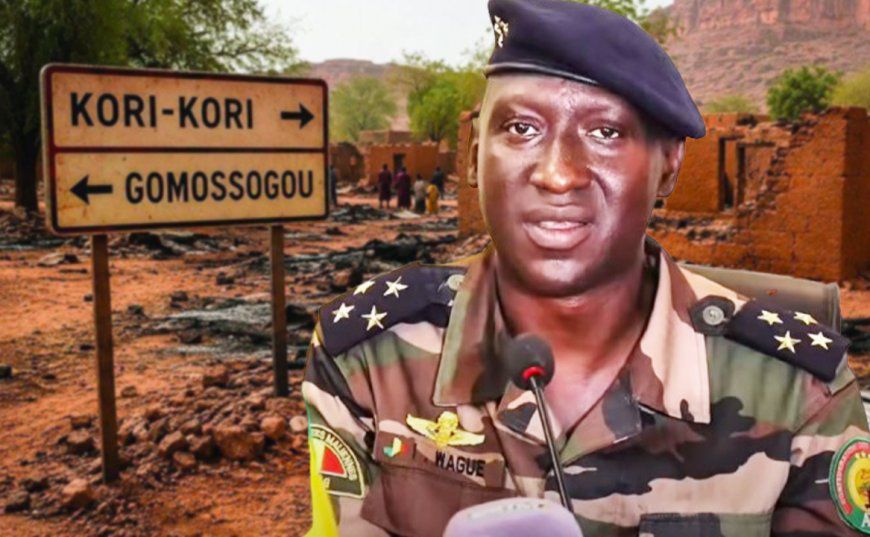
A high-level Malian government delegation, led by General Ismaël Wagué, the Minister of State for Reconciliation, Peace, and National Cohesion, traveled to Bandiagara in central Mali on Monday, May 11, 2026. This crucial visit followed a devastating terrorist assault that occurred on May 6, targeting the villages of Kori-Kori and Gomossogou, situated within the Bankass circle.
During a solemn ceremony held at the regional governorship, the delegation formally extended the State’s profound condolences to the affected communities. In a tangible show of support, significant aid was distributed to the victims, comprising 25 tons of millet, 25 tons of rice, and a financial contribution of 20 million FCFA.
Minister Wagué attributed the brutal attack to fighters from the JNIM group. However, official casualty figures have not yet been released by the authorities. In contrast, the local Dana Ambassagou Dozos militia reported a grim toll of over 60 fatalities, numerous injuries, and widespread material destruction across the affected areas.
Youssouf Toloba, who leads this militia, asserted that these villages were specifically targeted because their inhabitants had rejected signing so-called “peace agreements” with armed terrorist factions. Echoing this sentiment, Noël Tessougué, a sub-chief among the Dozos, issued a stern warning, stating that the militia would no longer tolerate any villages that choose to forge agreements with JNIM combatants.
In his address, Minister Ismaël Wagué underscored the transitional authorities’ unwavering commitment to eradicating violence against civilians throughout the entire national territory. He concluded his remarks by urging for collective unity, solidarity, and national cohesion as essential elements to effectively confront the current security challenges facing Mali and the broader West Africa region.
During a solemn ceremony held at the regional governorship, the delegation formally extended the State’s profound condolences to the affected communities. In a tangible show of support, significant aid was distributed to the victims, comprising 25 tons of millet, 25 tons of rice, and a financial contribution of 20 million FCFA.
Minister Wagué attributed the brutal attack to fighters from the JNIM group. However, official casualty figures have not yet been released by the authorities. In contrast, the local Dana Ambassagou Dozos militia reported a grim toll of over 60 fatalities, numerous injuries, and widespread material destruction across the affected areas.
Youssouf Toloba, who leads this militia, asserted that these villages were specifically targeted because their inhabitants had rejected signing so-called “peace agreements” with armed terrorist factions. Echoing this sentiment, Noël Tessougué, a sub-chief among the Dozos, issued a stern warning, stating that the militia would no longer tolerate any villages that choose to forge agreements with JNIM combatants.
In his address, Minister Ismaël Wagué underscored the transitional authorities’ unwavering commitment to eradicating violence against civilians throughout the entire national territory. He concluded his remarks by urging for collective unity, solidarity, and national cohesion as essential elements to effectively confront the current security challenges facing Mali and the broader West Africa region.
Follow this topicAdd our feeds to your favourite RSS reader
You may also like
Senegal-Azerbaijan pact in New York: what it means for jobs, trade and cooperation
What Luxembourg’s 9.8 billion FCFA port training pledge means for Benin’s workers and businesses
Burkina Faso: shrinking civil service payroll exacts a heavy toll on households and local economies
Libya-Cameroon air link plan: how Yaoundé and Tripoli are reacting, and what could follow
Silmossin fallout: Burkina Faso’s security debate moves beyond slogans