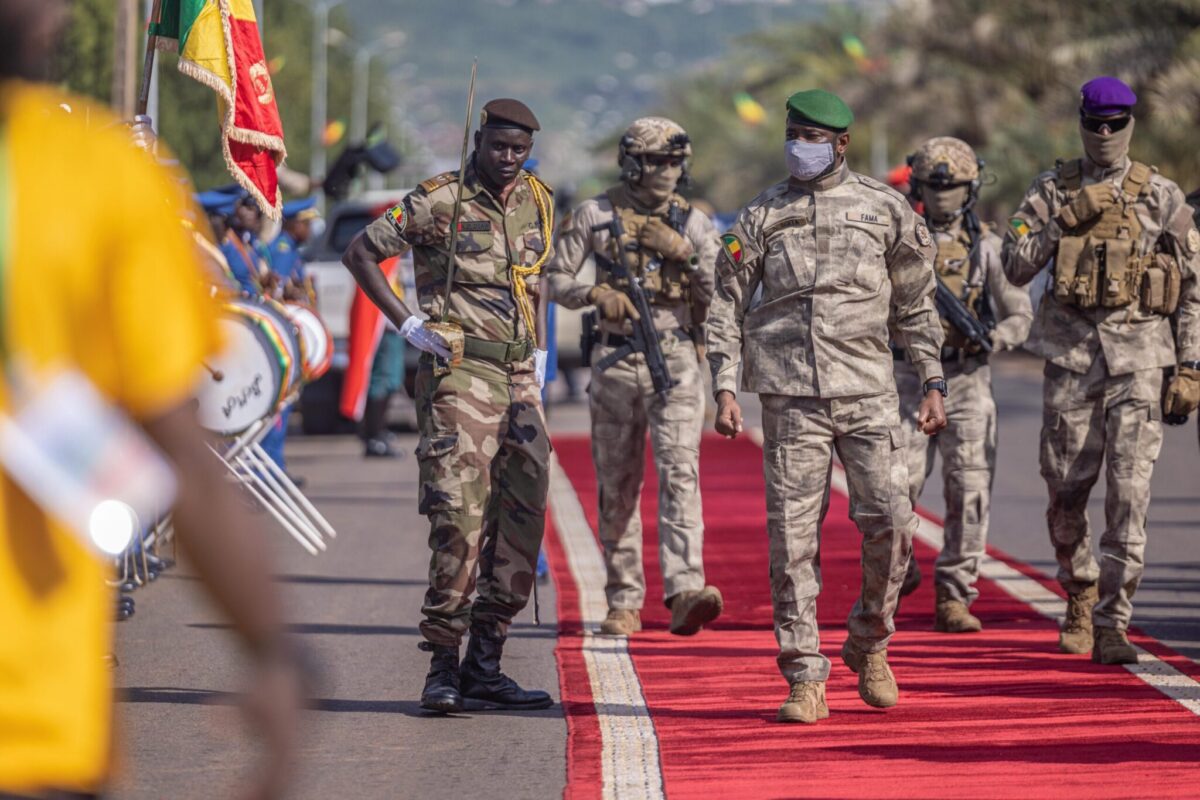
In Bamako, the rhetoric of regained sovereignty resonates strongly. Following the withdrawal of French forces and the gradual dismantling of Western security arrangements, Malian authorities have framed this transition as a historic victory—one that restores national control over territory long plagued by instability. Yet beneath the surface of official declarations lies a far more complex reality: the deepening militarization of the Malian state.
From external dependence to internal militarization
After the 2022 military takeover, the junta consolidated power by placing the army at the heart of governance. No longer just a fighting force, the military now shapes policy, controls institutions, and dictates the rhythm of national life. The departure of foreign troops did not end dependence—it merely reoriented it. Today, Africa Corps and other non-state actors fill the void left by Western forces, supporting counterterrorism operations while also safeguarding the regime’s stability.
This shift has transformed conflict from a temporary challenge into a permanent feature of Malian politics. Violence is no longer an obstacle to overcome; it has become the very foundation of state power. The longer the crisis persists, the more the military’s influence grows, justifying expanded budgets, centralized decision-making, and the postponement of democratic transitions. In this environment, peace is not a priority—it is a potential threat to the status quo.
Regional alliances and the illusion of autonomy
The Alliance of Sahel States (AES)—comprising Mali, Burkina Faso, and Niger—has emerged as a symbol of defiance against former colonial powers. While this alliance promotes a narrative of self-determination, its survival hinges on fragile economic foundations and shifting alliances. The reliance on Russian-backed security partnerships, in particular, has introduced new dependencies, replacing Western oversight with a different set of strategic constraints.
Yet the most pressing contradiction remains: the Malian state’s ability to govern is increasingly defined by its capacity to wage war. The economy, public administration, and even social cohesion are now structured around the logic of conflict. As long as insecurity persists, the military will retain its central role, and civilian oversight will remain secondary.
Can Bamako break the cycle?
The challenge facing Mali is no longer just about replacing foreign troops with local forces. It is about reimagining governance in a state where war has become an infrastructure of power. To move forward, Bamako must address the root causes of instability—not through military means alone, but through inclusive dialogue, economic revitalization, and a return to constitutional order.
Until then, the militarization of the Malian state will continue to deepen, not as a temporary measure, but as a defining feature of its future.