The already fragile security situation in Mali took a sharp turn for the worse in late April 2026, when a series of coordinated armed attacks targeted multiple cities, resulting in the deaths of the Defense Minister, Sadio Camara, and several Malian soldiers.
These incidents represent the latest escalation in a prolonged surge of violence against the Malian army and state institutions over recent years. Our decade-long research on insecurity and politics in West Africa and the Sahel reveals a direct link between these attacks and the unresolved grievances of the Touareg people—a nomadic Berber community in northern Mali—which the current military regime has failed to address.
Root causes of the conflict
Three key factors underpin the current crisis in northern Mali:
1. Political marginalization and cultural neglect
The Touareg community has long demanded greater political autonomy, cultural recognition, and equitable resource distribution. Their grievances center on systemic exclusion from power structures dominated by southern elites, dating back to Mali’s independence in 1960. Despite repeated calls for autonomy or decentralized governance, the state has consistently responded with repression rather than dialogue.
2. Military overreach and civilian harm
Counterterrorism operations in northern and central Mali have relied heavily on force, leading to significant civilian casualties, mass displacements, and collective punishment—such as arbitrary arrests and massacres. These actions have not only failed to curb insurgencies but have also fueled recruitment for Islamist militant groups like the Jamaat Nusrat al-Islam wal Muslimin (JNIM).
3. Economic disparity and resource control
The northern regions of Mali—rich in gold deposits, salt mines, grazing lands, and trade corridors—remain economically marginalized. Revenue from these resources flows disproportionately to the southern-central state, exacerbating regional inequality and deepening resentment among the Touareg population.
Historical parallels and failed interventions
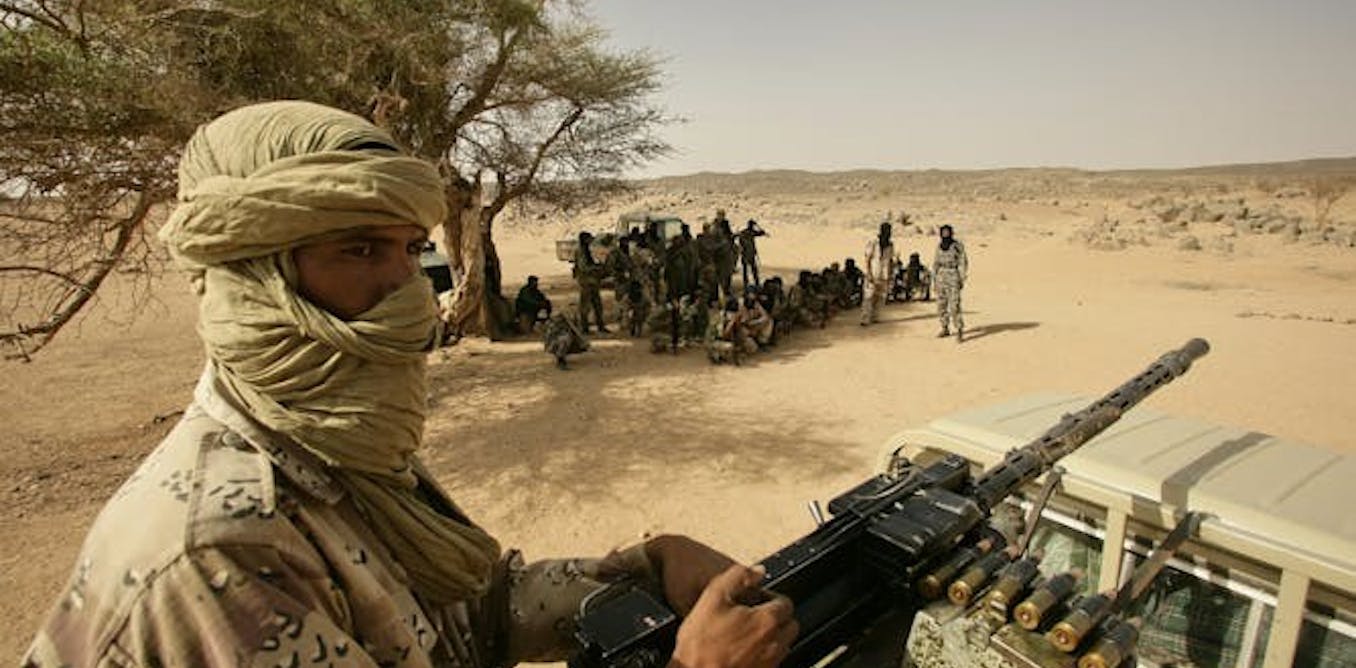
The 2026 attacks echo a similar crisis in 2012, when a coalition of Touareg separatists—led by the National Movement for the Liberation of Azawad (MNLA)—joined forces with Islamist militants, including affiliates of Al-Qaïda, to challenge the Malian state. Initially, the MNLA, founded in 2011 by former Libyan fighters and northern Touareg communities, numbered around 10,000 combatants at its peak. However, lacking military strength to hold territory, the group soon aligned with better-armed Islamist factions like Ansar Dine, Al-Qaïda in the Islamic Maghreb (AQMI), and the Movement for Oneness and Jihad in West Africa (MUJAO).
After briefly seizing major cities such as Gao, Timbuktu, and Kidal, the alliance collapsed under the weight of ideological and strategic differences. The subsequent French-led Operation Barkhane intervention in 2013 helped the Malian government regain control, forcing Islamist groups into remote desert and mountain strongholds where they adopted guerrilla tactics, including suicide bombings and landmine warfare.
The withdrawal of French forces in 2022 removed a critical counterterrorism pressure point, creating a security vacuum that Islamist groups swiftly exploited. With weakened state capacity and disrupted intelligence networks, these groups regained territorial influence, expanded local recruitment, and intensified operations across Mali.
Missed opportunities for peace
The current military regime under Assimi Goïta has yet to address the core issues driving Touareg discontent. Past peace agreements promised decentralization, investment, and integration of northern elites and former combatants—but implementation has stalled. Meanwhile, environmental challenges such as drought, desertification, and climate variability have devastated the livelihoods of pastoralist Touareg communities, compounding their sense of abandonment.
Critics argue that successive Malian governments—along with previous French military interventions—have contributed to the crisis through heavy-handed tactics and neglect of local governance. These failures have eroded trust in the state and provided fertile ground for Islamist recruitment and territorial control.
Pathways to resolution: lessons from Niger
To stabilize Mali, addressing Touareg grievances must become a national priority. One model for reconciliation comes from neighboring Niger, where former President Mahamadou Issoufou implemented a series of inclusive policies after taking office in 2011:
Political integration: Incorporating Touareg leaders and former rebels into state institutions.
Administrative decentralization: Granting regional authorities greater control over local budgets and governance.
Disarmament and reintegration: Launching DDR programs to demobilize combatants and reintegrate them into civilian life.
Targeted development: Investing in pastoral infrastructure, water access, education, and road connectivity in arid northern regions.
By addressing structural inequalities and restoring confidence in the state, Mali can shift the dynamics of conflict from rebellion to dialogue, paving the way for sustainable peace and stability in the north.