
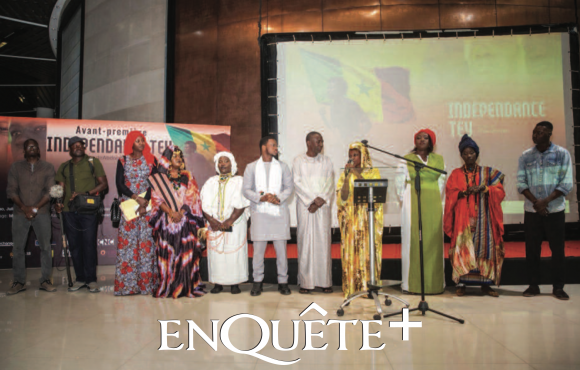
Senegalese documentary Indépendance Tey premieres at Dakar’s Black Civilizations Museum
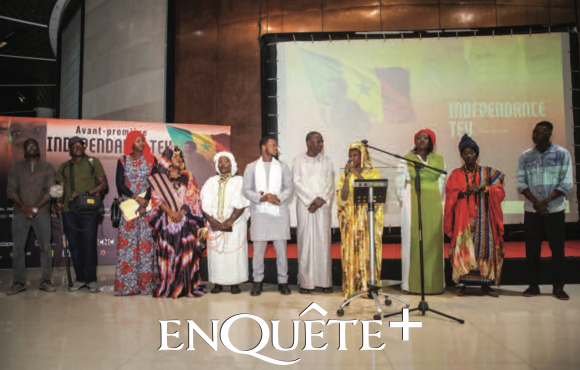
At the Black Civilizations Museum in Dakar, the premiere of Indépendance Tey, the latest film by Senegalese director Abdou Lahat Fall, turned into a profound evening of collective reflection. More than a film screening, this event united artists, activists, and citizens around the urgent questions shaping modern Senegal between 2019 and 2024.
The event, organized by Sine Films and Wawkumba Film in collaboration with FRAPP, the Directorate of Cinematography, and the Black Civilizations Museum, began with a powerful performance by Leuz Diwan G, a prominent voice in Senegalese conscious rap. His politically charged lyrics and urban rhythms set the emotional tone for the evening, signaling that Indépendance Tey was not just a political documentary—it was an intimate, human journey into a nation grappling with transformation.
a cinematic immersion into Senegal’s socio-political upheavals
Following his acclaimed 2018 documentary Migrants, Migrer: The Impossible Return, Abdou Lahat Fall returns with Indépendance Tey, a deeply personal exploration of the FRAPP movement and the individuals driving Senegal’s civic awakening. The film centers on four activists—Aabdoulaye, Bentaleb, Guy Marius Sagna, and Félix—whose lives and struggles mirror the broader tensions between idealism and reality in modern Senegal.
Through their stories, the documentary traces the seismic shifts in Senegal’s political landscape: mass protests against oil scandals, electoral tensions, police crackdowns on dissent, and the historic 2024 presidential election that brought opposition figures to power. But beyond the headlines, Indépendance Tey delves into the human cost of activism—the sacrifices, the shattered dreams, and the quiet resilience of ordinary people who dared to challenge the status quo.
From idealism to exile: the burden of commitment
Aabdoulaye, a passionate young activist, embodies the hopes of Senegal’s youth. Yet his journey reveals the personal toll of engagement: family pressure, abandoned studies, and the heartbreak of leaving his homeland for Canada. His departure becomes a silent metaphor for the sacrifices demanded by political struggle.
Bentaleb’s story, marked by arrests and imprisonment, reflects the harsh realities faced by many activists during years of relentless repression. Guy Marius Sagna’s evolution—from radical protester to institutional politician—raises critical questions about compromise, power, and the limits of civic action within formal political systems. Meanwhile, Félix, the aging union leader, represents the enduring legacy of past struggles, his weary eyes bearing witness to decades of social combat.
artistic integrity amid political passion
A defining feature of Indépendance Tey is its unflinching honesty. Abdou Lahat Fall, a filmmaker with deep personal ties to the movement, grapples with the challenge of documenting a cause he passionately supports without slipping into propaganda. The film’s narrative voice—sometimes critical, sometimes reflective—offers a rare balance between involvement and critical distance. In one poignant moment, Fall questions Guy Marius Sagna about his transition from street protester to electoral candidate, exposing the contradictions inherent in institutionalizing radical change.
The documentary’s power lies in its refusal to glorify its subjects. Instead, it presents them in all their complexity: flawed, conflicted, and deeply human. Scenes of mass protests blend seamlessly with intimate moments of doubt, strategic debates, and quiet solitude, creating a narrative that feels both urgent and deeply personal.
more than a film: a mirror of Senegal’s soul
Indépendance Tey transcends the boundaries of cinema. It is a living archive of Senegal’s recent history, a dialogue between generations, and a testament to the enduring belief that another future is possible. Frantz Fanon’s words resonate throughout the film: “Each generation must, within a certain opacity, confront its mission: to fulfill it or betray it.” This idea encapsulates the spirit of a Senegalese youth tired of injustice, rejecting fatalism, and forging its own path sixty years after independence.
The film’s cinematic approach is marked by restraint and authenticity. Without resorting to dramatic effects or artificial staging, Abdou Lahat Fall’s camera captures raw, unfiltered moments—silences, glances, and intimate exchanges that reveal the inner lives of his characters. This minimalist style enhances the documentary’s emotional impact, making it both a tool of collective memory and a catalyst for intergenerational conversation.
Already recognized on the international stage, Indépendance Tey has been selected for prestigious forums including Cinéma du Réel and Durban FilmMart. Supported by institutions such as Sentoo, Produire au Sud, DocA, the CNC, Fonds Image de la Francophonie, and Procirep-Angoa, the film underscores the growing prominence of Senegalese documentary filmmaking in global cinema. Its journey from residency programs to international screenings reflects a broader movement: African stories told with honesty, depth, and uncompromising vision.
For the audience at the Black Civilizations Museum, the premiere of Indépendance Tey was more than an artistic event. It was a moment of collective introspection—an invitation to reflect on Senegal’s past, present, and future through the lens of those who dared to imagine change.
You may also like
Bénin et Émirats arabes unis renforcent leur coopération militaire
Did Togo really spend two million dollars on a symbolic un map?
Did billions vanish from the vaults of the Special Criminal Court in Cameroon?
Why are Bénin’s amazones celebrating a historic handball triumph in Ouagadougou?
Niger’s official narrative masks deep fractures within the ruling junta