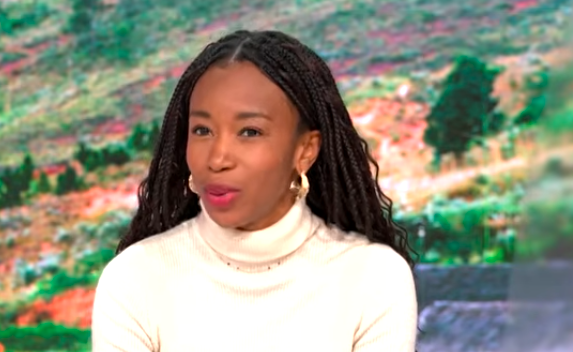
Senegal and Côte d’Ivoire are grappling with a particularly aggressive form of disinformation that specifically targets women in the public sphere. This concerning trend comes to light in a comprehensive report titled “Gendered Disinformation in Senegal and Côte d’Ivoire: Forms, Impact, and Stakes,” published by Article 19 and Polaris asso. Sadia Mandjo, the report’s author, discussed its findings in a recent interview.
The study reveals that a significant 61% of women surveyed across both Senegal and Côte d’Ivoire have experienced gendered disinformation. Sadia Mandjo, a journalist specializing in women’s rights in Africa, clarifies the distinction: “Gendered disinformation is unique because it targets women, and unlike disinformation aimed at men, it doesn’t attack women’s ideas; it targets their bodies, their sexuality, and their private lives.”
A striking imbalance exists in how false information is deployed. While misinformation directed at men typically focuses on political, economic, or diplomatic matters, campaigns against women—whether politicians, journalists, or activists—consistently undermine their legitimacy through attacks on their morality or personal lives.
The ’72 hours’ phenomenon: a unique challenge in Senegal
In Senegal, women describe a phenomenon known as “72h,” a distinct form of digital lynching prevalent in the country. Sadia Mandjo explains that for 72 hours, a female activist, journalist, or politician is subjected to an intense online smear campaign. “Her life is scrutinized, but not truthfully. Information is distorted, photomontages are created, and her life story is rewritten to portray her as immoral,” she details. While some Senegalese men in politics also face similar attacks, the researcher emphasizes the extreme violence when women are targeted. The report highlights the clear objective: “The goal is to silence them. The goal is to drive them out of the digital space.”
Tactics for discrediting women vary based on their public roles. Female Senegalese politicians are often accused of securing their positions through intimate relationships with party officials. Journalists find themselves portrayed as being paid by foreign entities for their reporting. Activists, meanwhile, face accusations of being funded by Western powers. “Their ideas are never the target; instead, the focus is always on undermining their legitimacy,” Mandjo observes.
Direct impact on women’s public participation
The study alarmingly concludes that this digital aggression is effective. Numerous women interviewed for the report admit to self-censoring online or even withdrawing entirely from certain platforms. “Withdrawing from digital platforms is not trivial; it means withdrawing from public life,” warns Sadia Mandjo.
The women most susceptible to these attacks are those with a strong public presence: female politicians, journalists, feminist activists, public figures, influencers, and artists. “These are the visible women, the women who assert themselves, the women who claim their space in society,” she summarizes.
The perpetrators of these campaigns are identified as “primarily men” aged 17 to 45, “often from the same country as the targeted women,” according to the report. Intriguingly, some women, described in the study as “patriarchs woman,” also contribute to these campaigns.
Sadia Mandjo also points to the accountability of platforms like Facebook, Instagram, and TikTok. She notes that “a significant amount of content is created in local languages, such as Wolof,” yet these platforms often lack the functionality to report content in Wolof. This is because “platforms are developed in the West and are not cognizant of local realities.”
Official recognition urged in Senegal
A primary recommendation from the report is directed at Senegalese and Ivorian authorities: formally recognize digital violence against women as a form of gender-based violence, alongside sexual violence, femicides, and physical violence. “Recognizing it would pave the way for specific laws and the training of police officers to handle such complaints,” Sadia Mandjo argues. This official acknowledgment would also facilitate the training of magistrates and judges to address these cases, in addition to fostering digital literacy programs and fact-checking awareness initiatives.
The report’s author underscores that digital violence is not an isolated issue but rather “a continuation of the violence women face outside the digital realm.” The high figures of violence against women in homes and on the streets of Senegal are thus mirrored and amplified in the digital space.