Gabon’s president outlines bold economic and political vision
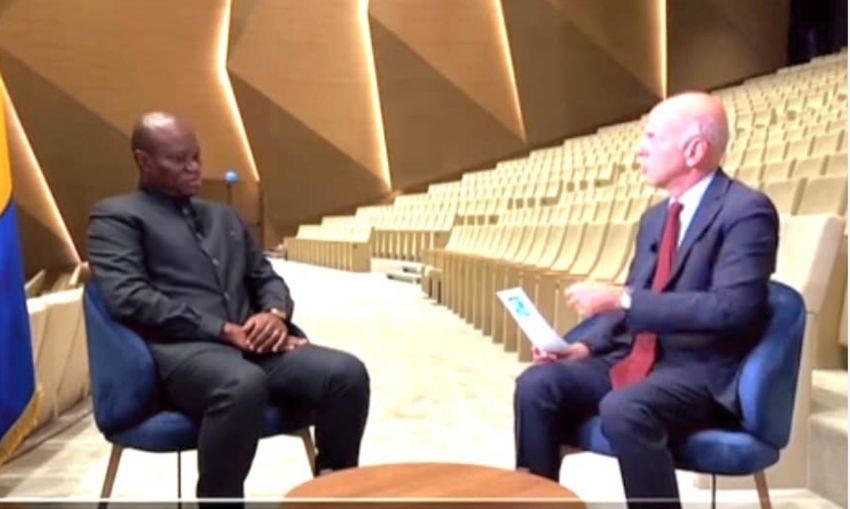
Libreville, June 3, 2026 – In a carefully orchestrated media appearance, Gabon’s President Brice Clotaire Oligui Nguema used his platform to defend his administration’s economic strategy, assert the nation’s sovereignty, and reaffirm his commitment to democratic alternation.
Three years into his leadership and one year after securing over 94% of the vote in presidential elections, the Gabonese head of state granted his first major international interview from the Congress Hall of Libreville’s Cité de la Démocratie. Addressing pressing national and global issues, President Oligui Nguema outlined a clear political vision centered on long-term reforms, economic independence, and balanced international partnerships.
Progressive reforms for national transformation
Critics have highlighted delays in critical infrastructure projects, particularly in water and electricity access. The President acknowledged these challenges but emphasized that his seven-year mandate is designed for sustainable progress rather than quick fixes. He pointed to investments exceeding 800 billion CFA francs in energy infrastructure, signaling a commitment to gradual but meaningful development.
The message is clear: Gabon’s transformation is a marathon, not a sprint. Structural reforms require patience, but the administration is laying the groundwork for lasting change.
Economic sovereignty as a guiding principle
The most striking declarations came on the economic front. President Oligui Nguema confirmed Gabon’s intention to engage with the International Monetary Fund (IMF) but insisted on completing a comprehensive audit of public finances before finalizing any agreement. This cautious approach reflects a broader strategy to regain control over the country’s financial commitments before entering new international negotiations.
A landmark decision was announced: the ban on exporting raw manganese starting in 2029. As one of the world’s top manganese producers, Gabon is shifting toward local processing of its mineral wealth. This move directly targets the French mining giant Eramet, sending a firm message that the government expects local value addition before raw material exports can continue.
This policy underscores a broader goal: rebalancing the relationship between the state and multinational corporations to ensure greater economic benefits for Gabonese citizens.
A balanced international stance
On the diplomatic front, President Oligui Nguema sought to dispel concerns that Gabon’s pursuit of sovereignty would lead to isolation. He confirmed an upcoming state visit to France on July 20, emphasizing the strength of Libreville’s ties with Paris. The handover of Camp de Gaulle to Gabonese authorities was framed as a collaborative process, contrasting with the confrontational approaches seen elsewhere in the region.
His response to a U.S. proposal regarding the resettlement of deported migrants was equally decisive. While not rejecting cooperation with Washington, he made it clear that such an arrangement did not align with Gabon’s national interests.
Rejecting dynastic rule and embracing democratic alternation
The interview also addressed the legacy of former President Ali Bongo Ondimba. Without directly assigning blame, the President noted the former leader’s health status and implied that accountability for past governance issues lies beyond his administration’s scope.
However, his most consequential remarks addressed the future of power in Gabon. In a region where political dynasties and prolonged mandates are common, President Oligui Nguema firmly ruled out the possibility of a political dynasty bearing his name. He reaffirmed the inviolability of the seven-year term limit, renewable only once, signaling his intent to build a political architecture centered on democratic alternation.
The road ahead: ambitions versus expectations
This interview revealed the pillars of Gabon’s evolving political doctrine: economic sovereignty, local resource transformation, balanced international partnerships, progressive infrastructure reforms, and a commitment to democratic renewal. Yet, the true test lies in execution.
While the President retains significant political capital, public expectations are high. Gabonese citizens will judge his administration not by its promises but by tangible results. One year into his presidency, Brice Clotaire Oligui Nguema has staked a bold claim: Gabon will reclaim control of its economic and political destiny. The nation now awaits to see if this vision can translate into lasting reality.