Gabon’s pivotal role in Africa’s evolving economic landscape
Libreville, Saturday, June 20, 2026 — Africa stands at a historic economic crossroads. Long constrained by colonial-era borders, the continent is now forging the world’s largest free trade zone by number of participating nations.
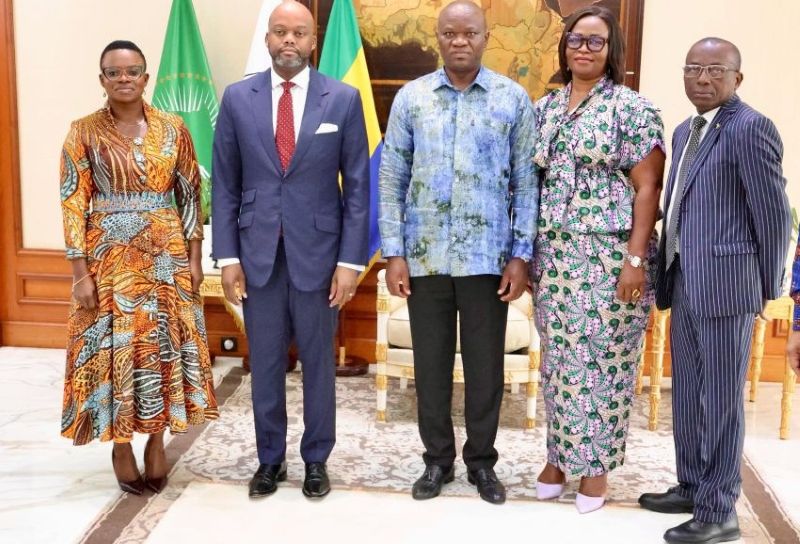
The Friday meeting in Libreville between Gabonese President Brice Clotaire Oligui Nguema and AfCFTA Secretary-General Wamkele Mene transcended standard diplomatic protocol. It signaled a broader ambition: positioning Gabon as a cornerstone of Africa’s emerging economic architecture.
As global supply chains realign and regional blocs deepen their integration, the imperative is no longer whether Africa should increase intracontinental trade—it’s about how each nation plans to capitalize on this transformative shift.
The AfCFTA’s continental market potential
Spanning 1.4 billion consumers and boasting a combined GDP exceeding $3 trillion, the African Continental Free Trade Area represents one of the 21st century’s most ambitious economic initiatives. Its core mission appears straightforward: dismantling trade barriers to supercharge intra-African commerce.
Yet despite its vast potential, Africa remains one of the world’s least integrated regions. While over 60% of Europe’s trade occurs among its member states and Asia’s intraregional commerce nears 50%, Africa’s cross-border exchanges languish below 15%. The AfCFTA aims to bridge this critical gap.
Discussions between Gabon’s head of state and the AfCFTA chief centered on mechanisms to help Gabon fully leverage this continental opening. Priorities identified include customs modernization, border infrastructure upgrades, regulatory framework adjustments, and institutional strengthening.
The strategic value of Nkok’s industrial hub
The AfCFTA Secretary-General emphasized a Gabonese asset frequently overlooked across the continent: the Nkok Special Economic Zone.
Within years, this industrial powerhouse has become Central Africa’s leading manufacturing hub, hosting enterprises specializing in timber processing, metallurgy, and light manufacturing. It embodies Gabon’s commitment to moving beyond raw material exports toward value-added production.
This approach aligns perfectly with the AfCFTA’s ethos. The success of duty-free trade will hinge less on natural resource exports than on each nation’s capacity to develop competitive industrial bases.
Gabon’s geographic position further enhances its prospects. Nestled in the Gulf of Guinea, equipped with modern port infrastructure, and engaged in major logistics projects, the country possesses the ideal characteristics to emerge as a regional trade nexus.
Economic transformation as national doctrine
During the audience, President Oligui Nguema reaffirmed the pillars of Gabon’s National Growth and Development Plan. This vision rests on three core strategies: local resource transformation, economic diversification, and accelerated digital transition.
This model marks a decisive break from traditional commodity-dependent economies, preparing Gabon for the demands of global competition.
The AfCFTA’s true challenge extends beyond tariff reductions—it’s about cultivating African economies capable of producing, innovating, and exporting at scale.
The Gabonese leader’s meeting with the AfCFTA chief comes at a pivotal moment. The continent now has a unified legal framework. The task ahead is converting political ambition into economic reality.
For Gabon, this is a strategic imperative. The nation is no longer merely seeking to participate in free trade—it aims to emerge as one of its primary beneficiaries. The AfCFTA unlocks a gateway to an unprecedented continental market. Yet only states that anticipate industrial, logistics, and digital transformations will fully capture its rewards. Libreville appears determined to be among them.
You may also like
Senegal: how Sonko’s playful jab at Sadio Mané over 2029 is reshaping the political conversation
Senegal’s shadow funds: How unchecked spending drains public trust and budgets
Bénin: le Sénat tient sa séance inaugurale sous la conduite de Patrice Talon
Gabon : la participation citoyenne au cœur de la Ve République
Is Chad truly experiencing a political easing of tensions?