Gabon’s digital sovereignty: balancing innovation and responsibility
Libreville, Tuesday, July 14, 2026 — The digital economy, once perceived as a boundless virtual realm largely beyond national borders and sovereign control, is now entering a transformative phase. Nations worldwide are increasingly asserting their authority to protect citizens, regulate content, and hold global platforms accountable for their operations.
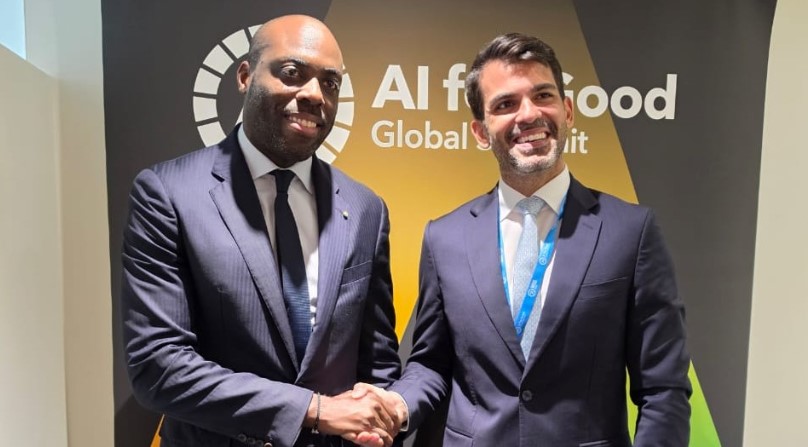
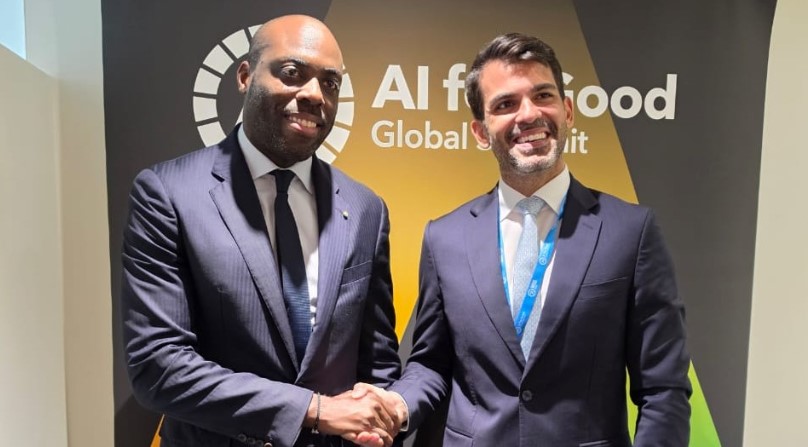
In Geneva, amidst the “AI for Good” global summit and the World Forum on the Information Society, Gabon delivered a clear message to major technology companies. This signal underscored the nation’s resolve to safeguard its digital sovereignty while fully embracing the vast opportunities presented by the ongoing digital revolution.
The recent high-level discussion between Mark-Alexandre Doumba, Gabon’s Minister of Digital Economy, and regional executives from TikTok, transcends a mere institutional exchange. It signifies the commencement of a new chapter in the relationship between Libreville and one of the most influential digital platforms among African youth.
From confrontation to collaborative engagement
The context surrounding this significant meeting is crucial. Just months after a period of tension that led to the temporary suspension of several social networks in Gabon in February 2026, Gabonese authorities and TikTok have opted to re-engage in dialogue. Their shared objective is to construct a digital environment that is safer, more responsible, and effectively regulated.
For Libreville, the issues at stake extend far beyond mere technological concerns. The proliferation of misinformation, hate speech, cyberbullying, information manipulation, and the exposure of minors to inappropriate content now represent critical public safety challenges and major societal priorities.
In light of these concerns, Minister Mark-Alexandre Doumba reiterated to the platform’s representatives that protecting the mental well-being of young Gabonese users, combating digital violence, and preserving social cohesion are paramount government priorities. This strategic approach is integral to the broader national digital sovereignty strategy championed by Gabonese authorities.
TikTok reveals extensive moderation efforts in Gabon
Responding to the concerns articulated by the authorities, TikTok embraced transparency by presenting concrete figures. Data shared during the Geneva discussions indicated that the platform removed 23,504 videos and other content deemed sensitive or in violation of its community guidelines within Gabonese territory during the first quarter of 2026.
Beyond the sheer volume of content removed, TikTok highlighted the efficiency and speed of its technological infrastructure. Reportedly, nearly 99.8% of illicit content was automatically detected even before any user reports were filed. Furthermore, an impressive 92.9% of these problematic materials were deleted before they could be viewed by internet users.
These statistics underscore the extensive application of artificial intelligence in the mechanisms for detecting, filtering, and suppressing sensitive content. They also illustrate the rapid evolution of moderation tools employed by major global platforms to meet the escalating demands of national governments.
Digital sovereignty emerges as a strategic imperative
The Geneva meeting between the Gabonese Minister and Emir Gelen, TikTok’s regional director, occurs at a time when Gabon has recently fortified its legal framework for regulating digital platforms. A new ordinance pertaining to the governance of digital spaces now grants major international platforms a one-year period to comply with new national requirements concerning security, data protection, and content moderation.
Libreville’s message is unequivocal: technological innovation cannot sustainably thrive without a foundation of social responsibility. Global platforms can no longer operate merely as content hosts. They are progressively becoming pivotal stakeholders in ensuring social stability, informational security, and the protection of vulnerable populations.
This evolving perspective extends well beyond Gabon’s borders. Across the globe, diverse states such as the European Union, Australia, Brazil, and several African nations are now actively seeking to impose new regulatory standards on American and Chinese technology giants.
Gabon is clearly intent on participating in this global redefinition of digital governance. Rather than resorting to continuous confrontation or systematic access restrictions, Libreville appears to favor a strategy of co-regulation rooted in dialogue, shared responsibility, and a commitment to measurable outcomes.
This choice is profoundly strategic. In an African continent where over 70 percent of the population is under thirty years old, the struggle for digital sovereignty is poised to become one of the defining political, economic, and cultural challenges of the coming decades.
The Geneva discussions may, in retrospect, be seen as a foundational moment in the establishment of this new Gabonese digital doctrine. A doctrine designed not to impede innovation, but to provide a framework for it; not to shut down platforms, but to hold them accountable; and not to pit the state against tech giants, but to forge a new balance between digital freedom, collective security, and national sovereignty.
Gabon has thus initiated a crucial undertaking whose implications will extend far beyond its borders, potentially inspiring other African nations grappling with similar challenges.